

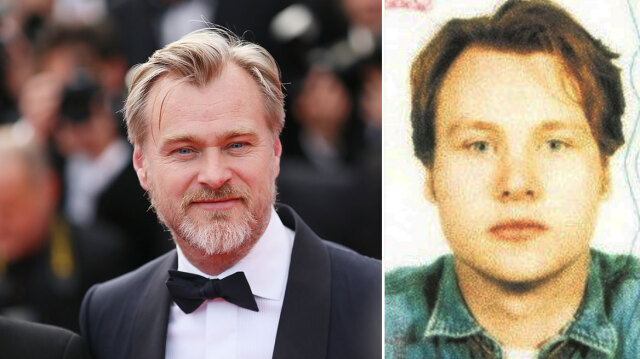
Christopher Nolan, director of "The Odyssey," personally asked a judge to show leniency toward his older brother Matthew nearly 16 years ago, according to court documents cited by the Daily Mail. Matthew Nolan had been accused by authorities in Costa Rica of taking part in the kidnapping and killing of an American accountant, with prosecutors alleging he was the one who carried out the killing.
The most serious charges against him were never proven. A U.S. judge rejected the extradition request against him on kidnapping and homicide charges, ruling that the evidence of his involvement was insufficient and unsubstantiated.
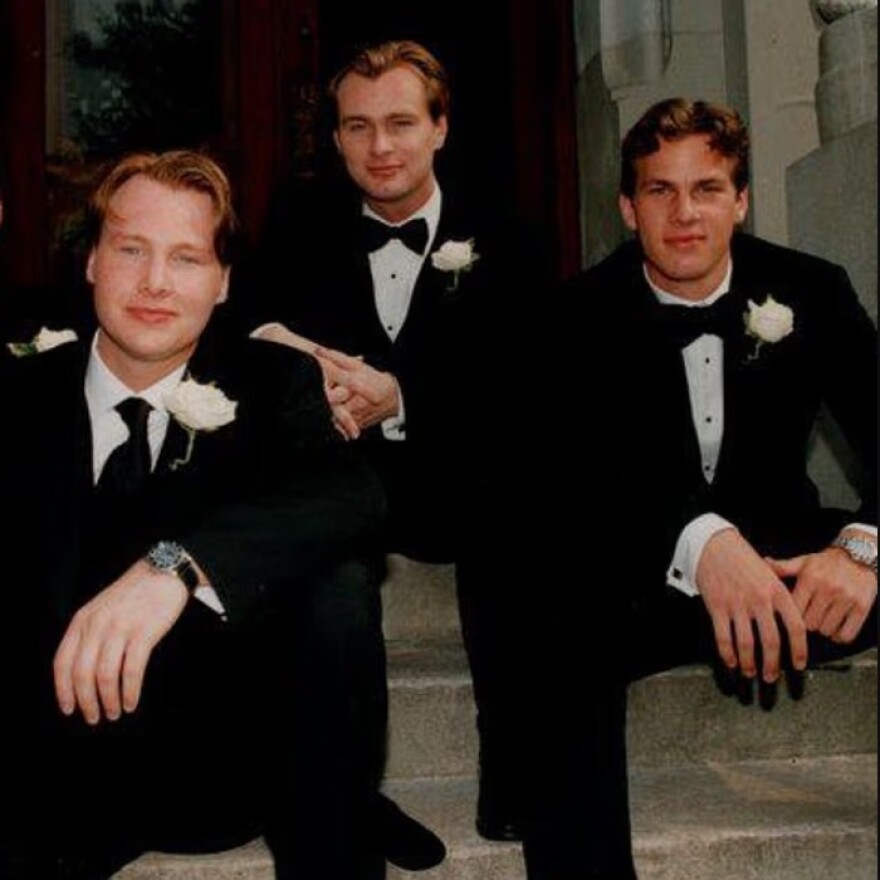
The case includes a striking coincidence. According to Costa Rican authorities' allegations, Matthew had used the name "Oppenheimer" roughly 15 years before his brother won Academy Awards for the film of the same name.
Three Nolan brothers, three different paths
Matthew Nolan, now 57, is the eldest of the three Nolan brothers, followed by Christopher, 56, and Jonathan, 50. All three were born in London to British advertising executive father Brendan Nolan and American mother Christina, hold both British and American citizenship, and attended Haileybury school in Hertfordshire.
Christopher became one of Hollywood's leading directors, with films including "Interstellar," "Dunkirk," "Inception," "Oppenheimer" and the "Batman" trilogy. Jonathan became a successful screenwriter and producer, working on "Memento" and co-creating the series "Westworld." Matthew, by contrast, went into real estate development in Chicago, ran into serious financial trouble during the 2000s, and filed for bankruptcy in 2009. That same year his life took a dramatic turn.
The accountant's murder and the extradition request
In March 2009, a Costa Rican judge approved a request for Matthew Nolan's extradition over the death of Robert Cohen, a 63-year-old accountant from Florida whose body had been found in the Central American country in 2005. Costa Rican authorities sought him for aggravated kidnapping, use of a forged document, and aggravated homicide.
According to police claims, a wealthy gem dealer named Robert Bresca had hired Matthew to kidnap and torture Cohen over a dispute involving seven million dollars that had reportedly gone missing. Bresca allegedly persuaded Cohen to meet Matthew in San Jose by presenting him as a multimillionaire and a member of the Oppenheimer diamond dynasty.
According to the extradition request, on March 6, 2005, Matthew allegedly agreed with Costa Rican national Luis Alonso Douglas Mejia, who was later convicted of the murder, to go ahead with Cohen's kidnapping. Authorities said the victim was forced into a car rented by Matthew, with the plan calling for him to be taken to an isolated beach. The documents state the ultimate goal of the operation was to kill Cohen.
Judge rejected the murder and kidnapping charges
American courts did not find these claims sufficient. Judge Mason rejected the extradition request against Matthew Nolan on the aggravated kidnapping and homicide charges, ruling that the evidence of his participation was insufficient and unsubstantiated.
The judge found reliable evidence that Matthew had been with Cohen at the time of the kidnapping, including hotel security camera footage from where both men were staying, and evidence that the vehicle used to take Cohen away was a Toyota 4Runner rented by Matthew. What was missing, according to the judge, was sufficient evidence that Bresca had hired Matthew as the killer, that he had planned the kidnapping and murder, that he knew of or had ordered Mejia's actions, or that he himself had committed any violent act.
The judge did approve Matthew's extradition on a separate charge: use of a forged document, specifically a fake British passport under the name "Matthew Francis McCall," allegedly used to open a bank account in Costa Rica.
The prison escape plot
The case grew stranger after Matthew's arrest, which took place while he was attending a hearing for his personal bankruptcy. In October 2009 he was charged with five offenses related to items found in his cell at Chicago's Metropolitan Correctional Center, a 28-story facility.
According to court documents, corrections staff found about 9.5 meters of braided rope, a homemade harness, a metal piece from a pen cap, and part of a broken razor blade hidden inside a bar of soap. Staff also discovered the metal object could be used to open locked handcuffs.
Prosecutors said Matthew used coded language to discuss the escape plan, referring to it among other things as a "beach party." In one note he allegedly described a plan to climb down from a prison window using rope and be picked up by accomplices on the street. In another he allegedly boasted he could free himself from handcuffs within 15 seconds.
Christopher Nolan's letter to the judge
At this point Christopher Nolan intervened personally. Matthew's lawyers asked the court for leniency, submitting letters from his wife and children as well as from his famous brother. It was June 2010, just one month before the premiere of "Inception."
In his letter, dated June 28, 2010, Christopher described it as a mystery and a shock that his older brother had ended up in that position. Recalling their childhood, he wrote how important it had been for him to have his older brother at the same boarding school, and said Matthew had supported him devotedly during that time and protected him without thinking of himself, which he said showed how deep his devotion to the family ran.
The most difficult part of the letter concerned their father's death.
"He could not say goodbye to our father"
While Matthew was in prison, their father lost his battle with cancer. Christopher wrote to the judge that his older brother had been extremely close to their father and that, despite the confusing and heartbreaking situation Matthew found himself in, their father's love for his firstborn son had never wavered.
The director argued that the fact Matthew could not be at their father's deathbed to say goodbye was in itself a terrible punishment. He also expressed his belief that imprisonment had made his brother reassess his true priorities in life. Christopher Nolan effectively asked for a second chance for Matthew, arguing that the shame and hardship the imprisonment had already caused him and the family amounted to significant punishment.
Conviction and release
Matthew Nolan ultimately pleaded guilty to two charges related to the attempted escape. He was sentenced to 14 months in prison, but because he had already been held in custody for a comparable period, he was released and placed under supervision for two years.
He was never extradited to Costa Rica. The murder and kidnapping charges were never proven, and the only charge for which his extradition had been approved concerned the use of a forged passport.
A spokesperson for Costa Rica's Ministry of Public Security later said the evidence the American judge deemed insufficient to link Matthew to the crimes against Cohen was the same evidence used to convict Mejia in Costa Rica.
A year later Matthew filed lawsuits against the U.S. government for medical negligence and against corrections officers over his treatment in prison. Both cases were dismissed. His lawyers have previously maintained he was innocent of the charges brought against him and that he regrets the loss suffered by Cohen's family.
Sixteen years later, the unusual family story is resurfacing as Christopher Nolan is again at the center of film industry attention with "The Odyssey." The irony is hard to miss: the name "Oppenheimer," which appeared in the allegations of a dark case surrounding his brother, would years later become the title of the film that brought Christopher Nolan the biggest honors of his career.


