

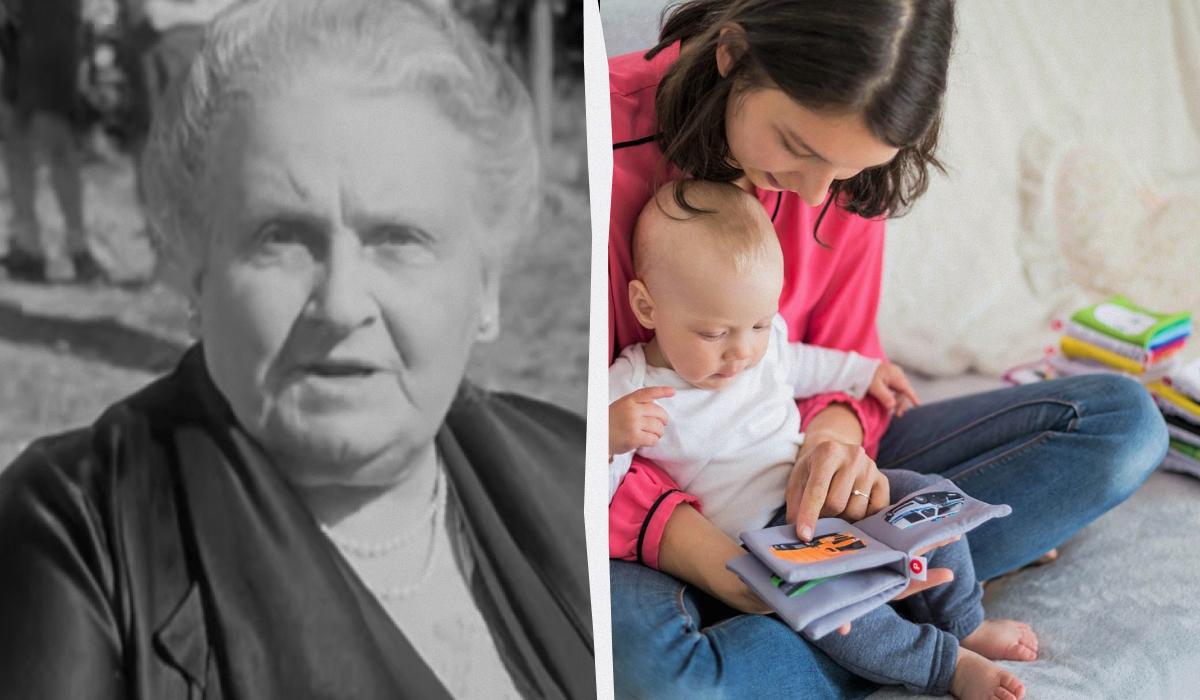
Assisting children with tasks they believe they can complete on their own can hinder their development and lower their self-confidence, according to advice from Italian educator Maria Montessori highlighted by radio outlet Radio Pogoda.
Radio Pogoda shared one of Montessori's most prominent questions, asking whether adults always perform a good service for a child when offering assistance. According to the publication, the physician and educator advised parents never to help a child with a task if the child feels capable of succeeding independently.
The publication noted that this concept may initially seem unusual to many parents, who generally view assistance as a natural expression of care. However, Montessori argued that taking over tasks for children can produce an outcome opposite to what parents intend.
Impact of Premature Help
Her advice is sometimes mistakenly interpreted as a recommendation to abandon a child to their fate, but the outlet explained that her actual meaning was entirely different. When a child attempts to put on shoes, assemble a puzzle, or solve a problem and believes they can manage it, premature help deprives them of feeling capable.
Instead of feeling satisfaction from personal success, the child receives an implicit message that they cannot manage without adult intervention. Montessori observed that child development occurs during moments of effort, as children build confidence, patience, and problem-solving skills through trial, error, and repeated attempts.
The outlet explained that the philosophy does not call for withholding all assistance, but rather for recognizing the proper moment to intervene. Adults should offer support when a child truly requires it, not simply when the adult wants to speed up the process.
Core Educational Principles
Montessori's approach rests on several core principles detailed by the publication. The first principle is independence, which holds that children should be given opportunities to perform age-appropriate actions, such as dressing themselves, tidying up, or preparing simple food as part of their learning.
A second principle focuses on a prepared environment. In Montessori schools, furniture, learning materials, and spatial layout are specifically adapted to children's needs in order to encourage independent activity.
The third principle emphasizes learning through experience. Montessori maintained that children learn best by doing, touching, experimenting, and discovering patterns independently rather than passively listening to lectures.
Finally, the methodology defines the teacher as a guide rather than the central figure of the classroom. The teacher's role is to observe, inspire, and provide aid only when it is genuinely required.
Background of Maria Montessori
Born in Italy in 1870, Maria Montessori was one of the first women in her country to graduate from medical school. Her work began by observing how children learn independently and recognizing the significant roles played by curiosity, hands-on experience, and freedom of movement.
She developed an original system of education that now operates in thousands of schools and kindergartens across the world. Montessori believed that a child is not an empty vessel to be filled with knowledge, but an individual with a natural drive to explore the environment, requiring adults to create supportive conditions rather than direct every step.
Related Parenting Advice
In addition to Montessori's findings, news agency UNIAN previously reported on eight specific parental habits that trigger anxiety in children. The agency also highlighted insights from child psychologists regarding what was considered the worst parenting habit of the 1970s.


