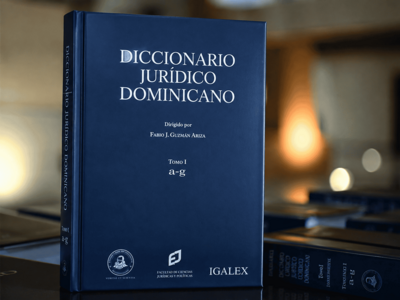
The Dominican Legal Dictionary was officially presented in Santo Domingo on August 13 following six years of work led by jurist Fabio J. Guzman Ariza.
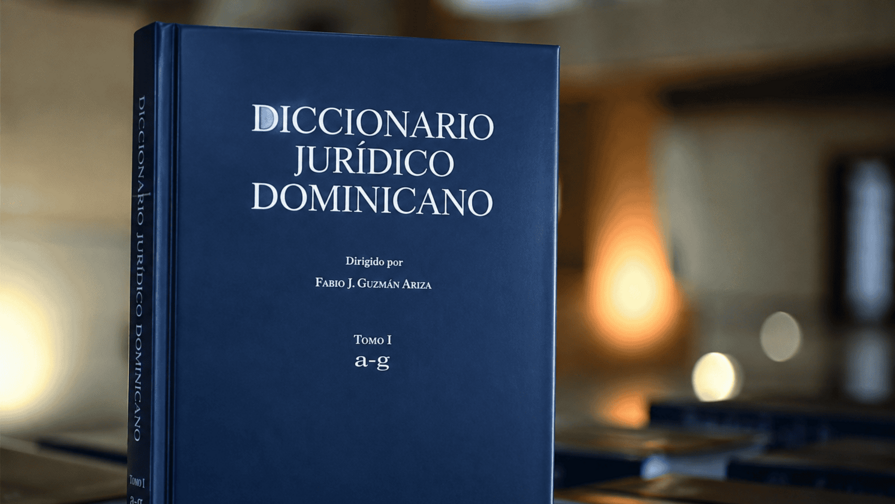
The 10,056-entry reference work provides a systematic record of Dominican legal terminology with precise definitions. It was developed to address a long-standing reliance by legal practitioners on Spanish and French reference texts that failed to reflect local legal language.
Santo Domingo is the capital of the Dominican Republic, a Spanish-speaking Caribbean nation. Philologist and lexicographer Maria Jose Rincon, a member of the Academia Dominicana de la Lengua who holds chair Zeta, detailed the project history following the publication of the volume.
Institutional Collaboration and Development
The project required formal institutional backing from its inception. A collaboration agreement was signed by the Escuela Nacional de la Judicatura, the Academia Dominicana de la Lengua, and the Fundacion Guzman Ariza, which served as the precursor to the current Instituto Guzman Ariza de Lexicografia.
The compilation took place across four distinct phases of work. The team comprised more than 60 Dominican judges, professors, and lawyers who were selected by the Escuela Nacional de la Judicatura and specialized across 20 branches of law.
The Escuela Nacional de la Judicatura is the official judicial training institution in the Dominican Republic, responsible for educating judges and court personnel. The Academia Dominicana de la Lengua oversees linguistic standards within the country in affiliation with Spain's Real Academia Espanola.
Inspiration and Legal Terminology Deficit
Guzman Ariza conceived the dictionary after working on legal lexicography projects in Spain and Latin America. His involvement with the Diccionario del espanol juridico, created by the Real Academia Espanola and the Consejo General del Poder Judicial of Spain, alongside his work on the Diccionario panhispanico juridico, inspired the effort to document the Dominican legal lexicon.
Guzman Ariza said that before the release of the new dictionary, lawyers and judges in the Dominican Republic relied on Spanish and French dictionaries. He noted that while those foreign works had value, they could not capture the specific identity and practical reality of Dominican legal Spanish.
Speaking at the launch event, Guzman Ariza recalled that extensive legal knowledge or being an eminent jurist was not enough on its own to write a proper legal dictionary. He said essential tools for dictionary compilation included clarity, precision, conciseness, grammatical rigor, and proper linguistic adaptation.
Dictionary Entries and Documentation
The completed dictionary contains 10,056 entries, 11,201 definitions, and 12,716 citations drawn from legal sources, statutory texts, and court jurisprudence. These citations document how terms and phrases are used in Dominican legal practice.
The project highlights a structural commitment to clear language, balancing technical precision with accessible terminology for legal specialists and ordinary citizens alike.