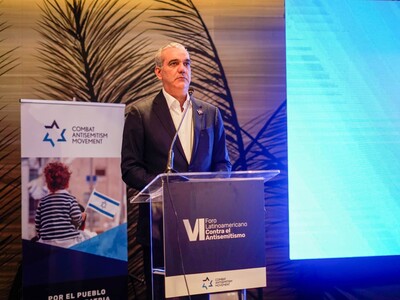
Dominican Republic President Luis Abinader has formally adopted the International Holocaust Remembrance Alliance definition of antisemitism during a conference in Santo Domingo.
The Ministry of Foreign Affairs officialized the accession through a formal statement published on August 24. The step incorporates the Caribbean nation into the non-legally binding international framework designed to identify manifestations of hatred against Jewish people.
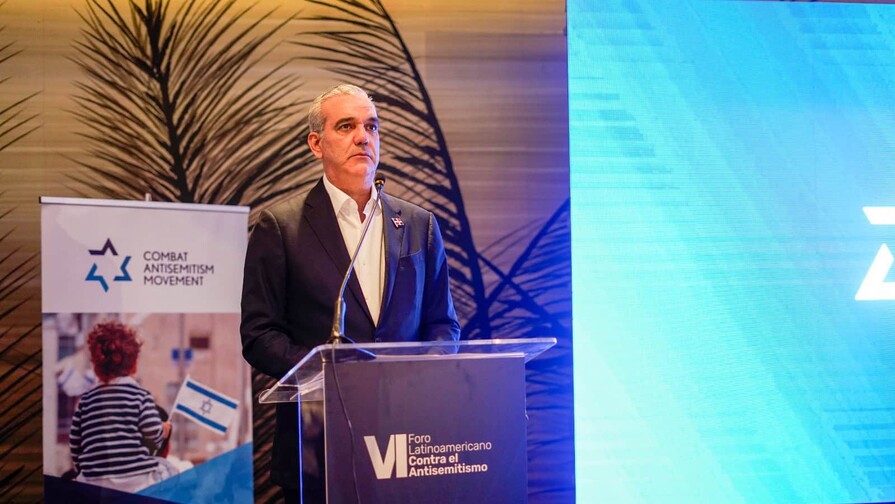
According to the Combat Antisemitism Movement, an advocacy organization that organized the gathering, the Dominican Republic is the seventh Latin American country to adopt or endorse the definition. It joins Argentina, Colombia, Costa Rica, Guatemala, Panama, and Uruguay in recognizing the standard.
International framework and Latin American adoption
Approved by the International Holocaust Remembrance Alliance in 2016, the framework defines antisemitism as a certain perception of Jewish people that may be expressed as hatred toward them. The intergovernmental organization established 11 illustrative examples alongside the definition to guide its practical application.
These examples include Holocaust denial, theories alleging a secret Jewish conspiracy, holding Jewish people collectively responsible for individual actions, and specific claims regarding the State of Israel. The alliance explicitly notes that the definition carries no legal force and states that criticism of Israel similar to that leveled against any other nation cannot be considered antisemitic on its own.
President Abinader emphasized that the Dominican Republic will apply the tool while fully respecting freedom of expression and all rights guaranteed under the nation's Constitution. His comments address an ongoing international debate regarding the scope of the framework.
Debate over freedom of expression and criticism
A United Nations special rapporteur has recognized the alliance's definition as a helpful educational instrument. However, the rapporteur warned that several examples could create a chilling effect on legitimate criticism of Israeli government policies if public bodies use them for regulatory purposes, recommending explicit protections for free speech.
In response to these concerns, more than 200 specialized academics initially endorsed the Jerusalem Declaration on Antisemitism in 2021. Created as an alternative to the alliance's definition, the declaration aims to define more precisely the boundary between antisemitism and political debate regarding Israel and Palestine. Promoters report that the alternative document now has more than 400 signatories.
The Dominican adoption took place during the VI Latin American Forum against Antisemitism, which ran from August 23 to August 26 in Santo Domingo, the Dominican capital. The four-day event brought together lawmakers, diplomats, academics, religious leaders, and representatives from civil society organizations across the region.
Sosúa Jewish Museum construction funding
During his address at the forum, President Abinader also announced a contribution of 50 million Dominican pesos to construct a new building for the Sosúa Jewish Museum. The institution preserves the history of the Jewish community established in the northern province of Puerto Plata during Nazi persecution in Europe.
The monetary figure had previously been announced by the Dominican government earlier in the year. On January 16, Minister of the Presidency José Ignacio Paliza reported a total investment of 50 million Dominican pesos for a comprehensive intervention and enhancement of the museum, handing over the first 25 million Dominican pesos at that time.
The project outlined in January focused on renovating exhibition areas and restoring the local synagogue to develop the site into a cultural, educational, and tourist attraction. The recent announcement refers specifically to constructing a new building, though official sources have not clarified whether this represents a modification of the project scope or a re-announcement of the original allocation.
History of Jewish refugees in Sosúa
The selection of Sosúa connects to a notable chapter in Dominican diplomatic history leading up to the Holocaust. In July 1938, delegates from 32 nations convened at the Évian Conference in France to address the crisis of Jewish refugees attempting to flee Nazi persecution across Europe.
The Dominican Republic was the only nation at the conference to offer large-scale sanctuary. The regime of dictator Rafael Leónidas Trujillo offered to admit up to 100,000 Jewish refugees and subsequently granted land in the coastal town of Sosúa to establish an agricultural colony.
The actual number of settlers was substantially lower than the original offer. Historical records from the United States Holocaust Memorial Museum show that the Dominican Republic admitted 645 Jewish refugees between 1938 and 1945, and the Sosúa settlement reached a maximum population of 476 residents in 1943.
Dominican authorities issued approximately 5,000 visas to European Jews between 1938 and 1944. However, official records indicate that the majority of visa recipients did not ultimately settle in the Caribbean nation.