

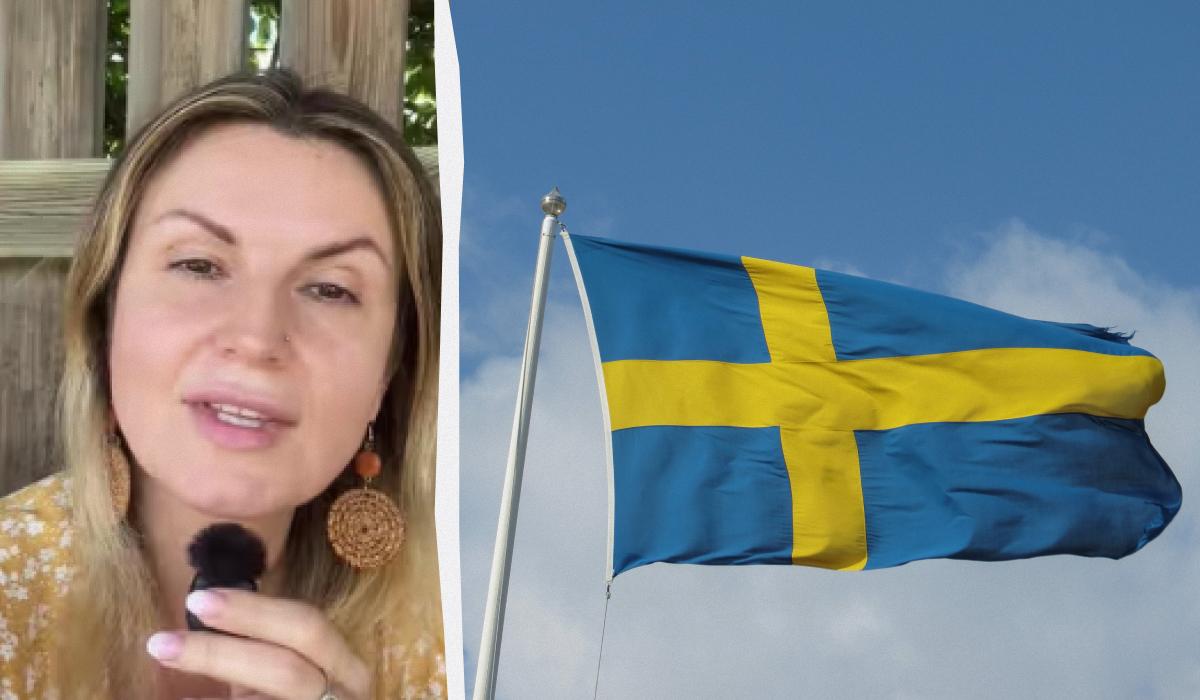
Ukrainian blogger Asiyat Dorokhova has outlined the unexpected administrative hurdles facing foreign arrivals in Sweden in a video shared on TikTok.
Dorokhova explained that foreign residents must navigate strict financial and living limitations until they receive a Swedish personal identification number, which is only granted after one year of residence.
Without the personal identification number, newcomers cannot easily or quickly rent housing or access store discounts. Once the identification number is issued, an adult receives about 500 euros a month in state support, and the government covers full housing rent for individuals without official employment.
Sweden is widely recognized for maintaining one of the most comprehensive social welfare models in Europe. The Nordic nation relies on national taxation to fund extensive public services, with personal identification numbers serving as the essential key to opening bank accounts, securing leases and accessing civic benefits.
Speaking on medical services, Dorokhova said that appointments with specialists can take weeks or even months to book, and laboratory tests are expensive. However, she emphasized that the state budget covers complex surgical operations and treatment for serious illnesses, with patients paying only a standard visit fee of around 30 euros.
Healthcare in Sweden is decentralized and managed by regional county councils, designed to protect citizens and registered residents from catastrophic medical expenses through capped co-payments for primary doctor visits and hospital admissions.
Housing, Employment and Education Rules
Finding work in Sweden is nearly impossible without fluent Swedish or English, Dorokhova added. She explained that newcomers receive free housing from the start, moving from temporary quarters into an apartment where they live completely free of charge, while receiving modest state food assistance that can last if managed carefully.
To stretch daily budgets, residents frequently shop at church social stores, which offer products close to their expiration dates at low prices.
Dorokhova also highlighted an educational opportunity, noting that a state program allows foreign residents to learn Swedish for free and enroll in local universities at any age, requiring only a high school certificate and language certificates.
Higher education institutions in Sweden, such as Stockholm University and Uppsala University, are renowned across Europe, and tuition-free language instruction is standardly provided to facilitate social integration for legal residents.
Relocation Incentives and Refugee Support
In addition to internal social assistance, Swedish authorities have revised payment amounts for individuals who decide to return home voluntarily. An adult holding a valid Swedish residence permit can receive up to 32,000 euros to return to their home country.
Voluntary repatriation grants are common administrative mechanisms across European Union member states, structured to assist foreign residents and asylum seekers who choose to resettle in their country of origin.
The discussion around social support follows another TikTok video that recently went viral, showing the meals served to Ukrainian refugees in German camps. The creator showed a meal consisting of a small portion of salad, two thin slices of cheese and sausage, and almost an entire loaf of bread intended for two people.
While acknowledging that camp dining is not a restaurant experience, the author of the clip described the approach as good, remarking that free provision of this kind is unavailable in Ukraine. Public comments were divided, with some viewers describing the portions as overly modest while the majority argued that government aid is designed as emergency support rather than full maintenance.
Germany and Sweden remain key destinations for individuals displaced by conflict, operating under European Union frameworks that grant temporary protection rights, healthcare access, housing assistance and educational opportunities to eligible refugees across the continent.


