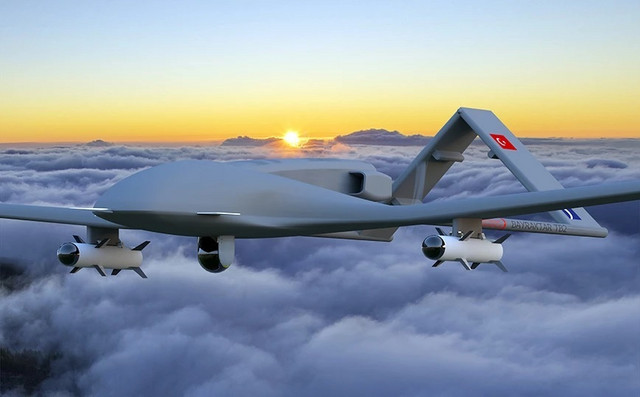
Greek military forces identified and intercepted three Turkish unmanned aerial vehicles operating over the Central Aegean Sea on Sunday, August 30, 2026.
According to data released by the Hellenic National Defence General Staff, the drones committed three separate violations of air traffic regulations within the Athens Flight Information Region, along with one violation of Greek national airspace.
Defense officials confirmed that the three Turkish aircraft operated as single, isolated units rather than in a tactical formation. The military reported that none of the drones carried armament, and no physical engagements or dogfights took place during the encounters.
Greek defense authorities deployed aircraft to identify and intercept the foreign drones in line with international aviation regulations and standard operational practices. Military commanders emphasized that such flights form part of periodic aerial activity recorded across the Aegean, which remains under continuous monitoring by the Hellenic Armed Forces.
Athens FIR and Aegean Monitoring
The Hellenic National Defence General Staff, known locally by the Greek acronym GEETHA, serves as the supreme military command for the nation's armed forces. The Athens Flight Information Region is an internationally recognized airspace management zone administered by Greek civil and military air traffic authorities under standards set by the International Civil Aviation Organization. Within this region, aircraft are required to submit flight plans and maintain radio contact to prevent aerial collision risks.
Standard military interception procedures require defense aircraft to establish visual contact with unidentified radar targets, confirm their aircraft registration details, and monitor their flight path until they exit controlled airspace. Unmanned aerial vehicles, commonly referred to as drones, are remotely piloted aircraft utilized extensively for aerial surveillance, reconnaissance, and maritime tracking without requiring on-board personnel.
The Central Aegean Sea represents a strategic geographic corridor connecting mainland Greece with Western Turkey, forming an essential link between the Mediterranean and Black Sea maritime routes. Greek radar stations and military command centers maintain round-the-clock monitoring over the surrounding airspace to manage regional air traffic and maintain territorial security.