

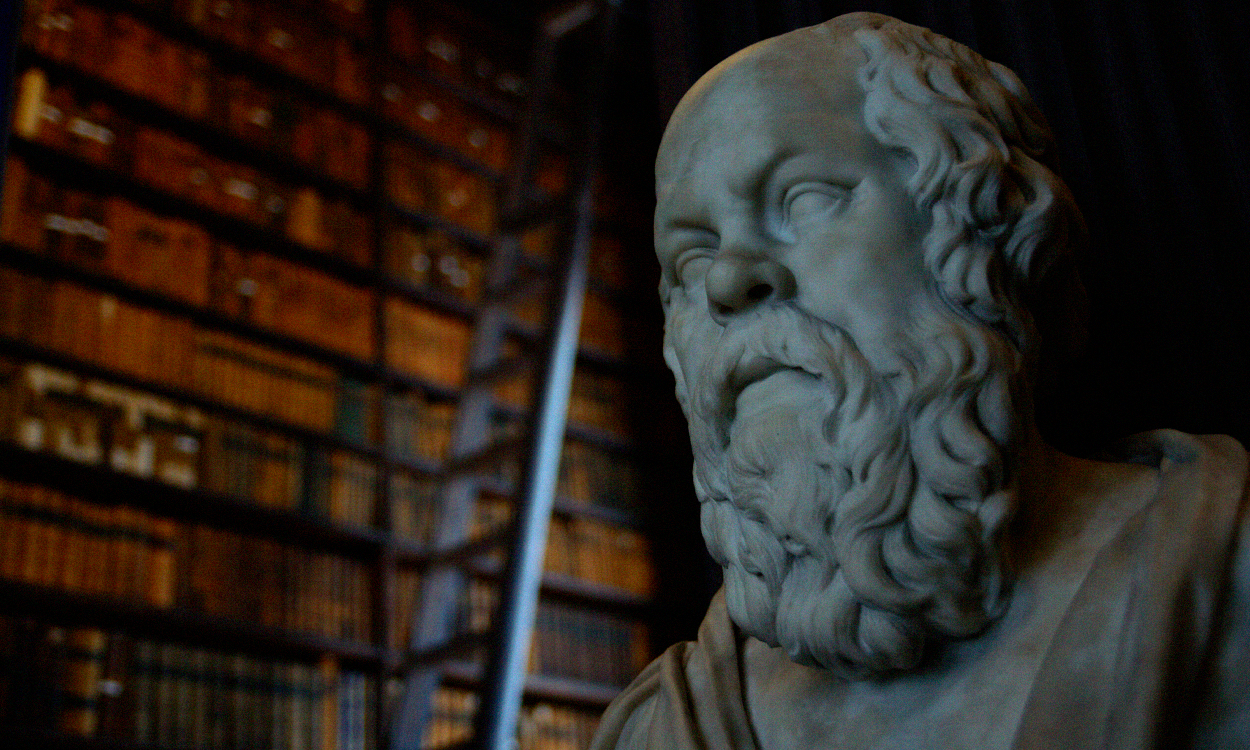
Athenian philosopher Socrates maintained that all human souls are immortal and that the souls of the righteous are divine, in philosophical conversations recorded by his student Plato.
The statement summarizes a central inquiry in classical Greek philosophy regarding the nature of the soul, its relationship to physical existence, and whether consciousness survives the death of the body.
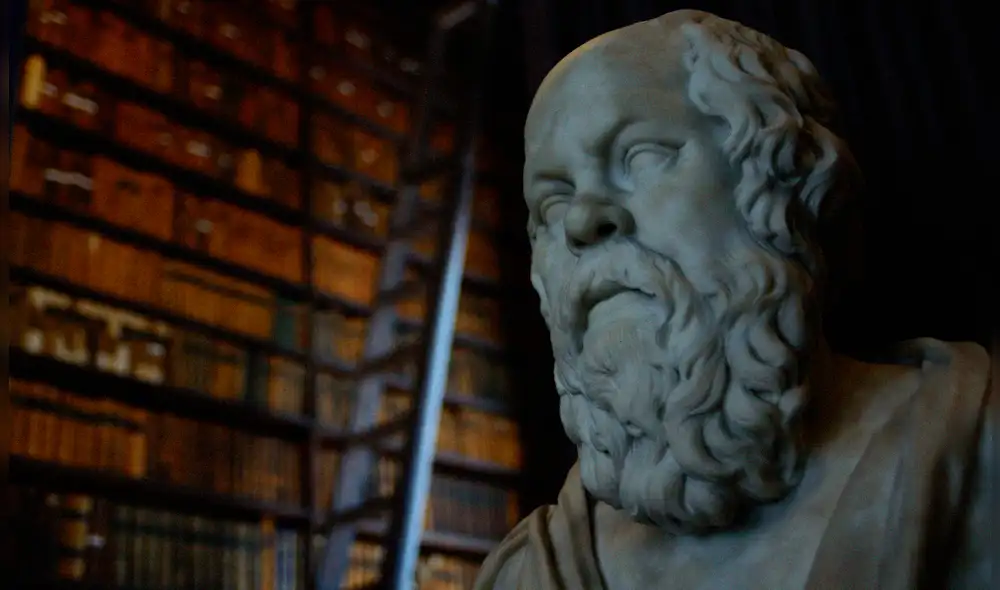
In the philosophical dialogue Phaedo, Plato set Socrates in his final hours before his execution by drinking lethal hemlock poison. Sitting in prison, the philosopher conversed with his disciples about death and examined what happens to the soul when the physical body ceases to exist.
One of the principal arguments in the text holds that the soul is not subject to the same mortal conditions that govern the body. Socrates concluded that the soul is immortal after developing a structured argument centered on the connection between the soul and life itself.
The surviving text, preserved digitally by the Perseus Project at Tufts University in Massachusetts, records this reasoning in passage 105e of Phaedo. The passage explains that because the soul is intrinsically tied to life, it cannot accept death.
As the debate continued, Socrates argued that if the soul is immortal, death cannot be interpreted as its destruction. In passage 106e of Phaedo, the dialogue asserts that while the mortal part of a human being perishes, that which is immortal turns away and departs safely from death.
Resemblance to the divine
In one of the most famous sections of the dialogue, Socrates asked his disciple Cebes to consider which of the two components of a human being resembles the divine. The question established a direct contrast between the physical frame and the intangible soul.
The discussion concluded that the soul resembles that which is divine, immortal, intelligible, uniform, and indissoluble. By contrast, the physical body is associated with what is human, mortal, multiform, unintelligible, and constantly changing.
The connection between leading a righteous life and the destination of the soul is further developed across other Platonic texts. In Laws, Plato presented the immortal soul as the true essence of every individual, arguing that a good person can face death with a completely different outlook than someone who lived an unjust life.
Historical accounts and the Socratic problem
Socrates lived in ancient Athens from approximately 469 BC until his execution in 399 BC. He is widely recognized today as one of the foundational figures of Western philosophy and moral thought.
Because Socrates left no written books or philosophical treatises, knowledge of his life and ideas relies on accounts by contemporary and later authors. The primary surviving sources are the writings of the philosopher Plato, the historian Xenophon, and the comic playwright Aristophanes.
This reliance on third-party records created what historians call the Socratic problem. Because the descriptions in these texts vary, scholars cannot separate the historical Socrates with absolute certainty from the literary character portrayed in Plato's dialogues.


