

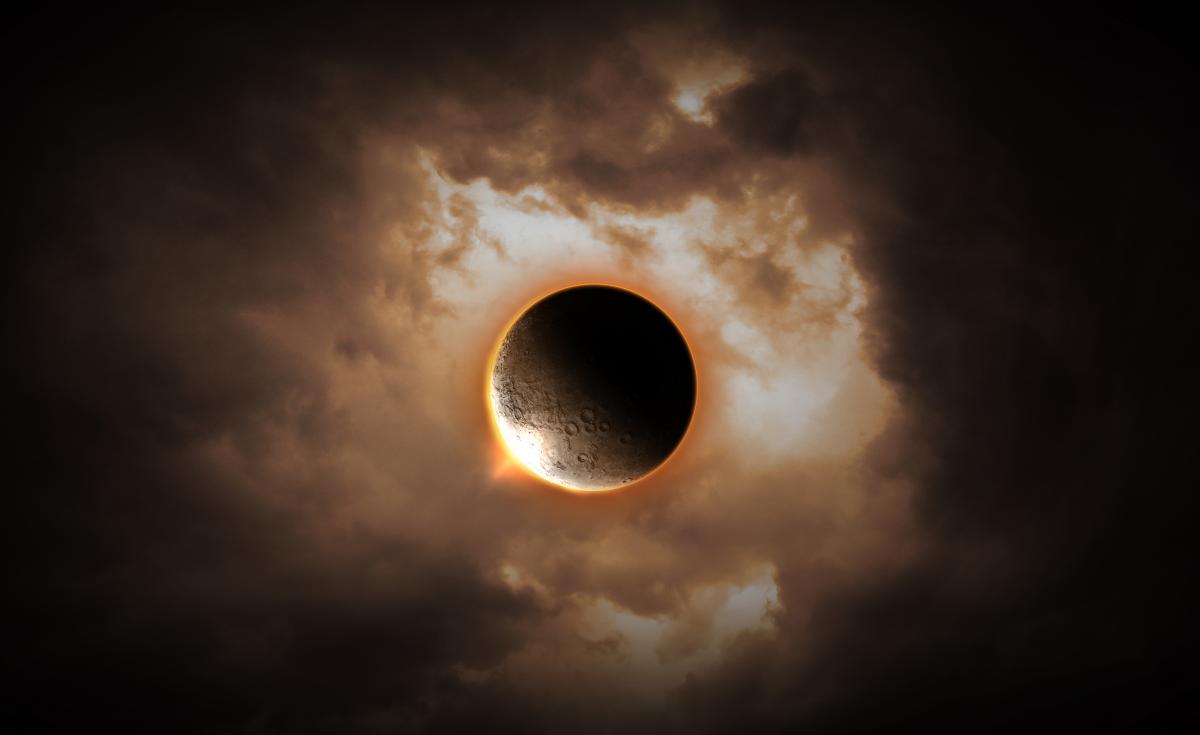
A partial lunar eclipse will cover approximately 96 percent of the Moon on August 27 and 28, 2026, turning its visible surface reddish-crimson across major parts of the world.
Space.com reported that during the astronomical event, Earth's shadow will obscure nearly the entire lunar surface. Because the celestial bodies will not align in a perfectly straight line, the eclipse will remain partial rather than total, leaving a small slice of the lunar disc illuminated by direct sunlight.
The vast majority of the Moon will pass through the umbra, which is the darkest central core of Earth's shadow. Near the maximum phase of the eclipse, the shadowed area may take on a distinct red-orange hue. This effect occurs as sunlight filters through Earth's atmosphere, bending red light toward the lunar surface. Skywatchers often refer to this visual phenomenon as a blood Moon.
Eclipse Timing and Schedule
Observers will first notice the event as Earth's shadow begins creeping across the lunar disc. According to data from TimeandDate, the eclipse will start at 22:33 Eastern Time on August 27, corresponding to 02:33 Greenwich Mean Time on August 28.
Earth's shadow will gradually cover the lunar surface until the eclipse reaches its maximum phase at 00:12 Eastern Time on August 28, or 04:12 Greenwich Mean Time. Peak red coloration will occur near this maximum phase.
Billions of people located on the night side of Earth will have the opportunity to view the celestial spectacle. The eclipse will be visible to skywatchers across North America, South America, Africa, and Europe.
Regional Viewing Conditions
Specific viewing times and the appearance of the Moon will depend on the observer's location. On the West Coast of the United States, the maximum phase will occur after midnight during the night of August 27 to 28. In Great Britain, observers will see the maximum eclipse shortly before sunrise on August 28, when the Moon hangs low over the south-western horizon.
Because the Moon will sit low on the horizon or approach setting in some regions, skywatchers are advised to check local start times and maximum phase calculations in advance.
Unlike solar eclipses, lunar eclipses are safe to view with the naked eye without protective glasses. Using binoculars or a small telescope can enhance the view, allowing observers to track Earth's shadow moving across lunar surface features.


