

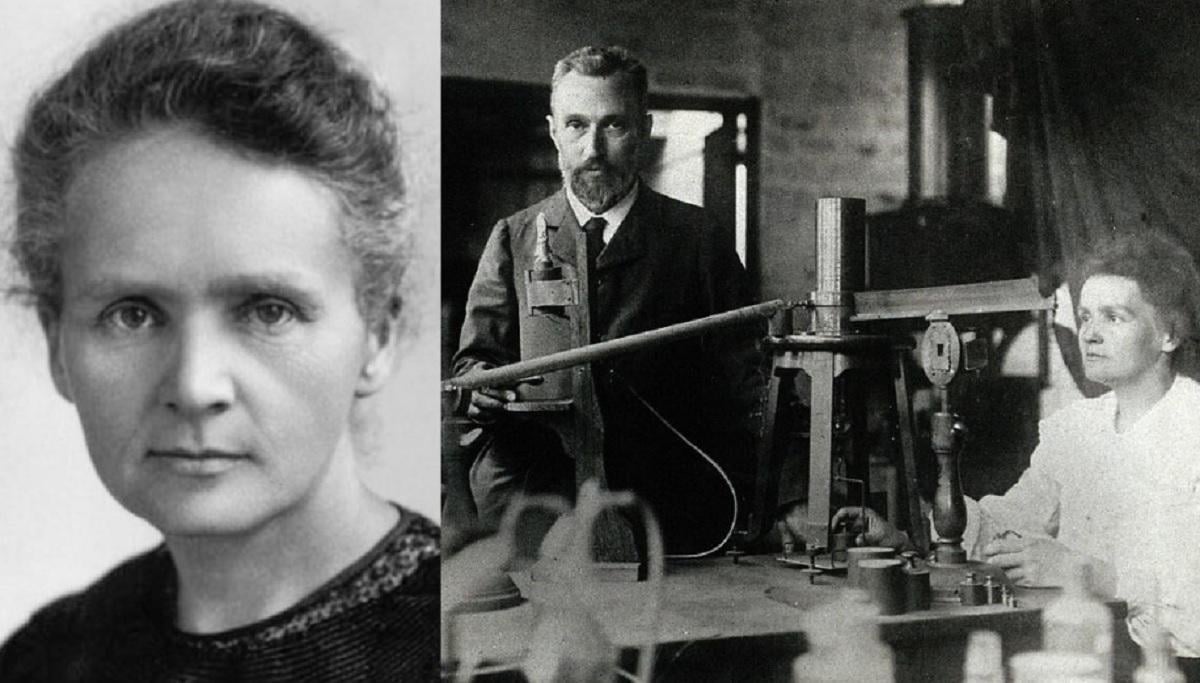
Marie Curie's laboratory notebooks remain radioactive more than 120 years after they were written, requiring them to be kept in specialized lead-lined containers at the National Library of France in Paris.
The persistent contamination stems from pioneering radiation experiments conducted by the scientist alongside her husband, Pierre Curie, in the late 19th and early 20th centuries. The couple spent years handling hazardous radioactive materials without understanding the severe health risks involved, according to science news outlet Spacedaily.
The research began in 1898 when Marie Curie set out to investigate radioactivity, a phenomenon involving emitted atomic radiation that was first identified by French physicist Henri Becquerel. She observed that samples of pitchblende uranium ore originating from Bohemia exhibited far higher levels of radioactivity than could be accounted for by their uranium content alone, prompting her to hypothesize that an undiscovered chemical element was hidden inside the rock.
To isolate the mysterious element, the couple set up a makeshift laboratory inside a small, poorly equipped wooden shed near a physics school on Lomond Street in Paris.
Working conditions inside the structure were exceptionally severe. The shed lacked proper ventilation, causing indoor temperatures to soar during the summer and plunge close to freezing during the winter, while its glass roof leaked whenever it rained.
Extracting Radium From Tons of Ore
Extracting even tiny quantities of the new element required processing massive volumes of raw mineral material. Over several years of manual labor, the couple refined approximately seven tons of Bohemian uranium ore, according to historical estimates.
Marie Curie described spending entire days continuously stirring boiling chemical mixtures inside a heavy cast-iron cauldron. The ore underwent repeated cycles of dissolution in acid, filtration, chemical precipitation, and recrystallization to gradually remove unwanted waste materials.
Her persistent efforts yielded a major scientific breakthrough in 1902, when she successfully isolated roughly one-tenth of a gram of pure radium chloride. That minute sample provided enough purified substance for the scientific community to accurately determine the atomic mass of radium.
Throughout their experiments, the scientists observed a faint blue-green glow emanating from glass containers holding concentrated radium compounds. Unaware of the hazards posed by ionizing radiation, Pierre Curie once carried a radium sample inside his jacket pocket to show fellow researchers, resulting in a severe skin burn that took several months to heal.
Decades of Unprotected Exposure
Marie Curie similarly handled radioactive samples with her bare hands, stored hazardous materials inside unshielded desk drawers, and spent years working inside the contaminated shed. Radioactive dust gradually settled across laboratory worktops, personal garments, paper documents, and notebook pages.
The enduring hazard present in the documents is caused by radium-226, the primary isotope isolated by the couple. Because radium-226 possesses a radioactive half-life of approximately 1,600 years, the period required for half of its radioactive atoms to decay, the radiation trapped within the paper fibers vanishes extremely slowly.
Despite their dangerous nature, the notebooks stored inside protective lead containers at the French national library display clean pages filled with neat handwriting, mathematical calculations, dates, laboratory instrument readings, and small hand-drawn sketches. Several notebooks also feature entries written by Pierre Curie before his death in a street traffic accident in 1906.
Nobel Prize Legacy and Fatal Radiation
The groundbreaking findings transformed modern physics by reshaping how scientists understand atomic structure and nuclear decay. In 1903, Marie Curie, Pierre Curie, and Henri Becquerel were jointly awarded the Nobel Prize in Physics for their landmark discoveries.
Marie Curie earned a second Nobel Prize in Chemistry in 1911 for her research into the elements radium and polonium. She remains the only person in history to be awarded Nobel Prizes across two different scientific disciplines.
Marie Curie died in 1934 from aplastic anemia, a rare blood condition in which the body ceases to produce enough new blood cells, which medical experts directly attribute to her decades of unshielded exposure to radioactive elements.


