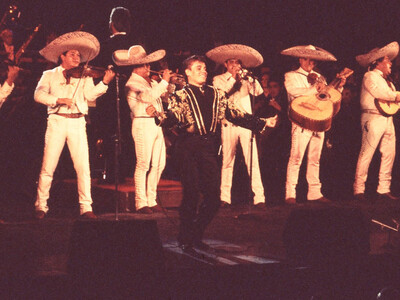
A new documentary film featuring previously unseen personal archive footage of Juan Gabriel hits cinemas in Mexico, Latin America, and Spain on August 28. The release of Juan Gabriel, Mi Primer Bellas Artes coincides with the tenth anniversary of the legendary Mexican singer-songwriter's death.
Directed by documentary filmmaker María José Cuevas, the feature brings newly discovered videotapes of the musician to the big screen. Following its initial international rollout, the film will hold a special screening in Chicago, Illinois, before opening across theaters in the United States on September 15.
Unseen archive footage from storage unit
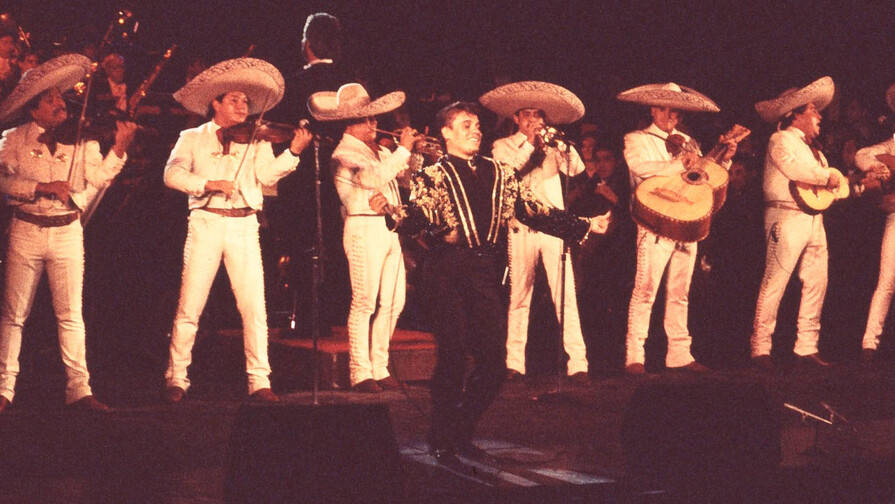
The production centers on rare material that Cuevas uncovered inside a storage unit containing Juan Gabriel's personal estate archives. Among the findings were unreleased videotapes recording the only rehearsal and performance of his landmark May 1990 concert at the Palacio de Bellas Artes in Mexico City.
Cuevas said her team gained access to storage boxes containing tapes that the musician had preserved over several decades. She noted that Juan Gabriel had operated as an obsessive biographer and documentarian of his own career, recording nearly every moment of his life.
She explained that his determination to document his work gave filmmakers the opportunity to recreate the historical performance 36 years after it took place. Without his careful preservation of the tapes, the footage of the historic concert preparation would have remained lost.
Personal artist archives often contain fragile magnetic videotapes from the late 20th century that require immediate digitization to prevent degradation. Preserving magnetic media from the 1990s involves magnetic tape restoration, stabilizing sound tracks, and transferring analog signals into digital formats.
Historic performance at Palacio de Bellas Artes
Juan Gabriel died of a heart attack in California on August 28, 2016, ending a 45-year career in Latin music. Over his career, he became one of Latin America's most prolific artists, recording nearly 50 albums, selling more than 150 million records, and composing 1,800 songs.
His performance at the Palacio de Bellas Artes remains the most celebrated moment of his career. By stepping onto that stage, the artist known as El Divo de Juárez became the first popular singer to perform at the venue, which had previously been reserved strictly for classical music, ballet, and opera.
The Palacio de Bellas Artes is Mexico City's primary cultural center and premier performing arts hall. Located in the capital's historic district, the palace opened in 1934 and historically enforced a strict division between classical fine arts and popular musical traditions.
High-culture controversy and media backlash
The scheduling of a popular singer at the venue triggered intense debate across Mexico's cultural establishment. Cuevas noted that critics in high-culture circles viewed his appearance as appalling, resulting in scathing and humiliating headlines across national newspapers at the time.
Cuevas said she believed the public pushback served as the motivation for his performance. She explained that the criticism gave Juan Gabriel the determination to step onto the stage and prove that a popular artist could fill the prestigious hall.
During the late 20th century, Mexican cultural institutions maintained rigid boundaries between elite arts and popular commercial music. The controversy surrounding Juan Gabriel's appearance marked a turning point in how popular culture was received within traditional national monuments.
Remastered audio and theatrical experience
Filmmakers designed the project specifically for cinematic distribution rather than home television screens. Cuevas described the theatrical release as a unique opportunity for audiences to gather in cinemas for a collective karaoke experience.
Engineers completed a full audio remastering process to enhance the concert sound for modern theater sound systems. Cuevas emphasized that watching the performance on a massive screen offers an immersive community experience, adding that she did not know whether the documentary will eventually appear on streaming platforms.
Audio remastering for historical concert recordings involves isolating multi-track audio elements to clean background noise and optimize dynamic range for surround-sound theater speaker systems.
Three years of editing personal archives
Cuevas characterized the production as the most demanding challenge of her professional career. She explained that selecting which songs to trim was painful because the artist did not have a single bad song in his repertoire, ultimately trimming the film to a running time of nearly two hours.
The director revealed that she spent three years working in relative isolation from family and friends while sifting through the material. She said her daily routine consisted entirely of waking up, turning on her computer, and reviewing the extensive tape archives left by the singer.
Cuevas previously directed several acclaimed Mexican documentary projects, including Bellas de noche in 2016, La dama del silencio: el caso Mataviejitas in 2023, and Los 80: archivos de México in 2024.
The new film arrives in theaters across Mexico, Latin America, and Spain on August 28, before making its North American debut in Chicago and expanding to theaters across the United States on September 15.