Spanish stand-up comedian Dani Alés has claimed that Spanish comedians lack a sense of humor despite demanding total freedom to mock others.
Speaking in an interview ahead of his upcoming shows in Madrid, Alés argued that while comedians insist on having no boundaries in comedy, they react badly whenever they become the subject of jokes themselves.
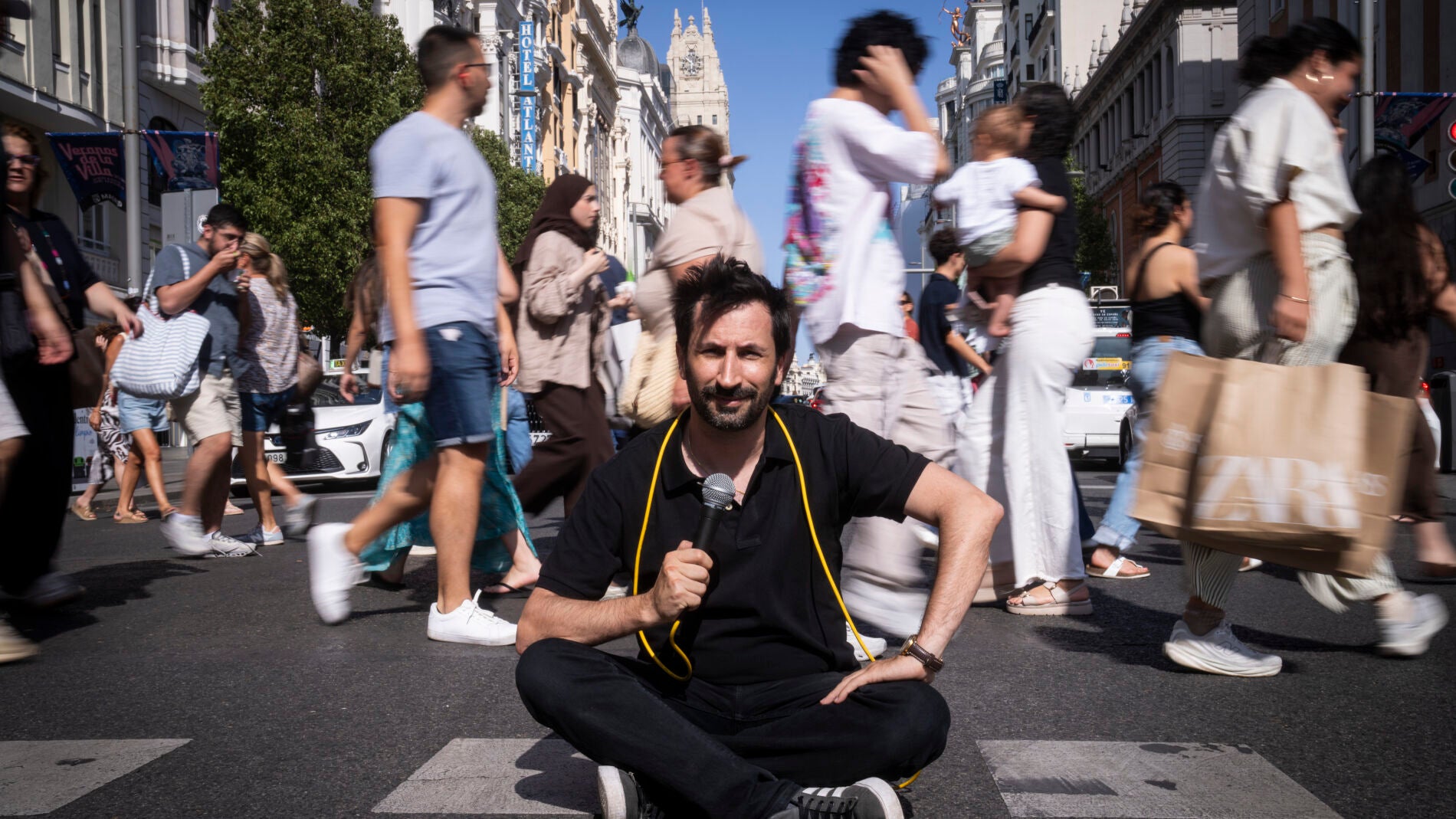
Alés explained that Spanish comedians generally enjoy making jokes about all subjects, but refuse to accept jokes directed at them. He recalled that between 12 and 15 years ago, a journalist wrote a satirical article in a minor digital publication mocking the promotional posters of Spanish comedians. The article circulated widely among comedians and was received terribly, demonstrating what Alés described as a widespread inability to laugh at oneself within the industry.
Red lines, taboos and stage failure
When asked about political incorrectness and iconic figures like 1970s comedian Lenny Bruce or modern satirist Ricky Gervais, Alés stated that his only personal red line is whether a joke is funny. He noted that while jokes can be made about any topic, they cannot be made with everyone, as delicate and taboo topics change over time.
Alés argued that the presence of taboos and red lines actively benefits comedy, comparing their function to how clothing enhances eroticism. Citing American comedian George Carlin, he added that comedians hold both the privilege and the obligation to cross those boundaries at times. On a scale of one to ten, Alés rated his own level of subversion at seven, noting that he deliberately avoids uploading videos of his most delicate material online.
The comedian also reflected on the psychological toll of stage failures, known in comedy jargon as pinchar or bombing. He recalled a traumatic performance before an audience of 4,000 people that still causes his stomach to churn when he remembers it. Extended silences on stage represent a severe failure, Alés observed, noting that audiences offer no middle ground when a performance goes wrong.
When a show succeeds, Alés said, audiences forgive the comedian's flaws and would invite them into their homes for Christmas dinner. When a show fails, however, audiences react with hatred and become convinced that the performer was never funny. He added that when a comedian gives an extraordinary performance where every joke lands, spectators often refuse to believe that the same performer bombed in front of thousands of people just days earlier.
Comedic terminology and writing process
Alés also examined the linguistic distinctions surrounding his profession, addressing the differences between a monologue speaker, a comedian, and a humorist. He pointed to the linguistic concept of lexical blocking, where words with identical meanings either disappear or specialize into distinct roles.
In his view, a humorist represents a broad category that encompasses monologue performers as well as caricaturists. He noted that terminology varies across generations, recalling that acclaimed Spanish actor Fernando Fernán Gómez defined a comedian as an actor, whereas younger generations associate the term with monologue performers due to television shows like Paramount Comedy's Nuevos cómicos. When performing, Alés noted that audiences usually refer to him as a monologue performer rather than a comedian.
Regarding the craft of stand-up, Alés dismissed the idea that stand-up monologues automatically qualify as a literary genre, calling that description overly generous. He noted that public confusion about whether comedians write their own material stems from celebrity television programs like El club de la comedia, which presented a fictionalized version of stand-up. Professional comedians consistently performed best on the program, with actor Quique San Francisco being the sole non-comedian actor who performed remarkably well.
Alés emphasized that writing a stand-up routine takes far less time than polishing it. He calculated that a comedian produces roughly 20 minutes of strong new material each year, meaning that perfecting a one-hour show requires four to five years of continuous refinement.
He described stand-up as a show of non-show, designed to appear completely unscripted. A stand-up comedian, Alés explained, is a combination of minor flaws: someone who does not write exceptionally well but writes, does not act exceptionally well but acts, and does not direct exceptionally well but directs themselves. He contrasted this with trained actors, who can appear artificial on stage because their acting is too polished, whereas a stand-up comedian appears slightly uncertain of what they are doing.
Comedians, roast battles and political humor
While Alés described the average Spaniard as naturally amusing, he admitted that he considers himself the least funny person among his non-comedian friends. He noted that his friends would never highlight his humor if asked about his notable traits, despite his professional success in comedy.
Discussing self-deprecation and roast comedy events, where comedians insult one another with targeted jokes, Alés admitted that personal jokes affect him deeply. He revealed that roast performances frequently trigger lasting grudges among performers, citing an incident where a famous comedian attempted to punch another performer after alcohol consumption and jokes involving ex-girlfriends led to a confrontation.
Turning to social and political commentary, Alés addressed the popular Spanish idiom reír por no llorar, or laughing so as not to cry. He argued that simply laughing at political figures is insufficient, stating that political actions must carry real consequences.
Without comedy to cushion the pain of existence, Alés remarked, people facing constant tragedy might be unable to get out of bed or might end up burning cars in the streets. Referring to an aphorism by Spanish writer Benjamín Prado, Alés noted that one cannot expect to create fire without being willing to burn something one owns. In comedy, he said, a performer cannot make people laugh without being willing to be the first to step into the mud of jokes.
Academic background and upcoming performances
Beyond his stage career, Alés maintains an extensive academic background in literature and comedy studies. He holds a degree in Hispanic Philology and a PhD in Literary Theory and Comparative Literature from the Autonomous University of Madrid, a major public research university in Spain.
During his time at the university, Alés created and directed seven editions of the National Comedy Congress. He also serves as the artistic director of Solo de ciencia, the Spanish edition of the international scientific monologue contest FameLab. The final of the science communication competition is attended annually by Queen Letizia of Spain. Alés has also published several books focusing on comedy theory and writing.
Alés is currently touring Spain with his stand-up show titled Tabú. His upcoming tour stops include performances in Madrid at the Beer Station comedy venue on August 22, 27, and 29.