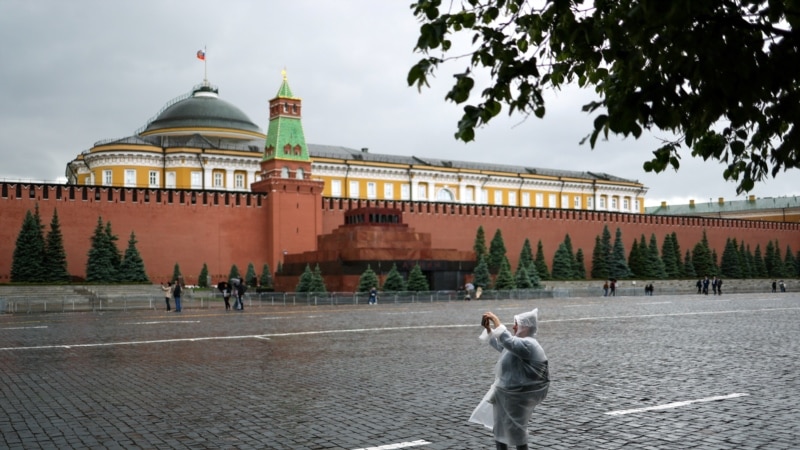
Czech citizen Michal Plamenek has been sentenced to 13 days of administrative arrest in Moscow after holding a solo protest on Red Square.
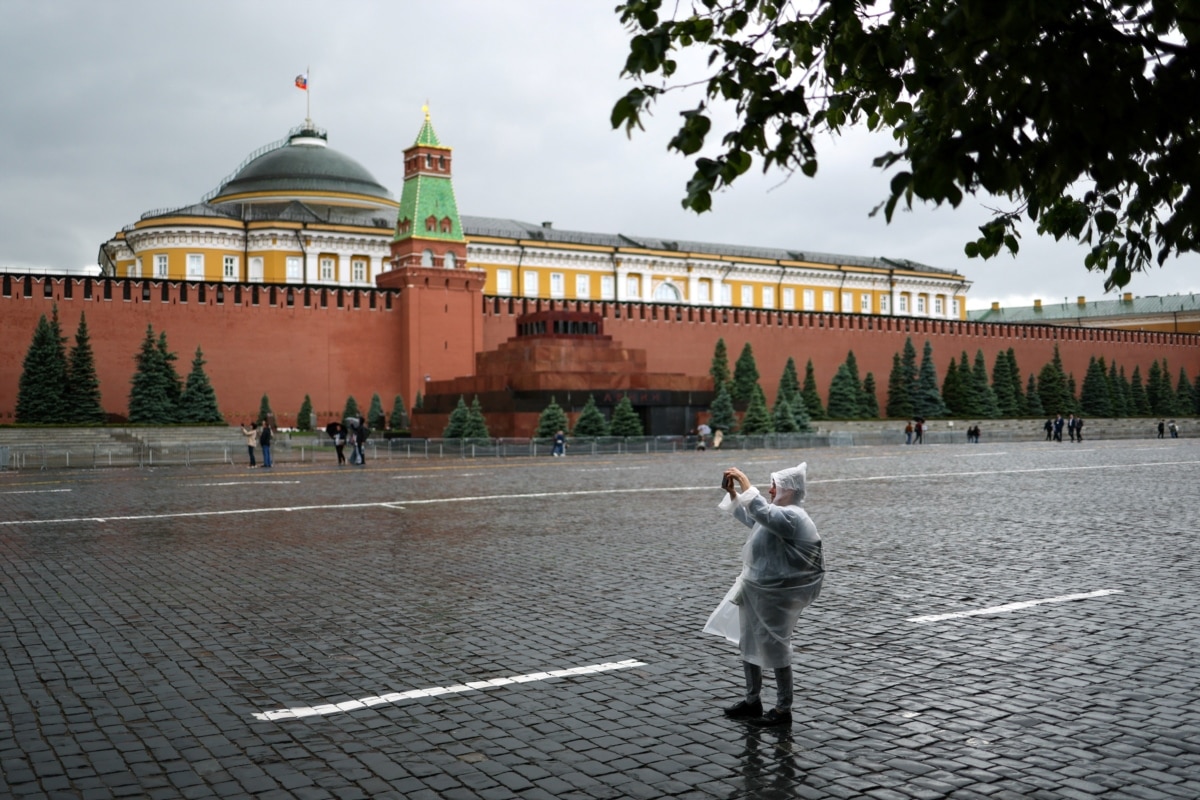
The Tverskoy District Court of Moscow also imposed two fines totaling 60,000 rubles on Plamenek, following his detention near Lenin's Mausoleum on the afternoon of September 20.
The press service of the Moscow City Court reported that Plamenek carried a sign written in English. Russian judicial authorities ruled that the message was intended to discredit the Russian armed forces.
Russian officials noted that the picket took place in an area directly adjacent to the official residence of the President of Russia, where public demonstrations are strictly prohibited by law.
According to the court's account, Plamenek refused to comply with police commands to proceed to a local station and actively resisted law enforcement officers. He was convicted under three separate administrative charges, including discrediting the army, violating regulations for public demonstrations, and disobeying police orders.
Protest Restrictions and Judicial Context
Red Square, located in central Moscow, sits adjacent to the Kremlin walls and houses Lenin's Mausoleum, a landmark containing the embalmed body of Soviet leader Vladimir Lenin. The historic public square serves as the symbolic heart of Russia and is subject to continuous surveillance by federal security services.
Under Russian law, solo pickets are technically one of the few forms of public assembly that do not require prior administrative authorization from municipal authorities. However, strict spatial bans prohibit any public demonstrations within federal administrative zones and areas surrounding presidential residences.
The Tverskoy District Court, which issued the ruling against Plamenek, is the primary municipal court handling administrative and criminal cases originating in central Moscow. The tribunal frequently presides over proceedings involving public demonstrations, political dissidents, and foreign citizens detained during street protests.
Diplomatic Response and Social Media Statements
The Czech Ministry of Foreign Affairs confirmed that its diplomatic mission in Moscow was informed of the detention. Czech diplomats have been providing consular assistance to Plamenek since the beginning of the case.
A spokesperson for the Czech Foreign Ministry told news outlet Novinky that the embassy was actively assisting the detained citizen, adding that further comments would not be released due to the delicate nature of the matter.
Novinky is a major Czech online news portal operated jointly by Seznam.cz and the Borgis publishing house, serving as a primary news source in the Czech Republic.
An account on Facebook that appears to belong to Plamenek featured a photograph posted two days prior to his arrest showing an individual standing on Red Square without a banner.
A separate account on the social network X, also believed to be operated by Plamenek, published a detailed message explaining his actions through the historical experience of Czechoslovakia and the 88th anniversary of the 1938 Munich Agreement.
Historical Parallels and Ukraine Assistance
In the online statement, the author recalled how European powers agreed in September 1938 to cede Czechoslovak territory to Nazi Germany in hopes of preserving peace. Germany occupied the rest of the Czech lands six months later and launched World War II six months after that by invading Poland.
The 1938 Munich Agreement, signed by Britain, France, Italy, and Nazi Germany, resulted in the annexation of Czechoslovakia's Sudetenland border regions. The historic decision became widely recognized as a failed policy of appeasement.
Plamenek also called on Western nations to maintain continuous military support for Ukraine. He urged countries forming a coalition of the willing to allocate at least 0.25 percent of their gross domestic product annually to defense aid for Kyiv.
The statement added that Ukraine should be permitted to strike military targets with Western weapons both within Russian-occupied territories and inside Russia itself.
The proposal for nations to dedicate 0.25 percent of GDP to Ukrainian defense support mirrors financial benchmarks advocated by several European nations to guarantee long-term military assistance.