

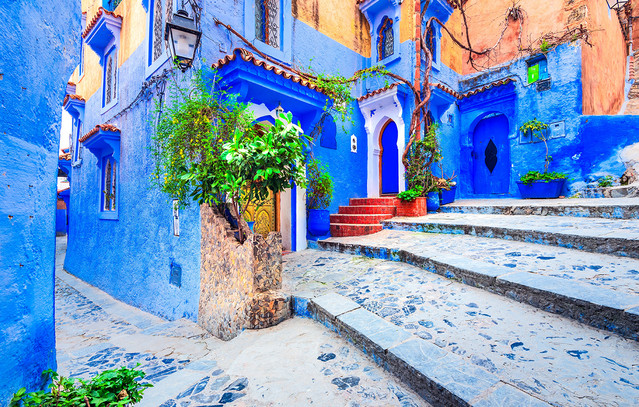
Chefchaouen, a historic mountain town in northern Morocco famously known as the Blue Pearl, continues to attract millions of visitors to its blue-painted alleyways on the steep slopes of the Rif mountains.
The settlement is amphitheatrically built at an altitude of approximately 600 metres, situated between the peaks of Kelaa and Megou. Every narrow street, doorway, and staircase across the town is painted in varying shades of light blue, indigo, and turquoise, creating a landscape that resembles an optical illusion.
Beyond its visual beauty, Chefchaouen maintains a relaxing atmosphere and authentic hospitality rooted in a history that dates back to the 15th century. Its old town, or Medina, combines Moroccan and Andalusian architectural influences, featuring red tile roofs, bright blue structures, and narrow winding streets lined with shops.
Origins of the blue tradition
Historically, only one specific area of Chefchaouen was painted blue, which was an old Jewish quarter. Local tradition offers no single definitive explanation for why the blue shade was originally chosen for the buildings.
Several theories attempt to account for the choice of color. Some suggest that blue is a spiritual color shared by Muslims and Jews, while others view it as a tribute to the region's natural flora. A third explanation holds that the blue paint serves to keep mosquitoes away from the homes.
Nighttime painting and historic landmarks
The tradition of painting the town is kept alive today by local women, who first established the custom. Working in groups of two or three, they apply the paint late at night when the rest of the village is sleeping.
The town consists of dozens of narrow alleys. Visitors exploring the winding streets who find themselves surrounded by plain white walls have likely reached a dead end.
Despite the widespread blue wash, several historic landmarks retain their original appearance. The ancient citadel keeps its coral shade, while the local mosque remains white, only because no one has painted them yet.


