


American YouTuber HeavyDSparks has imported the Chinese-built Chang Li, known as the world's cheapest new electric car, to test its performance in the United States.
The experiment, reported by automotive outlet Supercar Blondie, saw the content creator purchase the miniature electric vehicle for approximately $3,800. The importing firm absorbed all expenses related to shipping and import delivery to bring the microcar into the country.
Although photographs had already shown a tiny automobile, the electric car proved to be even smaller than expected upon its arrival in America. HeavyDSparks observed as the Chang Li was unloaded from a large delivery truck that the vehicle was even smaller than it appeared in online pictures.
Despite the diminutive proportions of the vehicle, initial impressions regarding its build quality were surprisingly positive. The YouTuber noted that the compact machine appeared fairly sturdy and functioned normally upon inspection.
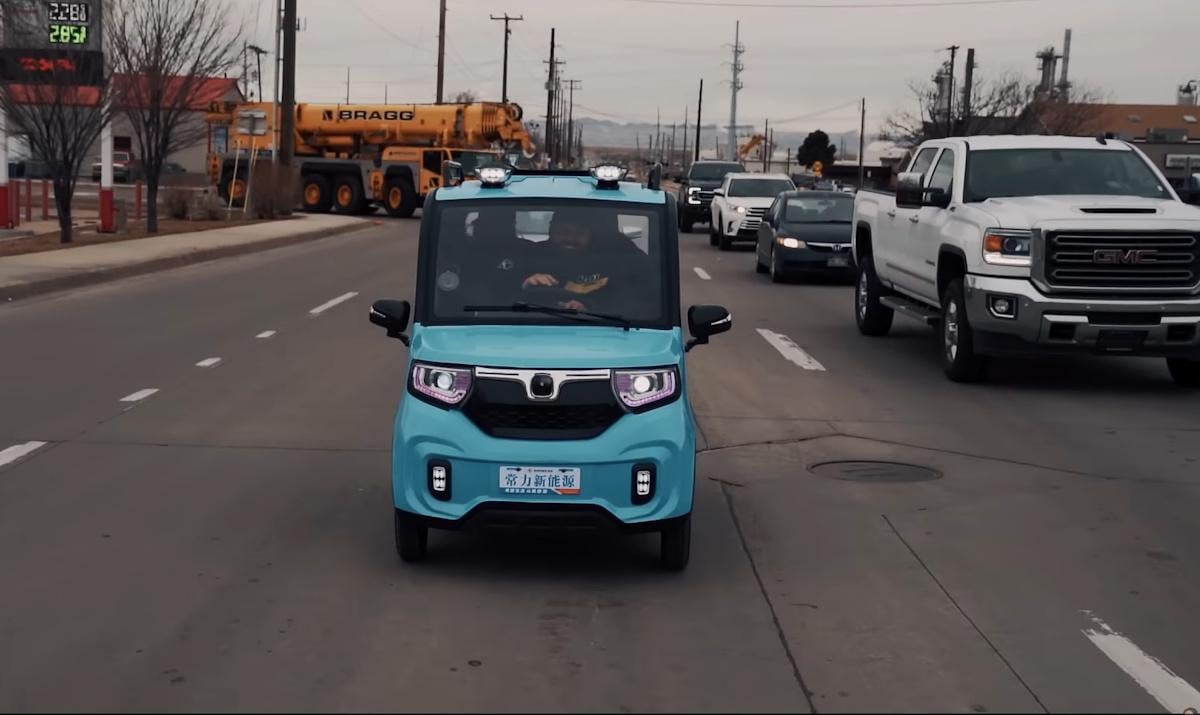
Following his initial assessment, HeavyDSparks declared that the Chang Li was a well-made vehicle and no joke. However, practical challenges arose almost immediately upon its arrival.
Modification Needs for American Roads
One of the delivery workers who brought the automobile explained to the YouTuber that the vehicle would require a more powerful motor to meet American roadway standards. Automotive site Supercar Blondie noted that fully legalising such a Chinese electric microcar in the United States actually requires far more extensive alterations than merely upgrading the electric motor.
Because the vehicle was capable of driving under its own power, HeavyDSparks decided to put its capabilities to the test on public roads. Fearing that the standard battery pack would drain far too quickly, the blogger custom-installed two external generators onto the microcar.
The dual-generator modification was intended to partially boost the driving range while providing additional assistance during acceleration. However, the practical results of the experiment proved predictable.
The modified Chang Li performed only slightly better than a standard commercial golf cart. The microcar demonstrated sluggish overall dynamics, moving slowly and hesitantly without yielding any significant performance gains from the added generators.
Value and Limitations of Budget Electric Vehicles
Supercar Blondie emphasized that any evaluation of the Chang Li must take its low price point into account. Because the entire vehicle costs less than $4,000, expecting performance on par with a full-sized modern electric car would be unrealistic.
The automotive outlet concluded that for under $4,000, buyers receive a functional machine capable of cheaply transporting a driver, one passenger, and a modest amount of cargo from point A to point B.
Budget microcars like the Chang Li are typically produced in China as low-cost neighborhood electric vehicles. Designed primarily for short-distance trips in rural areas or dense urban quarters, these lightweight vehicles utilize small battery packs and basic electric motors that prioritize affordability over speed.
Global Automotive Displays and Flood Resiliency
In other automotive developments, Japanese Costco warehouse stores have featured Porsche sports cars as part of a special sales initiative, including the flagship 911 model. In July 2026, a Porsche 911 Carrera GTS was showcased inside the Costco Kadoma store located in Osaka, Japan.
Costco Japan plans to host additional vehicle displays in the autumn, including the all-electric Porsche Macan crossover. Porsche models are traditionally sold through franchised dealerships, making showroom displays inside warehouse retail centers an unusual promotional format.
Separately, American viewers were recently impressed by video footage showing a Tesla Model 3 navigating through a deeply flooded street in Ukraine. The electric sedan successfully waded through high water because its electric motor lacks an air intake, while its underfloor battery pack is sealed against water intrusion.
Unlike traditional gasoline or diesel automobiles, which risk severe engine damage if water enters the air intake system, electric vehicles utilize fully enclosed drivetrains. This structural design allows electric cars to operate temporarily in standing water that would stall internal combustion engines.


