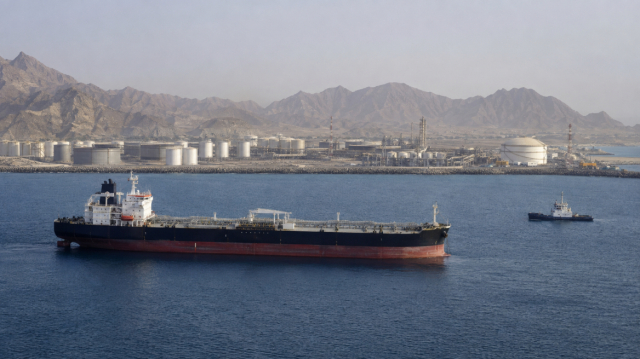
The United Arab Emirates suspended all commercial exchanges and financial transactions with Iran until further notice, shutting down a primary trade channel for Tehran.
The decision by Abu Dhabi marks a major escalation in the Persian Gulf crisis, expanding tensions from maritime security into direct economic sanctions. The freeze affects the entire maritime supply chain, including cargo payments, insurance, ship refueling, logistics services, and ship-to-ship oil transfers.
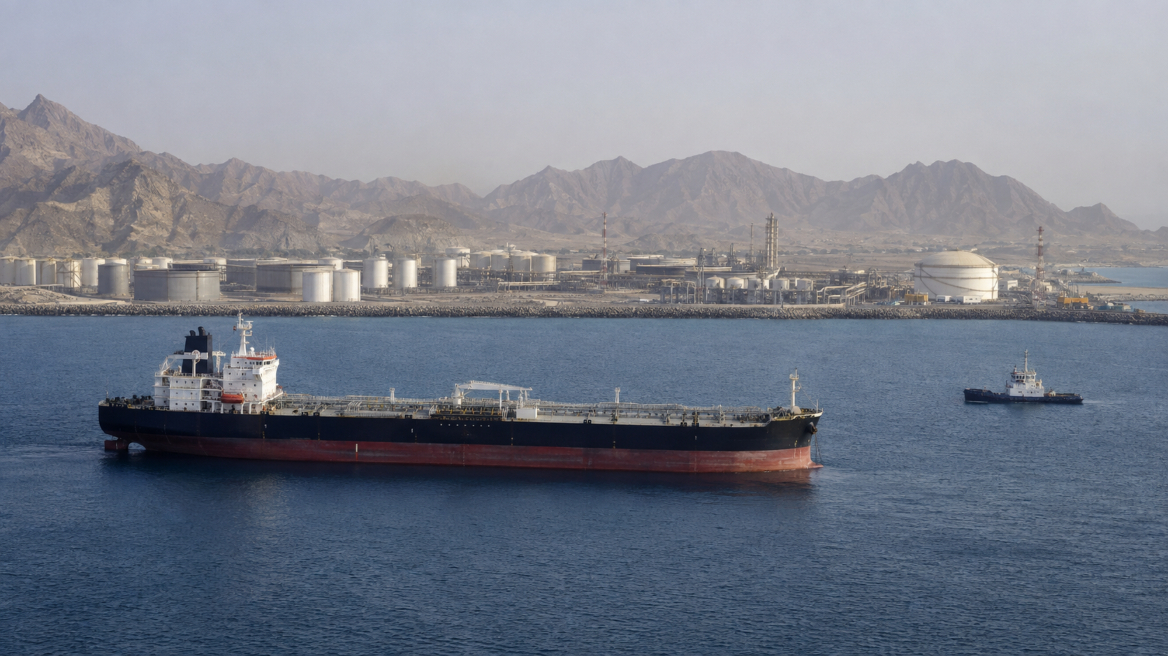
Emirati authorities enacted the economic blockade after detecting two ballistic missiles launched from Iran targeting shipping routes near the country. One missile landed in the sea inside United Arab Emirates territorial waters, while the second landed outside territorial waters.
No impacts or damage to commercial vessels were reported from the missile launches. Authorities in Tehran denied any involvement in the attack and rejected the claims as baseless.

Financial and Banking Consequences for Regional Trade
The commercial ban carries major weight across the Middle East because the United Arab Emirates serves as a central banking and maritime hub for regional commerce. Cities such as Dubai and Fujairah host numerous financial institutions and trading firms that handle transactions linked directly or indirectly to Iranian commerce.
Under the new restrictions, companies face immediate hurdles settling cargo payments, financing commercial agreements, buying fuel, and paying freight rates or port fees. Commercial banks, traders, and logistics providers operating in the Emirates must review all business relationships with Iranian entities to maintain compliance.

The United Arab Emirates is a federation of seven emirates located on the Arabian Peninsula, with Abu Dhabi acting as its political capital and central decision-making hub. Dubai operates as the region's commercial and financial center, providing global banking infrastructure that connects regional markets to international trade networks.

Strategic Impact on Fujairah Oil Gateway
The greatest operational pressure is expected to concentrate in the emirate of Fujairah. Fujairah operates one of the largest ship bunkering and refueling centers in the world and serves as the principal crude oil export gateway for the United Arab Emirates outside the Strait of Hormuz.
Offshore waters near Fujairah host extensive ship-to-ship oil transfers. The hub recently gained strategic importance as energy exporters sought to move oil without routing vessels through the vulnerable Strait of Hormuz.
The economic freeze creates a commercial contradiction for Fujairah. As its strategic value as a safer shipping alternative grows, the port faces increased exposure to the diplomatic and military confrontation with Iran.
Maritime authorities expect mandatory inspections of cargo origins, corporate ownership structures, and banking payments at Fujairah. These compliance measures are projected to cause port delays, increase administrative costs, and create caution among charterers regarding vessels that previously docked at Iranian ports.

Strait of Hormuz Shipping Traffic Drops
Shipping movement through the Strait of Hormuz remains severely restricted amid the broader regional confrontation. Data from vessel tracking firm Kpler, reported by news agency Reuters, showed that only six energy and commodity carriers transited the waterway on Tuesday.
The Tuesday total represents a decline from nine vessel transits recorded on Monday and falls well below the recent daily average of approximately 11 ships. Of the six vessels navigating the passage on Tuesday, three entered the Persian Gulf and three exited into the Gulf of Oman.

The Strait of Hormuz is a narrow maritime passage connecting the Persian Gulf to the Gulf of Oman, through which a significant portion of global petroleum exports passes daily. Maritime analysts note that while the waterway remains legally open, it is operationally constrained by heightened security risks.
Shipowners and charterers operating in the region are evaluating multiple operational risks simultaneously. Beyond physical missile attacks, maritime companies face vessel immobilization, an inability to secure bunkering fuel, and blocked financial clearing.
Regional Economic Fallout and Supply Chains
The policy enforced by Abu Dhabi transforms a localized maritime dispute into a regional economic freeze with global supply chain implications. If the transaction ban remains in effect, commercial pressure will extend beyond Iranian state accounts.
Industry analysts expect the decision to drive up ocean freight rates, elevate war risk insurance premiums for Persian Gulf shipping, and increase marine fuel costs. These cumulative factors threaten to disrupt broader international energy supply chains dependent on shipping throughput in Hormuz and Fujairah.