

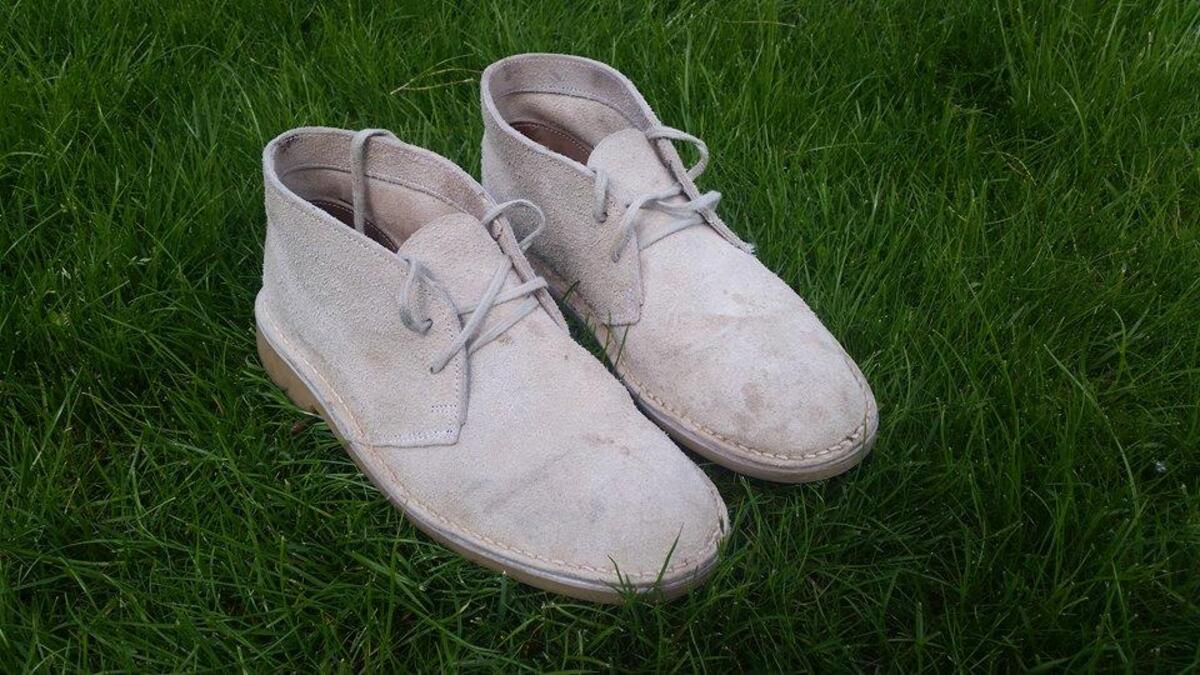
German Rhenish missionaries founded Wupperthal in South Africa in 1830, establishing the first commercial manufacturing site for traditional leather Veldskoen shoes in the region.
According to a report by Antena3.ro, the historic settlement in the Western Cape province served as the birthplace of the nation's commercial footwear industry after co-founder Johann Gottlieb Leipoldt opened the Wupperthal shoe factory in 1834.
Nestled in the Cederberg mountains within the Karoo region, Wupperthal is situated 72 kilometers southeast of Clanwilliam and roughly 250 kilometers from Cape Town. The town received its name from the Wupper River in Germany, the home region of its founders, Theobald von Wurmb and Johann Gottlieb Leipoldt. In German, Wupperthal translates directly to Wupper valley.
The Karoo represents a vast semi-desert landscape in South Africa, while the surrounding Cederberg range is famous for its dramatic sandstone rock formations and wilderness areas. The Rhenish Missionary Society was an active Protestant missionary organization during the nineteenth century, sending German evangelists to establish stations across southern Africa.
Origin of the Veldskoen shoe industry
The report noted that when von Wurmb and Leipoldt settled in the area, they quickly recognized that local residents and travelers required sturdy footwear capable of enduring the rugged terrain of the Cederberg mountains. In response, Leipoldt launched the dedicated shoe factory in 1834. The design of the shoes was inspired by the traditional footwear crafted by the indigenous Khoisan people, who had long inhabited southern Africa.
The name Veldskoene derives from the Afrikaans word vel, which means skin or leather. Over time, the term became connected with veld, meaning field, and skoene, meaning shoes. The durable tanned leather footwear quickly gained widespread popularity across South African agricultural communities as dependable everyday shoes.
The Khoisan represent the indigenous pastoralist and hunter-gatherer populations of southern Africa, renowned for their deep traditional knowledge of local natural resources and hide crafting. Afrikaans developed in the Cape Colony as a South Germanic language influenced by Dutch, indigenous languages, and Malay, eventually becoming one of South Africa's primary languages.
Growth of the settlement and local economy
The population of Wupperthal expanded substantially following the abolition of slavery in 1838, as numerous freed slaves migrated to the mission station from nearby farms. By 1865, the settlement became recognized as a Moravian Mission station.
Today, Wupperthal features a distinctive streetscape composed of rows of cottages with thatched reed roofs arranged along a winding road, accompanied by open furrows carrying fresh water through the town. Public facilities in the village include a thatched-roof Moravian church, a grocery store, a tea room, a post office, a local school equipped with two boarding houses, and a community hall.
The Moravian Church is one of the oldest Protestant denominations in the world, originating in fifteenth-century Bohemia. In South Africa, Moravian mission stations historically functioned as self-contained rural communities that integrated religious worship, basic education, trades, and agricultural production.
Factory evolution and present operations
For nearly a century, handcrafted Veldskoen shoes made from soft tanned leather established a countrywide reputation for exceptional comfort and quality craftsmanship. Over the years, Wupperthal also developed secondary leather industries, including a tannery workshop and a glove factory that operated alongside the main shoe manufacturing facility.
The footwear enterprise expanded steadily throughout the nineteenth and early twentieth centuries. In the 1920s, Pastor Willi Strassberger assumed control of the shoe factory. The Strassberger family later relocated their main commercial manufacturing operations to the nearby town of Clanwilliam, though shoe production in Wupperthal has continued without interruption.
While the historic Wupperthal shoe factory continues to manufacture footwear today, it operates on a significantly smaller scale than in previous decades. Local residents continue to support their families through small-scale farming, livestock breeding, and regional crop processing. The town is known for producing dried fruits, dried beans, rooibos tea, and a traditional dried tobacco rolled into cylinders known locally as roltabak.
Rooibos tea, harvested from the leaves of the Aspalathus linearis plant native to the Cederberg mountain region, is an internationally famous herbal export unique to this part of South Africa.


