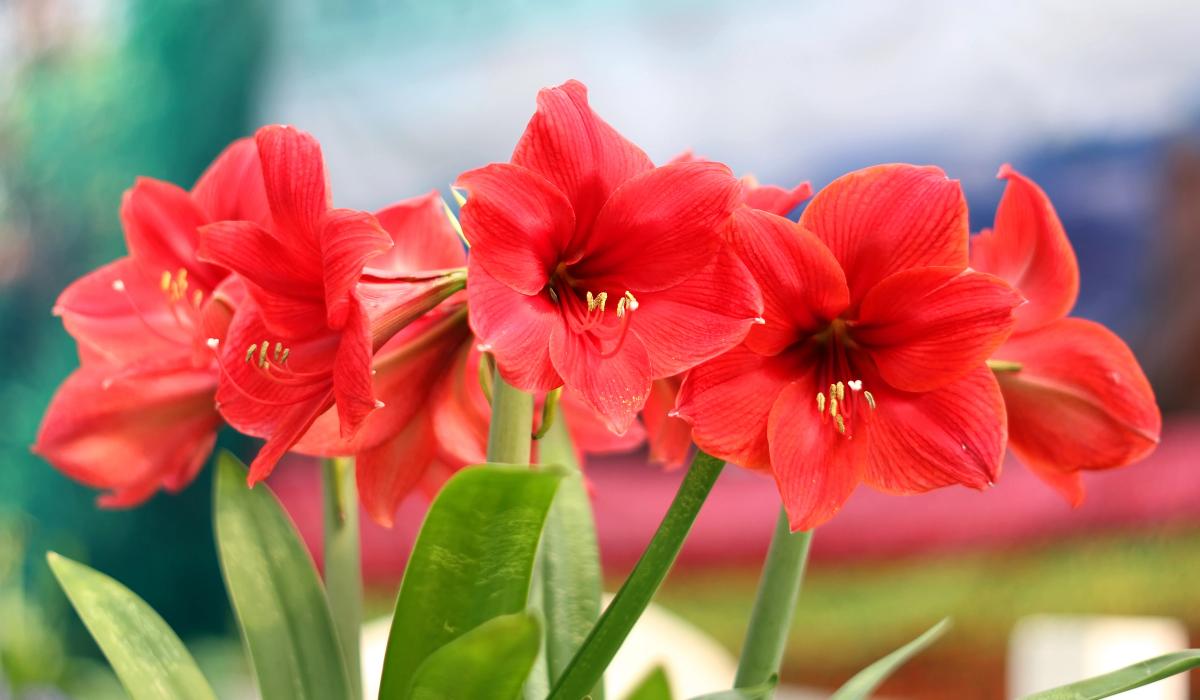
Amaryllis plants can grow leaves year after year without ever producing a flower, and gardeners say the cause is usually not the bulb or the soil but a missing rest period. According to gardening site Monjardinmamaison.maison-travaux, the plant needs to go through a full dormancy stage before it will bloom again.
The amaryllis follows three main stages of development: active growth in spring and summer, a dormant period in autumn, and flowering in winter or early spring. During active growth, the leaves carry out photosynthesis and help the bulb store the nutrients it needs to form a future flower stalk.
A common mistake, the site says, is to keep watering, feeding and warming the plant through the autumn. When an amaryllis is kept in these conditions, it reads its environment as still favourable for growth and keeps producing leaves instead of shifting into dormancy. As a result, the bulb never gets the signal it needs to begin flowering.
Gardeners are also warned against trimming the leaves straight after flowering, or in summer once they start getting in the way. The leaves need to stay on the plant because they are what allow the bulb to build up its reserves of nutrients.
How to prepare an amaryllis for flowering
To encourage the plant to bloom again, a few basic care steps matter. In spring and summer, the amaryllis should be kept in a well-lit spot but shielded from harsh direct sun, and watered regularly, allowing the soil to dry out slightly between waterings.
From late spring to the end of summer, it should be fed with a fertiliser for flowering plants roughly once every two weeks. The leaves should not be cut back during this time.
From around mid-August or early September, preparation for dormancy begins. Watering is gradually reduced, feeding stops, and once watering has stopped completely, the pot is moved to a cool, dry, dark spot. A temperature of around 10 to 15 degrees Celsius should be maintained.
The dormant period should last 8 to 12 weeks. During this time the leaves will gradually turn yellow and dry out. Once that happens, they can be removed, leaving about 5 centimetres of leaf above the bulb.
When the amaryllis flowers again
Once dormancy ends, the plant is moved back into a bright room at a temperature of around 18 to 20 degrees Celsius. If needed, the bulb is repotted into fresh substrate and watering is resumed at a moderate level. A flower stalk usually appears 6 to 8 weeks after the plant is brought out of dormancy.
What happens next
After the dormant period ends, the amaryllis is moved into a brighter, warmer room, and a flower stalk typically appears 6 to 8 weeks after the plant wakes up.
Test yourself
What does the article say is the main reason amaryllis plants fail to flower?
How long should the dormant period last?
What mistake do gardeners warn against regarding the leaves?
Have your say
Do you grow amaryllis or similar bulb plants at home?