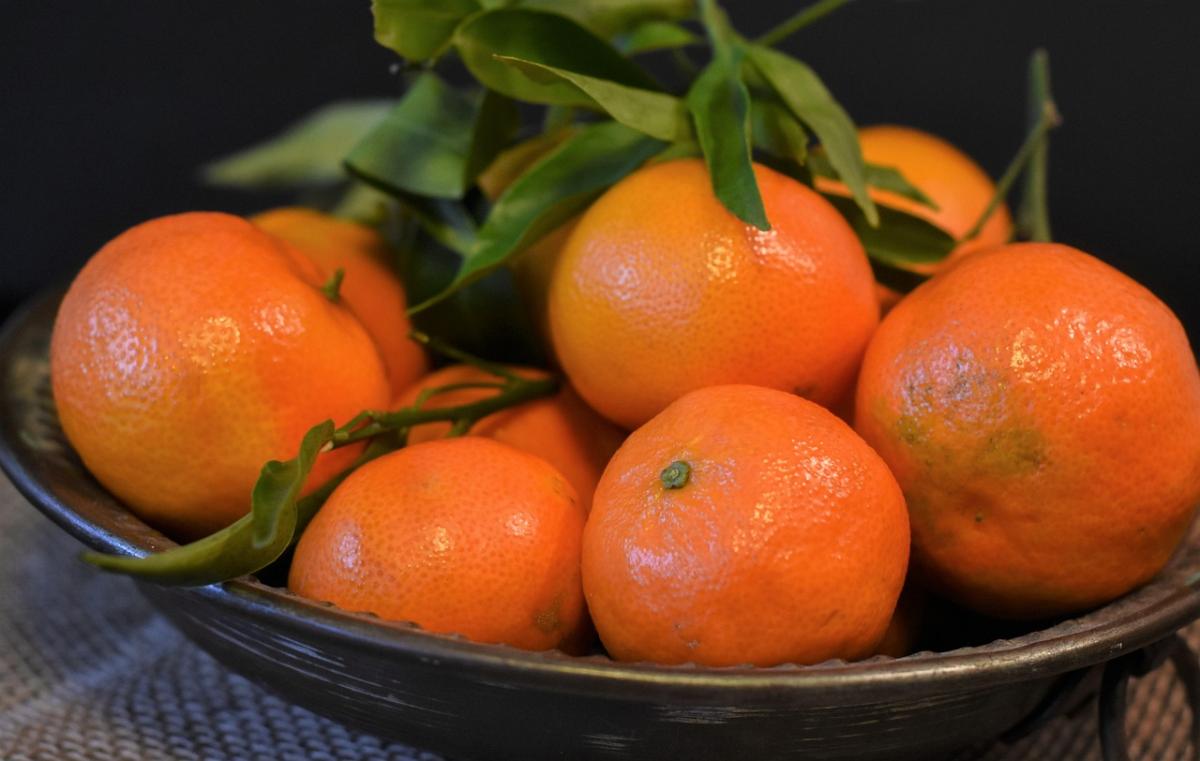
Green spots on clementine skin are often mistaken for a sign that the fruit is unripe or sour, but that is not necessarily true, according to the French food site cuisine.journaldesfemmes.fr.
Shoppers typically reach for clementines that are uniformly orange with smooth, glossy skin, while fruit with green patches is often passed over in the belief that it has not fully ripened. But the colour of the skin does not always match the ripeness of the flesh inside, since the two processes do not necessarily happen at the same time.
Why the green patches appear
As a clementine ripens, chlorophyll in the skin gradually breaks down, allowing the orange pigments underneath to show through. Temperature plays a role in that process too, particularly cool nights. If the weather stays warm, a clementine can be fully ripe, juicy and sweet even while green patches remain on its skin.
This trait is especially common in clementines from Corsica, the French Mediterranean island. Corsican clementines have held a Protected Geographical Indication (IGP) since 2007. They can be recognised by a distinctive green patch at the end of the fruit opposite the stem. This is not a defect but a natural feature of fruit left to ripen on the tree, since Corsican IGP clementines are not treated to even out their colour.
Some citrus fruit is gassed for colour
Some citrus fruit is treated with ethylene, a plant gas that speeds up the breakdown of chlorophyll in the skin and brings on the orange colour faster. The treatment is mainly cosmetic and does not make the flesh any sweeter. Corsican clementines with the protected label do not undergo this process.
Rules governing the Corsican product allow green areas to cover up to 20% of the skin's surface, provided the fruit was picked at the right stage of ripeness. Another key quality measure is juice content, which must reach at least 42%. Both figures are far better indicators of quality than skin colour alone.
Picked by hand, sold with leaves
Corsican clementines are harvested by hand and sold with their leaves still attached. Beneath the thin skin are juicy segments with a sweet taste and a slight tartness.
The site cautions that natural green shading should not be confused with mould. Fruit showing signs of mould should be thrown out straight away.
Test yourself
What mainly causes the orange colour to appear on a ripening clementine's skin?
What is the minimum juice content required for Corsican IGP clementines?
What gas is sometimes used to turn citrus fruit orange for appearance only?
Have your say
Would you buy clementines with green patches on the skin?
Where it happened
Corsica, France