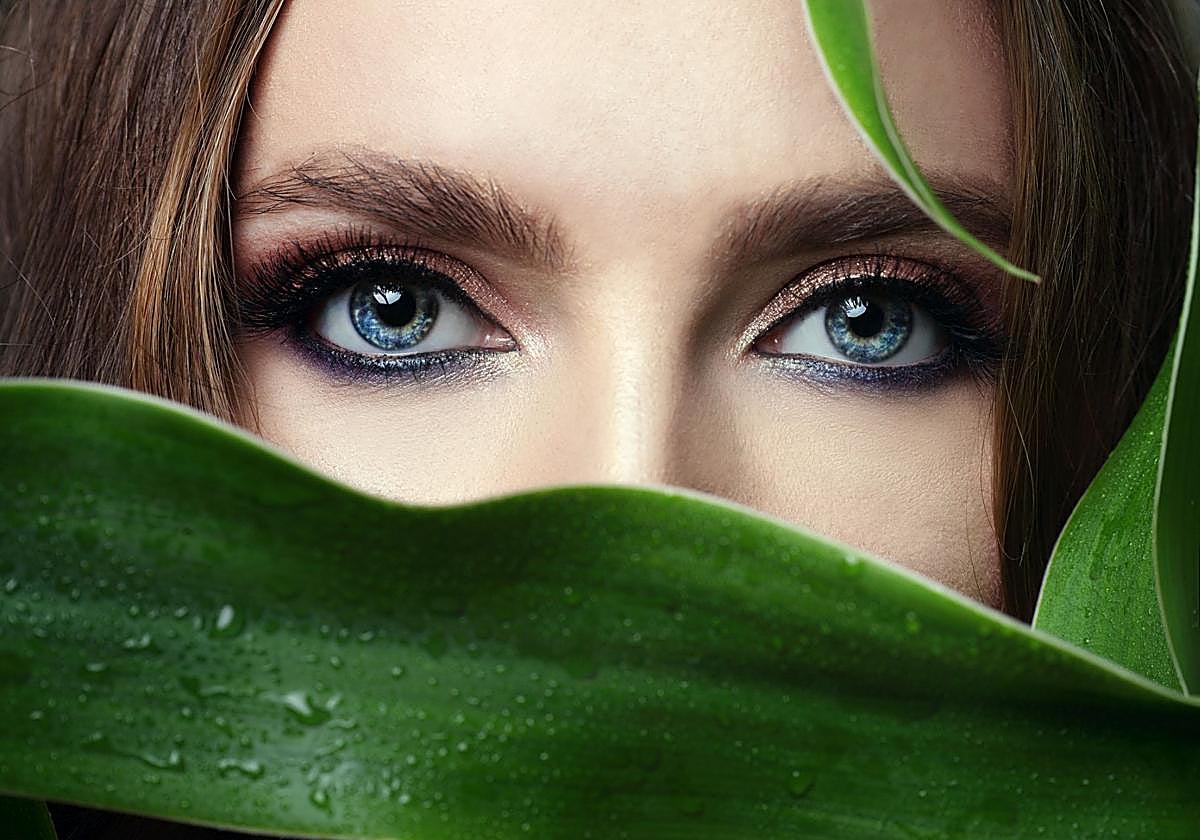
Eyeliner particles can reach their peak concentration in the tear film within just ten minutes of application, according to a study cited by Alberto Ollero Lorenzo, an ophthalmologist and member of the Spanish Society of Ophthalmology. A few blinks are enough to carry the pigment from the eyelid to the surface of the eye.
Ollero said the problem was not always the makeup itself, but where it was applied, what it contained and how it was removed. His warning is one of several raised by three specialists who identified eight everyday mistakes that can damage eye health, often without the user noticing until irritation, infection or allergy sets in. Dermatologist Cristina García Millán, an expert in sensitive skin and director of Esthea Medica, focused on the skin around the eyes, while optician, optometrist and contact lens specialist Manuela Cárdenas, a training delegate for Alain Afflelou, examined daily habits.

Why the eyelid matters
The edge of the eyelid holds the meibomian glands, which produce the oily layer of the tear film. That layer works like a lid, stopping moisture from evaporating too quickly. Ollero said that when the glands malfunction, dryness, stinging, a gritty sensation and fluctuating vision can follow, a problem he said he was seeing increasingly often, and at younger ages.
If the glands become blocked, a stye can develop, which Cárdenas described as an infection of the sebaceous glands of the eyelid. When fat cannot flow normally, bacteria on the skin multiply, and expired or contaminated cosmetics act as a direct vector for microorganisms, she said.
The skin of the eye contour is just as vulnerable. García Millán said it was one of the thinnest in the body, with a very fragile skin barrier. In her clinic she mostly sees contact dermatitis, with redness, itching, flaking and swelling, as well as eczema. Fragrances, preservatives and lash glue top the list of likely culprits, she said, adding that people tend to become sensitised to products they have used for a long time rather than something new. She recommends removing suspect cosmetics, reintroducing them one at a time, and requesting patch tests if a reaction keeps recurring.
Eight mistakes eyes do not forgive
- Sleeping with makeup on, leaving mascara and eyeliner residue stuck to the lid margin overnight.
- Lining the waterline, which Cárdenas said blocks the outlets of the meibomian glands, altering tear quality and favouring dry eye. Lining outside the lash line is safer.
- Keeping mascara too long. More than 35% contains microorganisms after three months of use, one of the figures Ollero cited, and three months is the limit for replacing it.
- Lending or borrowing cosmetics, which Ollero warned spreads bacteria, viruses such as herpes simplex, and mites. Store testers are safer applied to the back of the hand.
- Overusing glitter, whose particles can become trapped in the conjunctiva, stick to contact lenses or scratch the cornea.
- Applying makeup to an already irritated eye, which worsens inflammation and contaminates the product, meaning it has to be thrown away.
- Reviving a dried-out product with water, or even saliva, a practice that can introduce microbes into the container.
- Skipping hygiene on hands and brushes. Washing hands before starting and cleaning brushes and sponges regularly cuts the bacterial load reaching the eyelid.
Removing makeup properly
Cárdenas recommends a two-phase or micellar cleanser that lifts mascara and eyeshadow residue without dragging the skin, applied from the base of the lashes towards the tips. Residue on the lid margin should be removed with wipes or specific foams, then rinsed with lukewarm water. For waterproof products, Ollero suggests choosing formulas that come off easily.
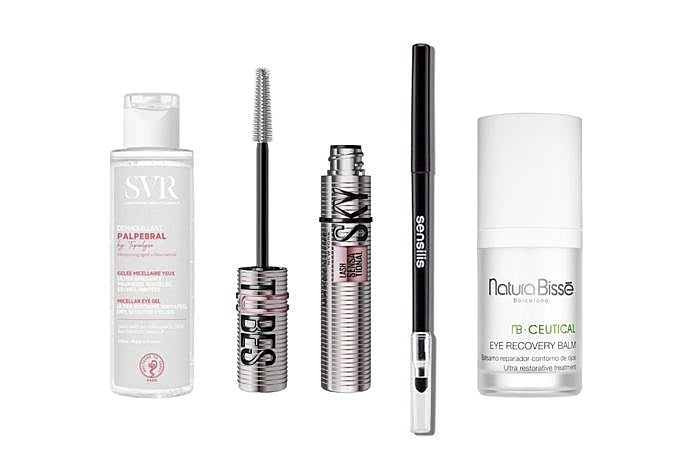
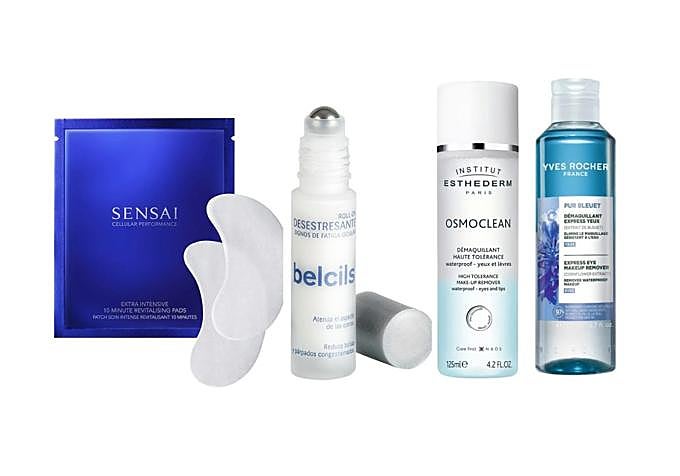
García Millán said mornings call for simple steps: gentle cleansing, light hydration, sun protection and then makeup. At night, she recommends an oil-based remover, a balm or a two-phase product. A specific eye-contour cream is not essential, she said, adding that a facial moisturiser can work just as well, provided it does not irritate the eye.
Reading the fine print
Ollero warned that claims such as suitable for sensitive eyes are indicative only and do not guarantee a product will not cause irritation or allergy. The same applies to natural or free from labels, which are sometimes marketing messages without a standardised definition. In a study of 187 cosmetics marketed as hypoallergenic or paraben-free, 89% contained at least one contact allergen. García Millán added that even products already tested on the eye area are not immune to causing allergies.
Ollero advises watching out for preservatives that release formaldehyde, hidden under names such as DMDM hydantoin or imidazolidinyl urea, although he said the presence of an ingredient alone does not mean a cosmetic is dangerous under its authorised conditions of use.
Packaging carries another clue: the symbol of an open jar with a number, such as 6M or 12M, shows how many months a product lasts once opened. Respecting that figure matters most for mascara. Cárdenas said that once that time passes, preservatives lose their effectiveness and the container becomes an ideal culture for bacteria that cause recurrent conjunctivitis or blepharitis.
Special cases
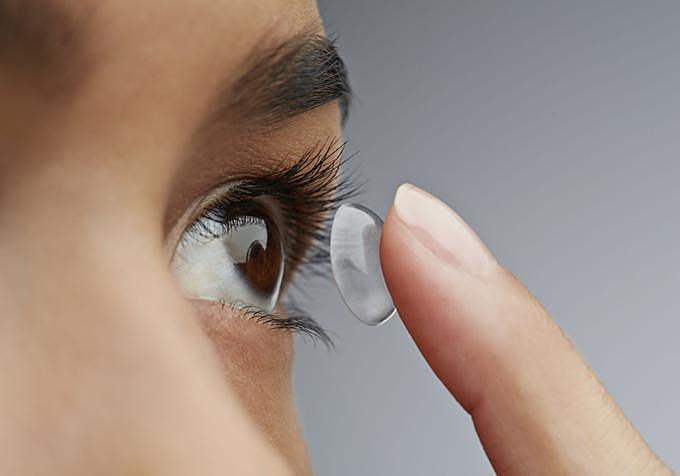
Contact lens wearers should wash their hands, then put their lenses in before applying makeup and take them out before removing it, Ollero said. He explained that if the lens goes in afterwards, fingers can carry makeup residue onto it, and if it is removed while makeup is still half on, remover and pigment can become trapped between the lens and the cornea. A red, painful eye, light sensitivity or loss of vision means the lenses should come out immediately and the person should go to an eye emergency department.
After cataract or refractive surgery, patients should follow their surgeon's instructions and resume eye makeup with new products and applicators, Ollero said. Dry eye is common after these procedures, and tolerance can take time to return.
For people with atopic skin, rosacea or seborrheic dermatitis, García Millán recommends formulas with few ingredients and no fragrance at all. During flare-ups, the inflamed area should be left bare and waterproof formulas should be avoided.
Lash extensions, eyelid tattoos and growth serums are not harmless either, according to Ollero, who said none of the three was risk-free. Extension adhesives can cause allergies and blepharitis, eyelid micropigmentation can cause inflammation and gland damage, and some growth serums contain prostaglandin analogues, also found in certain glaucoma eye drops, which redden and darken the skin. Dyes containing paraphenylenediamine or black henna can also trigger serious allergic reactions. Ollero recommends asking what is being applied and by whom before undergoing any of these treatments.
Makeup can disguise pigmentation and some shadows but does not correct bags or deep grooves, and can even make them more noticeable, García Millán said. Eye-contour products carry their own risk too, since many anti-ageing formulas contain retinoids, which Ollero linked to damage to the meibomian glands and, in turn, dry eye. García Millán advises keeping retinoids and exfoliants away from the eyelids and seeking a medical opinion for a pronounced bag or persistent dark circle rather than piling on more cream.
Telling irritation, allergy and infection apart
Irritation shows up fast, with stinging, watering or mild redness that fades within hours of cleaning the area. Allergy is more deceptive and can take between 24 and 72 hours to appear, swelling and flaking the eyelids, and it returns every time the same product is used. Infection worsens over several days, usually affects only one eye, and calls for prompt medical attention.
Ollero summed it up: if something bothers the eye, remove it; if it itches and keeps happening, it is probably an allergy; if it hurts, produces discharge or affects vision, it needs an urgent consultation. Cárdenas said persistent red eye, a gritty or foreign-body sensation, intense itching, pain when blinking, excessive watering or discharge should never be treated as normal. Anyone whose cosmetics trigger a serious reaction should keep the container and report it to the AEMPS cosmetovigilance system, Spain's medicines and health products agency.
As the specialists note, an eyeliner needs only about ten minutes to reach the tear film, while removing makeup properly takes, at most, a single minute.
Test yourself
According to Alberto Ollero Lorenzo, how long does it take eyeliner particles to peak in the tear film?
What share of mascara was found to contain microorganisms after three months of use?
Who is Cristina García Millán, according to the article?
Have your say
Do you remove your eye makeup every night before going to bed?