

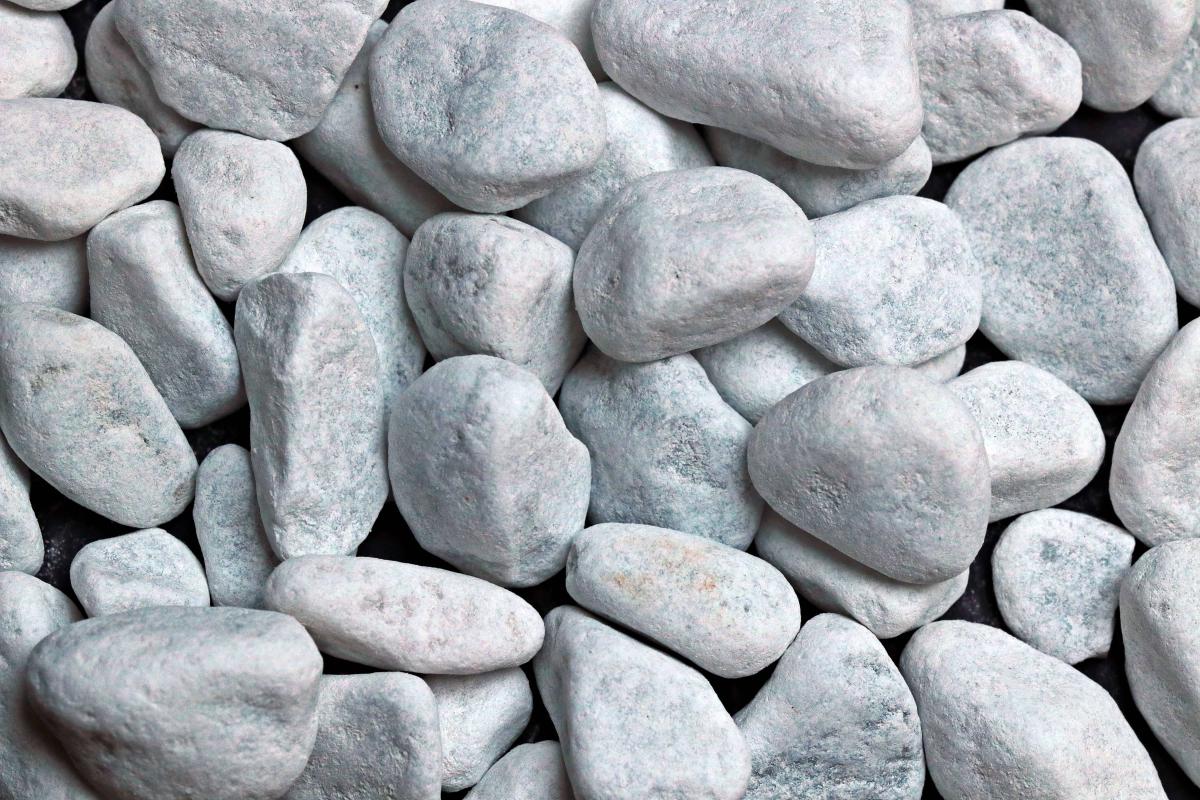
Homeowners who scatter white stones around house walls face serious long-term damp problems if rainwater drainage is ignored, Polish news outlet Gazeta.pl has reported.
While white gravel and decorative aggregate offer an elegant and quick way to tidy up garden borders along building facades, placing them directly against exterior masonry without proper preparation can lead to trapped moisture and ruined wall finishes over time.
Decorative stone borders are popular in modern residential landscaping as an alternative to bare earth or flowerbeds. In standard construction, exterior walls are protected from groundwater by damp-proof courses and waterproof membranes installed near ground level. Surrounding surfaces must allow rainwater to flow away from the structure rather than pooling against footings.
According to the report, crushed stone itself does not pose a direct threat to a building. Instead, issues arise when rainwater stagnates next to the facade or when the stone layer is built up too high relative to moisture protection barriers.
Drainage risks and soil preparation
The publication emphasized that the presence of stones alone does not cause dampness in wall structures. Key factors include the underlying soil type, base preparation, surface height, and the overall capacity for rainwater runoff.
Soil composition varies significantly around residential properties. Heavy clay soils have low permeability and tend to hold water for extended periods, creating hydrostatic pressure against below-grade walls. Sandier soils drain rapidly, but compacted sub-bases beneath gravel can still create artificial basins where water collects.
The report noted that placing a thick layer of aggregate over poorly permeable or inadequately prepared ground increases the risk of moisture retention. Leaving open ground around the foundation does not automatically solve the problem either, as clay or waterlogged earth also hinders water outflow. The central requirement is designing the perimeter so rainwater cannot accumulate beside the building.
Specialists cited in the report advised against piling crushed stone high up against exterior walls. The surrounding ground level must remain low enough to keep structural elements and damp-proofing installations exposed above the surface.
Proper placement and expert recommendations
In residential building design, raising gravel above the damp-proof course creates a physical bridge for moisture. Water can travel across the stones via capillary action, bypassing protective barriers and soaking directly into outer brickwork, render, or external insulation.
Specific height and layer requirements depend on the building design and the construction technology used. The report stressed that proper preparation of the sub-layers beneath the stones is essential to ensure long-term structural protection.
While using coarser gravel can assist with water movement, aggregate alone cannot guarantee effective drainage. Experts recommended observing the perimeter during heavy rainfall to check whether puddles form or standing water lingers near the walls, which indicates an underlying drainage failure. A properly prepared perimeter can maintain an attractive appearance without endangering the structure.
The report also highlighted other practical home maintenance tips previously shared by experts. These included a fast method for cleaning dirt and yellowing from white sneakers at home without buying expensive cleaning products, vinegar, or baking soda, as well as low-cost techniques for removing garden tree stumps without ordering an expensive excavator.


