

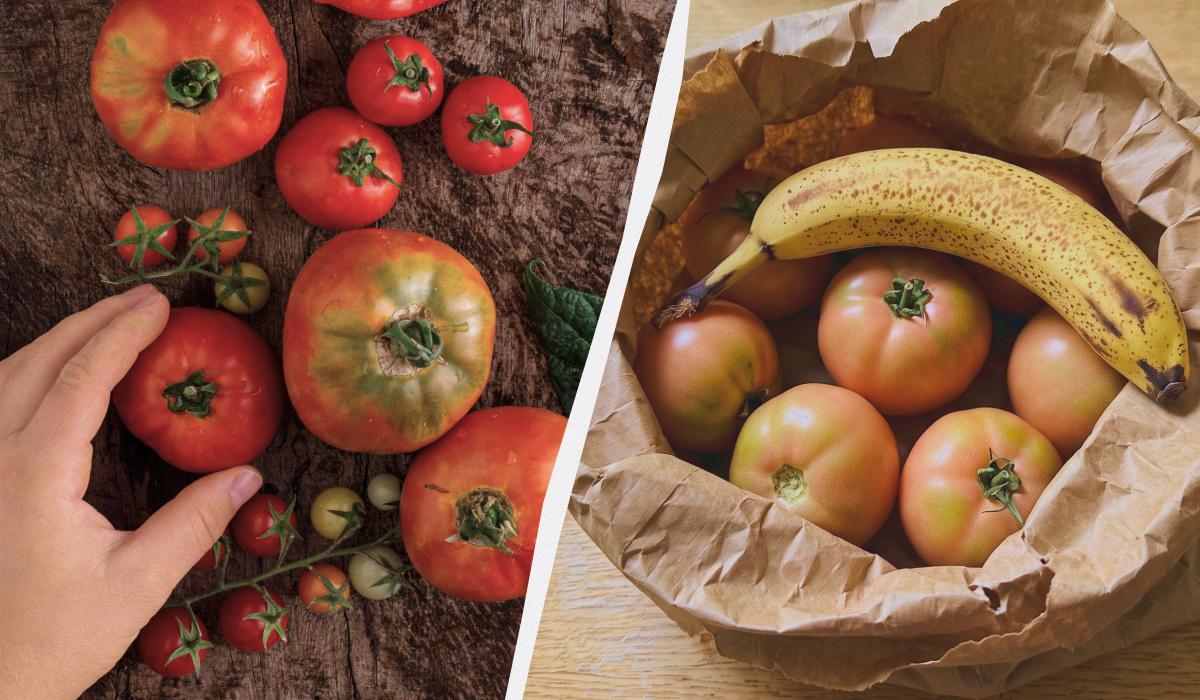
Gardeners rushing to gather crops ahead of sudden late-summer cold snaps can successfully ripen green tomatoes indoors by storing them alongside ripe bananas or apples.
The post-harvest technique relies on ethylene, a natural ripening hormone released by certain fruits, which naturally accelerates the maturation process in picked vegetables.
Ideal temperature and storage conditions
Successful indoor ripening requires strict environmental controls, starting with temperature and humidity. Storage areas must be maintained between 15°C and 20°C, with relative air humidity kept between 75% and 80%. If ambient temperatures drop below 10°C, the natural ripening process ceases and the vegetables risk decaying.
Harvested produce continues to respire and release moisture after being picked. To prevent mold growth while protecting crops from direct sunlight, vegetables should be kept in a dry, dark and well-ventilated space. Direct sunlight should be avoided as it damages vegetable skin without speeding up maturity.
Methods for paper bag and crate storage
For smaller quantities of produce, placing green tomatoes into paper bags alongside a ripe banana or apple creates a concentrated environment for ethylene gas. For larger harvests, shallow storage boxes lined with clean paper or dry sawdust help regulate moisture and protect fruits from spoiling.
Regular inspection of stored crops is essential to prevent decay. Any individual fruit showing signs of rot or injury must be removed immediately to protect surrounding vegetables from fungal contamination.
Vegetable suitability and disease control
Not all garden vegetables possess the ability to mature after being removed from the plant. Tomatoes, sweet peppers and eggplants ripen effectively off the vine, while green courgettes will only continue maturing if they have already reached a minimum weight of 200 to 300 grams. Conversely, cucumbers and cabbage are unsuitable for post-harvest ripening, as they rapidly wither and lose their crisp texture once picked.
To maximize storage life, gardeners should select only undamaged vegetables free from cracks, bruises or symptoms of late blight, a damaging plant disease caused by the pathogen Phytophthora infestans. When kept under recommended conditions and monitored frequently, harvested produce remains viable for two to four weeks. Unripe tomatoes can also be preserved through winter pickling methods.


