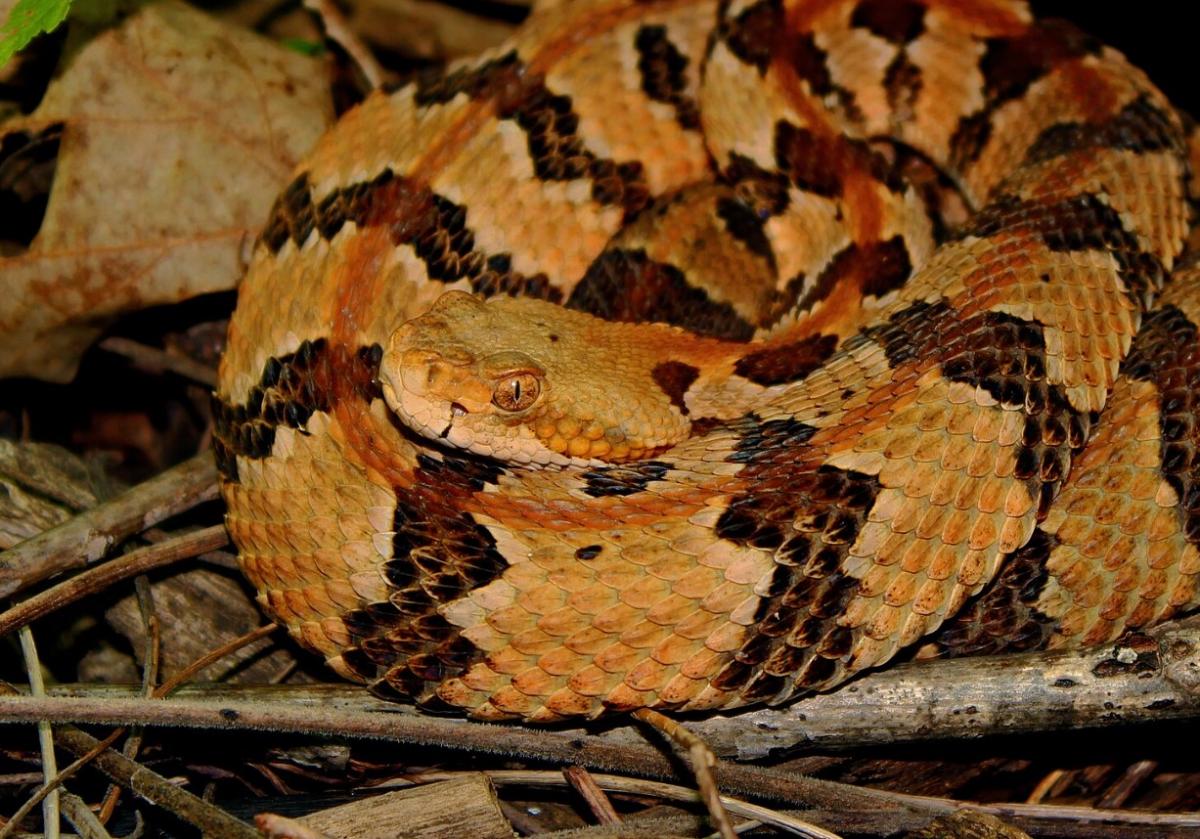
Timber rattlesnakes in Illinois do not head straight into their winter dens when the weather turns cold, nor do they rush back to their summer feeding grounds once spring arrives, according to a new study. Researchers found the snakes instead linger near their dens for days or weeks at a time, a pattern they believe is tied to shifts in temperature.
The study, published in the journal Ecology and Evolution, tracked 38 timber rattlesnakes in Jersey County, Illinois, over two autumn seasons and two spring seasons. Twenty of the snakes were fitted with radio transmitters so scientists could follow their movements in detail.
The timber rattlesnake, Crotalus horridus, is a venomous pit viper native to the eastern and central United States. It is known for gathering in shared winter dens called hibernacula, often returning to the same sites year after year, and is listed as threatened or endangered in several states because of habitat loss.
Weeks of waiting before the first snow
The researchers found that in autumn, the snakes did not move directly from their summer habitat into underground shelter. Instead, they first travelled to the area around their wintering den and stayed nearby for a period before going underground.
In 2021, that waiting period lasted an average of 29.23 days. In 2022, it shortened to 8.2 days. Of 27 seasonal movements the team recorded, 21 involved a snake staying on the surface before finally retreating underground.
During this waiting period, the snakes sheltered under leaves, rocks or hollow logs. These temporary hideouts sat an average of 58.17 metres from the winter den. Each snake used around two such sites and stayed in each for about 12 days, typically slipping into its underground den at night.
A slow return to summer feeding grounds
The researchers observed a similar pattern in spring. After emerging from their dens, the rattlesnakes did not set off immediately for their summer habitat but stayed in the surrounding area first.
This spring waiting period averaged 21.81 days in 2022 and 26.35 days in 2023. The snakes again sheltered under leaves, rocks and hollow logs, this time at an average distance of 75.5 metres from the den.
They used roughly 2.4 temporary shelters and stayed in each for about 10.63 days. Some snakes returned to sites they had used the previous autumn or in earlier years. Most emerged from their dens at night, though the researchers also recorded a smaller peak of activity around midday.
How temperature shapes the timing
Temperature readings suggested it plays a role at several stages of this seasonal movement. In autumn, the snakes arrived at their wintering grounds when the average temperature was around 19°C, but did not enter their underground dens until temperatures fell to about 14°C.
In spring, the pattern reversed: snakes emerged from their dens at around 14°C but did not start moving toward summer habitat until temperatures rose to about 19°C. The researchers noted that snakes tended to retreat underground after a sharp drop in temperature, while in spring they left their waiting areas only after a sustained period of significant warming lasting several days. Emergence from the dens itself was gradual, with snakes appearing during warm spells but their activity sometimes interrupted by cold snaps.
What the waiting periods might mean
The study's authors describe these intervals as "waiting periods" that separate a snake's broader seasonal movement from the specific moment it enters or leaves its den. They suggest the behaviour may help the snakes match their movements to suitable temperature conditions.
In autumn, arriving early but delaying the move underground may let the snakes stay active for as long as conditions allow. In spring, emerging before setting off for summer territory may lower the risk of travelling in cold weather.
The study did not pin down every cause behind the behaviour. Its authors said further observations over many years would be needed to understand more precisely how temperature and other factors drive the pattern.
What happens next
The study's authors say further observations over many years are needed to better understand how temperature and other factors drive this behavior.
Test yourself
How many timber rattlesnakes did researchers track for the study?
What did researchers call the delay between seasonal movement and entering or leaving a den?
At what approximate temperature did snakes begin entering their dens in autumn?
Have your say
Do you find animal behavior studies like this one interesting?
Where it happened
Jersey County, Illinois, United States