


IT HR specialist Anastasia Sukhanova says corporate team building acts as a strategic management tool to improve communication, productivity, and workplace trust. Sukhanova told Lenta.ru that managers often confuse team building with regular corporate parties, even though structured team activities serve specific managerial goals. Typical events include nature trips, stand-up paddleboarding, and themed quizzes.

Definition of Corporate Team Building
Literally meaning team building, the practice represents a long-term corporate culture strategy rather than a one-time Friday evening entertainment event. Sukhanova explained that true team building always incorporates specific exercises, training sessions, interactive games, creative contests, or strategic quests.
Sukhanova noted that placing employees in a single office does not guarantee effective cooperation. In IT companies, software developers focus on code, accountants process figures, and customer support staff manage client chats. These groups operate with different mindsets, work paces, and communication methods, requiring structured environments to establish mutual understanding.

Workplace Objectives and Employee Trust
Improving workplace communication remains a central goal of team building initiatives. Sukhanova explained that clear communication helps employees understand individual roles and colleague responsibilities, which encourages mutual assistance across departments and removes daily interaction barriers.
Building mutual trust fosters psychological safety, allowing workers to share ideas, take risks, and reach consensus. A study published in Harvard Business Review found that employees at high-trust companies experience 74 percent less stress, report 106 percent more energy at work, and show 50 percent higher productivity compared to those at low-trust organizations.

Onboarding, Leadership, and Motivation
Team building activities accelerate onboarding for new staff members by integrating them into teams smoothly. New hires build informal connections and discover shared interests during their first days, avoiding weeks of adjustment through formal work channels.
Informal events also highlight leadership qualities in employees who remain quiet during daily office routines. Unconventional tasks allow managers to identify strategic thinkers, natural organizers, and skilled improvisers, offering valuable insights into team strengths and weaknesses.
Sukhanova stated that managerial investment in team events signals care for workers, boosting loyalty and commitment. Structured activities also provide rest after intense work periods, allowing staff to laugh and recharge before returning to deadlines.

Workplace Benefits and Skill Development
Systemic team building strengthens team cohesion by guiding employees through unfamiliar challenges. Improved cooperation eliminates constant re-checking, speeds up decision making, resolves departmental conflicts constructively, and raises overall productivity without increasing individual workloads.
Regular team building lowers employee turnover by helping staff feel connected to their team. Sukhanova noted that department heads report warmer working relationships following team activities, leading to fewer absences, less distraction, and lower recruitment and training costs.
Participation in non-standard games also develops key soft skills, including planning, problem solving, and conflict resolution, while uncovering hidden personal talents among staff.

Implementation Risks and Cost Considerations
Executing team building without clear goals creates organizational risks. Superficially planned events waste financial resources and cause employee irritation due to perceived insincerity.
Standardized formats can fail by ignoring distinct personality types, favoring outgoing workers while leaving reserved employees uncomfortable. Single events provide only short-term positive boosts, whereas companies holding team building events quarterly or more frequently achieve consistent operational progress.
Sukhanova warned that a single trip to nature cannot solve deep internal conflicts or instantly create a unified team. She emphasized that team building must function as one component within a broader set of management practices.
Financial commitments for quality team building include renting venues, hiring independent professional facilitators, creating customized programs, providing transportation, and arranging catering, which can strain smaller corporate budgets.
Activity Formats and Virtual Options
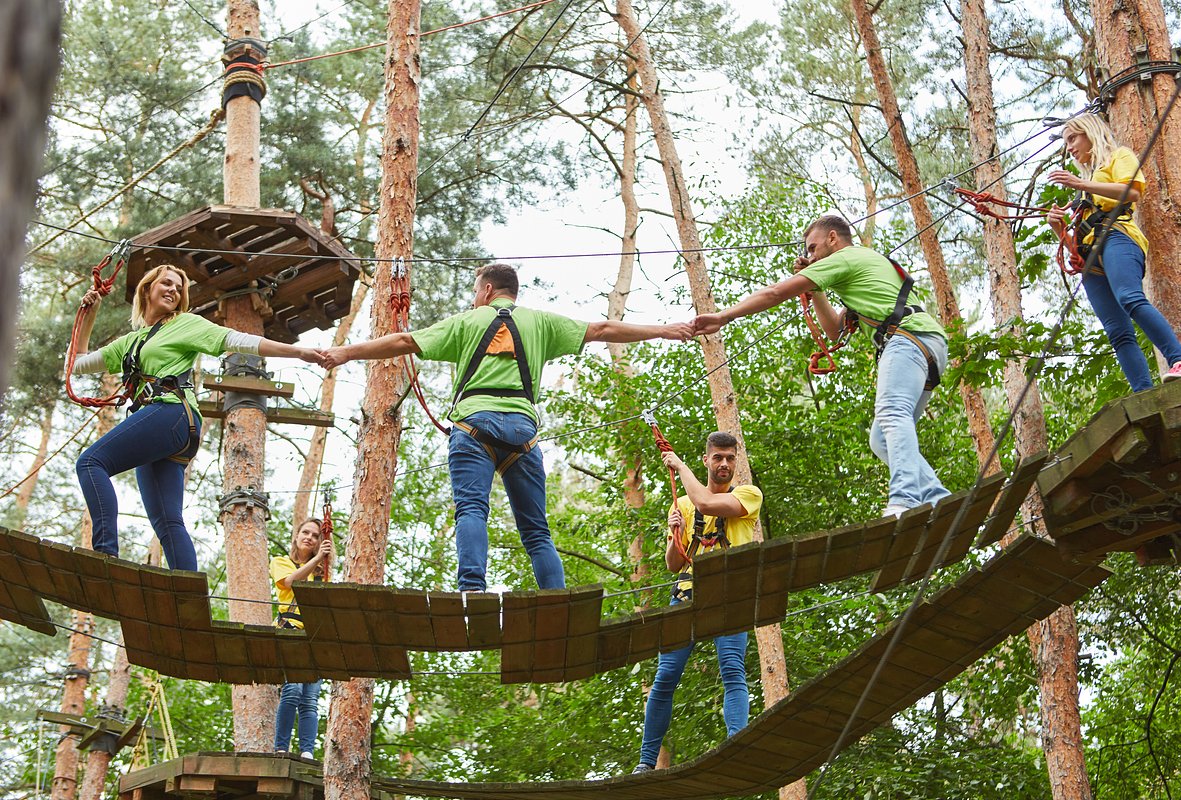
Companies choose team-building activities based on industry type, employee demographics, and specific management targets. Active outdoor programs like sports relays, rope courses, and orienteering build trust by requiring role allocation and mutual support under physical challenges.
Quests and strategic games suit intellectual teams by testing logic, erudition, and problem solving under time limits. Creative workshops, such as pottery painting, art creation, culinary battles, and baking complex desserts, foster relaxed environments, with shared meals further strengthening mutual understanding.
Charity initiatives offer another impactful format. Corporate volunteering at animal shelters, donation drives for people in need, and environmental cleanups demonstrate social responsibility and raise staff morale.

Virtual team building has expanded rapidly alongside hybrid work models. Since the coronavirus pandemic began in 2020, the number of companies using virtual team-building methods has grown 25-fold. Remote quizzes, online quests, video games of Mafia, and online intellectual competitions keep distributed teams connected across different locations.
Training programs with integrated team building offer dual benefits. Sukhanova noted that communication workshops combining theoretical concepts with interactive games allow staff to upgrade professional skills while bonding with colleagues.


