

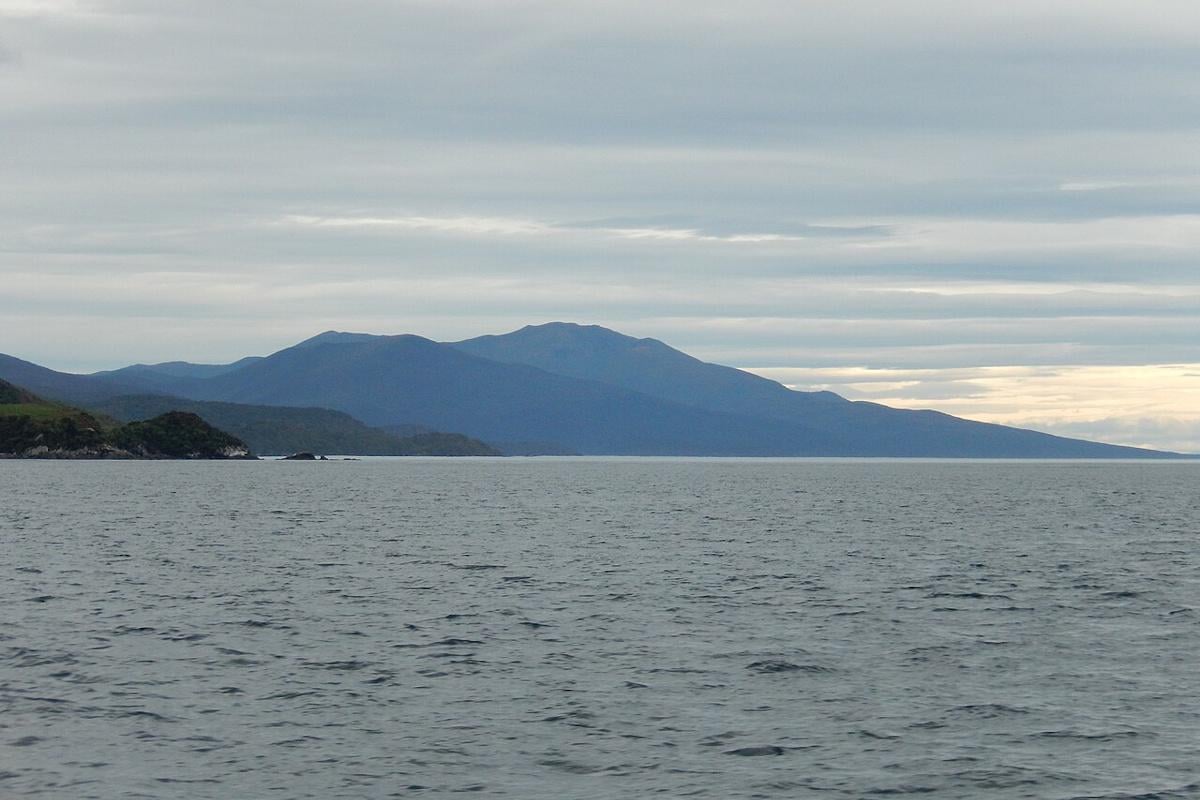
Stewart Island in New Zealand has taken first place in a global ranking of the world's quietest islands compiled by travel platform BookRetreats.
The study, reported by TimeOut, revealed that the remote destination has roughly 40 times more rare kiwi birds than human residents.
Stewart Island Features and Wildlife
With a population of around 500 people living across 1,680 square kilometres, Stewart Island offers visitors an atmosphere largely free from human disturbance. Protected national parkland covers approximately 85 percent of the island, preserving its natural habitats.
Local infrastructure remains minimal, featuring only a single small airstrip and no major roads. Visitors instead navigate roughly 280 kilometres of walking trails that wind through native forests toward secluded coastal bays.
Stewart Island is also recognized as the southernmost dark sky sanctuary in the world, certified by International Dark Sky. The status makes the island ideal for stargazing, with travelers occasionally able to view the aurora australis, or southern lights, under clear night conditions.
Rise of Quietcation Travel
The findings arrive as interest in quiet travel experiences reaches record levels. Data from Google Trends analyzed by BookRetreats showed that online searches for quiet destinations jumped by 1,268 percent over the past year.
Industry observers have named this growing travel trend quietcation, describing holidays where the primary goal is to disconnect from city noise, traffic, and loud beach venues in favor of natural soundscapes.
Study Methodology and Criteria
BookRetreats established the Unspoilt Index by analyzing satellite imagery and open mapping data across 100 islands around the globe. Each island was assessed using six key environmental factors: natural land area, road network density, air traffic intensity, population density, night sky darkness, and natural coastline length.
The research drew on work by silence researcher and psychology professor Olga V. Lehmann, as well as guidelines from the European Environment Agency. The agency defines a quiet area as a location with a pleasant acoustic environment where unwanted noise is absent or minimal. Destinations scored higher if they were quieter, greener, darker at night, and less built up.
Greek Islands Comparison
The Greek island of Anafi secured second place overall. Located slightly more than an hour by ferry from Santorini, Anafi has a population of under 300 people and a population density nearly 30 times lower than its famous neighbor.
Anafi emerged as one of the least developed islands in the study, with beaches such as Roukounas, Klisidi, and Katsouni staying uncrowded during peak summer months.
In contrast, Santorini ranked near the bottom of the list at 99th out of 100 islands. Despite its global popularity, Santorini was penalized for heavy infrastructure across its 76 square kilometres, including 64 kilometres of main roads, an international airport, and a low proportion of undisturbed natural space.
British and European Destinations
British islands performed strongly in the index, led by St Martin's in the Isles of Scilly at fifth place globally. The car-free island has 135 residents, no airport, and 12 beaches along 13 kilometres of coast. Its small size allows visitors to walk across the entire island in a single day.
Scotland's Isle of Skye ranked 11th, while Herm in the Channel Islands placed 14th. Herm is also free of motor traffic and has a population of around 60 people.
Elsewhere in Europe, Croatia placed two islands in the top 20, with Mljet ranking 17th and Vis in 19th place. Greece achieved a second entry in the top 25 with Milos taking 22nd position.
Global Top 25 Quietest Islands
The top 10 quietest islands in the index included Ilha Grande in Brazil in third place, Lord Howe Island in Australia in fourth, Tioman in Malaysia in sixth, Koh Chang in Thailand in seventh, Koh Rong in Cambodia in eighth, Havelock in India in ninth, and Santa Catalina in the United States in tenth place.
Rounding out the top 25 were Isla Holbox in Mexico at 12th, Magnetic Island in Australia at 13th, Boa Vista in Cape Verde at 15th, Salt Spring in Canada at 16th, La Digue in Seychelles at 18th, Palawan in the Philippines at 20th, Viti Levu in Fiji at 21st, Salina in Italy at 23rd, Ilha das Flores in Portugal at 24th, and La Gomera in Spain at 25th.
Generational Travel Trends
The index highlights evolving travel habits across demographic groups. Separate research into generational travel choices indicates that Generation Z travelers frequently favor destinations in Thailand, Cambodia, and Laos, while Millennials tend to choose Australia, Japan, and Greece, driven by social media trends and personal budgets.


