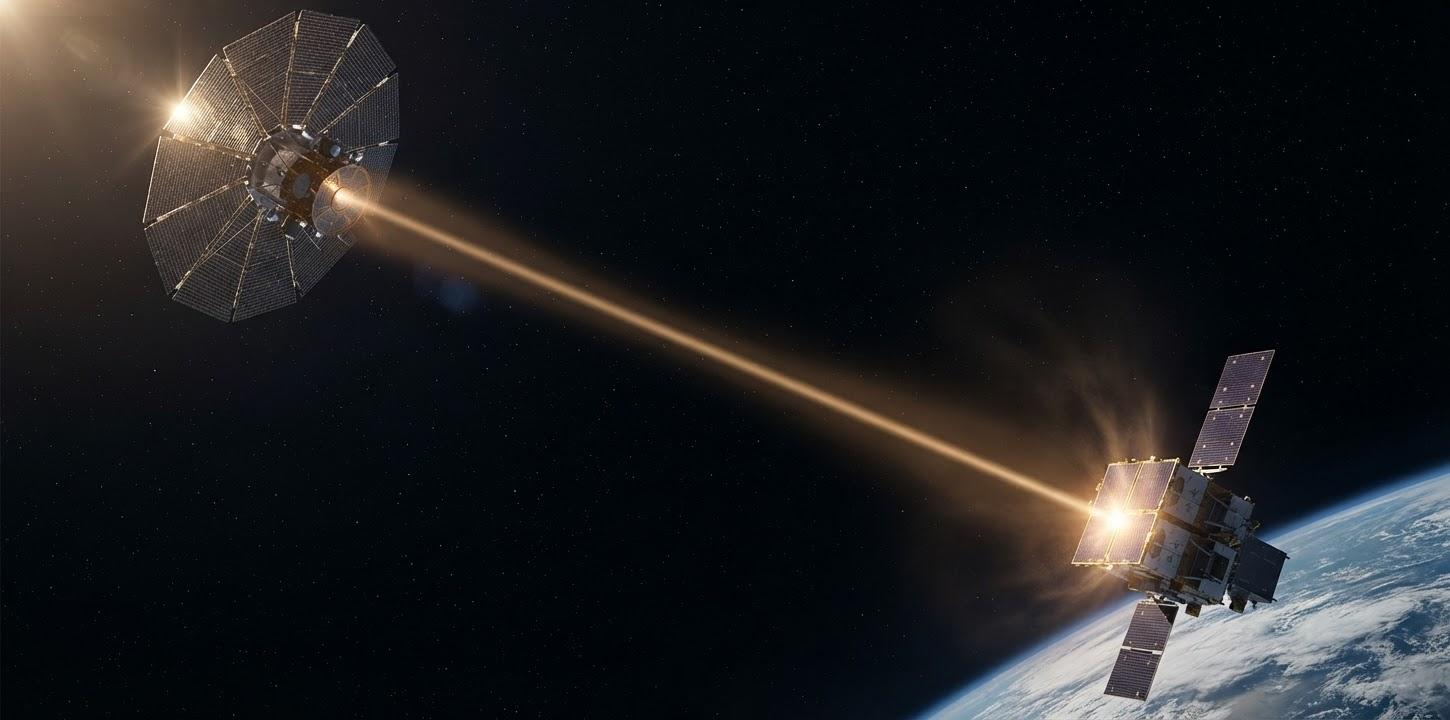
American firm Star Catcher Industries is preparing to conduct the first orbital test of wireless power transmission between two independently flying spacecraft. The experimental Protostar satellite is scheduled to launch from Vandenberg Space Force Base in October 2026. The spacecraft will fly aboard a SpaceX Falcon 9, a reusable two-stage rocket, as part of the Transporter-18 mission.
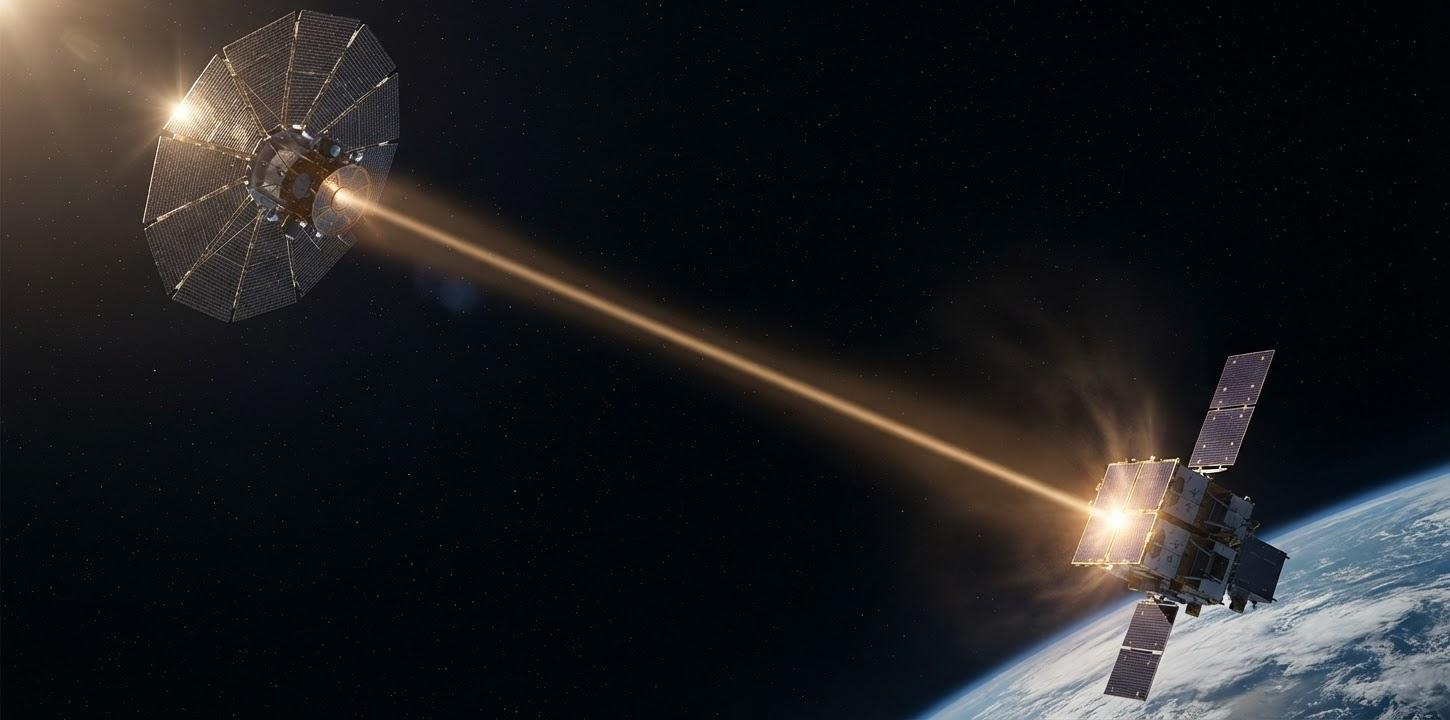
Once in orbit, Protostar will deploy a small cubesat, a type of miniaturized satellite, equipped with standard solar panels. The main spacecraft must then autonomously detect the smaller satellite, begin tracking its movement through space, and direct an optical energy beam precisely at its solar cells.
Engineers will measure exactly how much energy the cubesat receives to determine the efficiency of the remote transmission.
The mission is designed to validate several key technologies at once, including spacecraft detection, target tracking, and the wireless transfer of power.
Orbital power grid
Star Catcher has already tested the individual elements of the system. The company demonstrated its optical power transmission technology on Earth at NASA's Kennedy Space Center in Florida. In late 2025, it tested the software required to detect and track other spacecraft in orbit during the Sextant Alpha mission.
The Protostar satellite will integrate these previously tested components into a single system. If successful, Star Catcher will demonstrate the ability to transmit a measurable amount of energy between two physically disconnected vehicles under actual orbital conditions.
The company ultimately aims to establish a commercial power grid in space. This infrastructure would allow satellites to draw supplementary power from external sources, freeing them from the constraints of their own onboard solar panels. Star Catcher has identified Earth observation satellites, military spacecraft, and energy-intensive orbital data centers as the primary potential consumers for the service.
Commercial backing
The space industry has already shown interest in the technology. Star Catcher has raised $88 million in venture capital funding to develop the system. The company has also secured a $60 million Strategic Funding Increase contract from the United States Space Force, the military branch responsible for American space operations.
Commercially, Star Catcher has signed ten agreements for future power purchases with space technology firms including Starcloud, Loft Orbital, Astro Digital, and Aethero. The company has also received more than 40 letters of intent from other potential clients.
While the upcoming Protostar flight is designed to prove the viability of a space-based energy infrastructure, Star Catcher is concurrently developing a larger, next-generation spacecraft. This future vehicle is intended for practical commercial energy supply rather than demonstration.