Travelers do not need to cross Europe to feel small next to a massive landscape. Along the natural border between Galicia and Asturias, the sea has carved a scar into the land that leaves first-time visitors stunned.
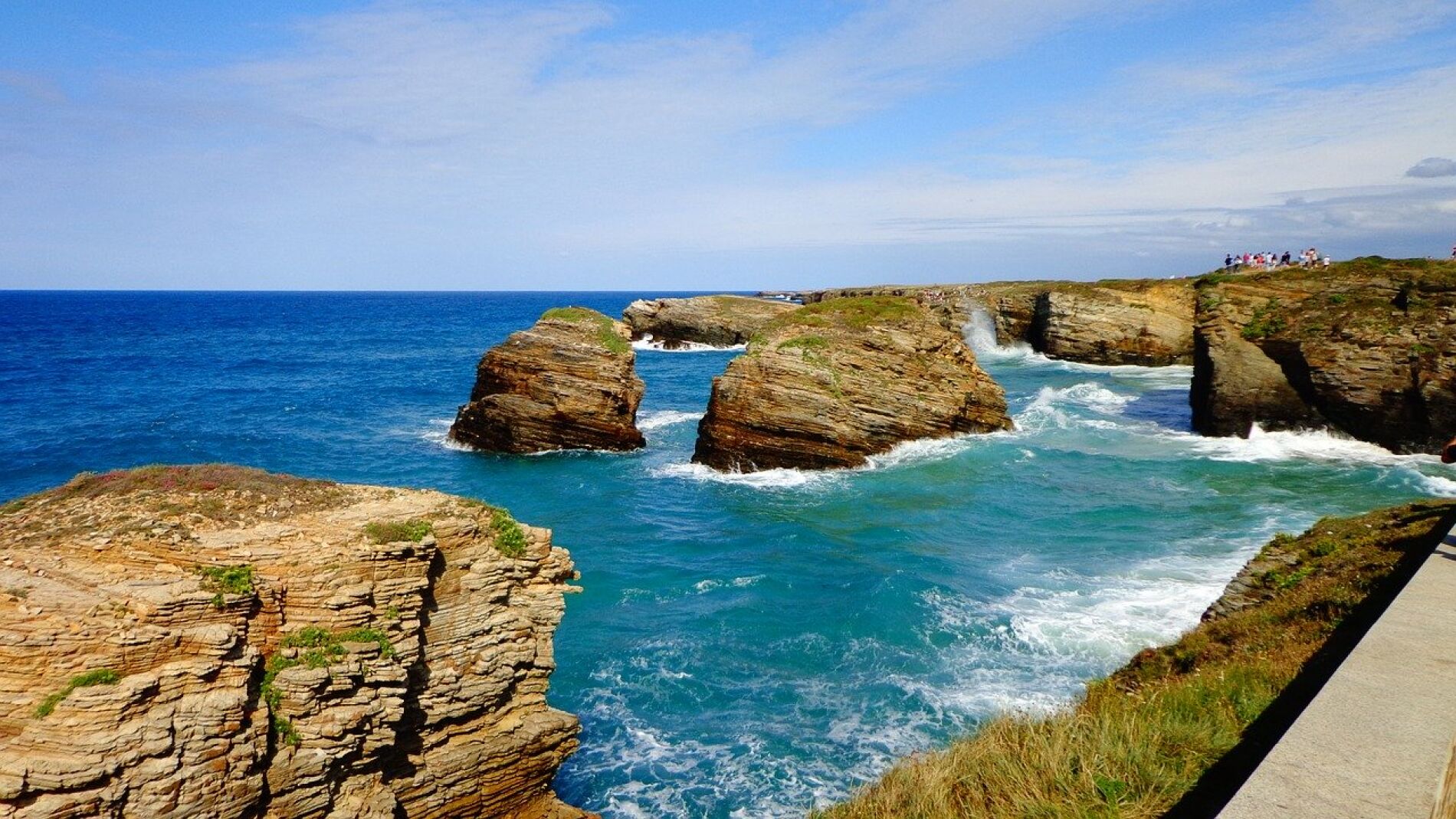
Between Ribadeo, in Galicia, and Castropol, in western Asturias, the Cantabrian Sea pushes inland to form the Ría del Eo, also known as the Ría de Ribadeo. The gap carved by its waters stretches for about 16 kilometers and splits into two distinct sections. The first ten kilometers run north to south with a width of about 800 meters, nearing a kilometer in some spots. The rest of the estuary is more winding, narrowing or widening between 40 and 600 meters depending on the area and the tide.
Why it's compared to Norway
What makes this estuary a Scandinavian mirage is not just its size but its shape. Rocky cliffs and mountainous hills flank the water along its entire length, recreating the same sensation of walking among giants that Norway's fjords offer. The landscape combines river valleys carved over millions of years with hidden beaches scattered along the estuary.
A protected refuge within a protected refuge
The ría is part of the Río Eo, Oscos y Terras de Burón Biosphere Reserve, one of seven such reserves in Asturias. Within it, the estuary also holds the status of Partial Nature Reserve in its own right, owing to its status as a large wetland. Its value goes beyond scenery: because it is designated a Special Protection Area for Birds, it has become a leading destination for birdwatchers.
How to explore it
Summer is the best season to discover the ría, thanks to cooler, milder weather than other stretches of the coast, and it serves as a perfect alternative to the nearby Playa de las Catedrales, which has seen a sharp rise in visitors in recent weeks. A network of trails around the ría allows people to explore it on foot or by bicycle, stopping at the various viewpoints overlooking the estuary. For a more active experience, canoeing trips down the Río Eo are suitable for the whole family and split into three sections of low difficulty. With the help of a guide, paddlers can reach hidden coves and sea caves washed by calm waters, far from the swell of the Cantabrian Sea.