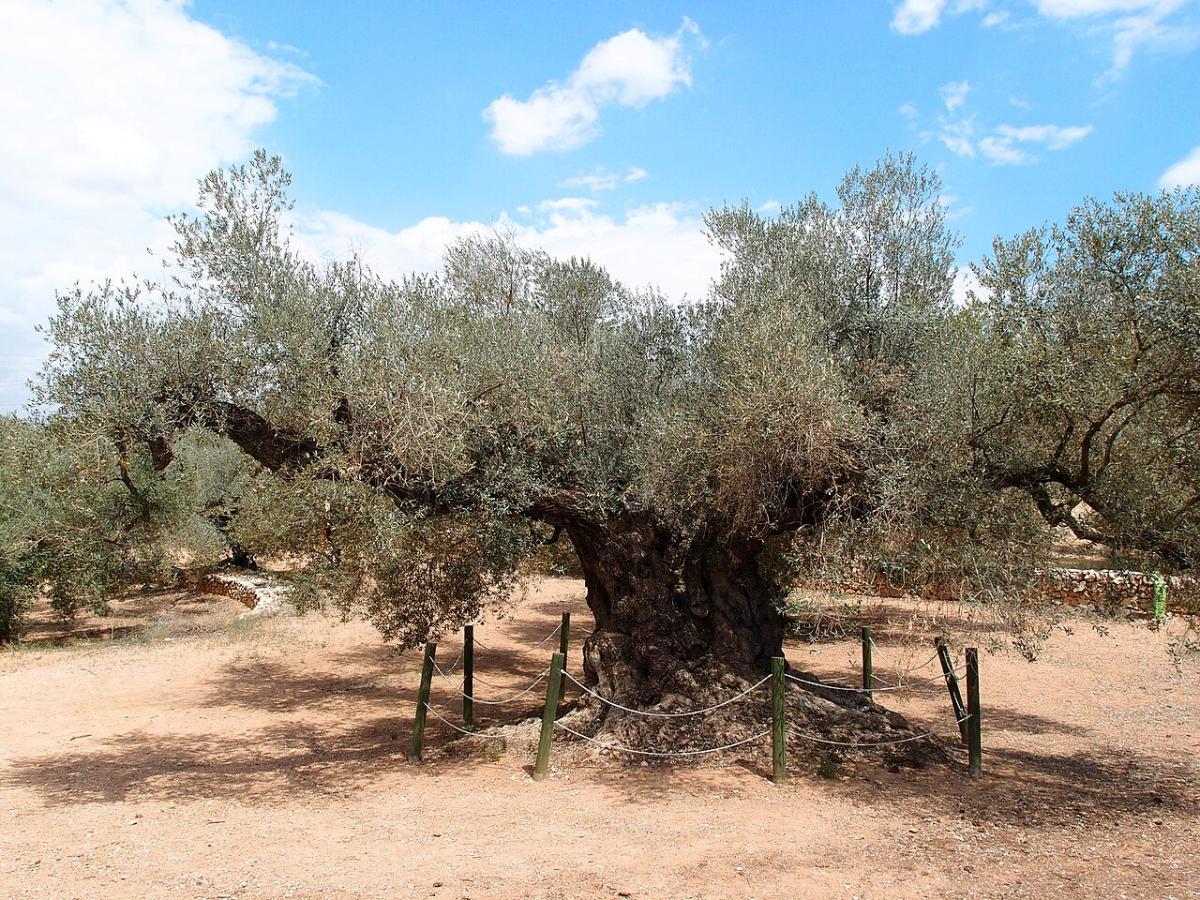
An olive tree that started growing in Spain in the year 314, during the reign of Roman Emperor Constantine I, is still alive and producing fruit more than 1,700 years later, according to La Nación.
The tree has lived through the fall of the Western Roman Empire, the Middle Ages and the growth of modern cities, while its roots have remained in the same spot throughout. Over many generations, the olive has adapted to the conditions of the Mediterranean climate.
A tree of striking size
The olive is now part of the Arión Millennial Olive Trees Museum, on the grounds of an estate belonging to the Porta-i-Ferré family. Unlike younger trees with slender trunks, it has a massive structure that has helped it survive numerous shifts in climate over the centuries.
Its trunk measures 8.03 metres in circumference, and the base of its pyramid-shaped form spans roughly 18 metres in diameter. The tree stands about 6.5 metres tall. Despite its age, it still bears fruit, a sign of the longevity of the species.
Official recognition
In 1997, the Catalan government declared the olive a monumental tree, a status given to especially valuable specimens that require protection. In 2006, the Spanish Association of Municipalities for Olive Growing, known as AEMO, awarded it first prize as the country's best monumental olive tree, cementing its place as part of Spain's natural heritage.
Not the only ancient tree in town
The olive is not the only ancient tree standing in Ulldecona, the Catalan municipality where it grows. More than 1,300 millennial olive trees grow in the area, with around 150 of them over a thousand years old. Their fruit is used to produce an oil called Farga Milenaria, made from the traditional Farga variety that has adapted over centuries to the region's Mediterranean soil and climate.
Preserving these trees has allowed the agricultural activity tied to them to continue, and that activity has become part of the region's cultural identity. The ancient olives also form an important part of the local economy, supplying raw material for oil production and drawing tourists through their history.
Visiting the ancient olives
Tourists who want to see the ancient trees can visit the Arión Millennial Olive Trees Museum. Guided tours, arranged through the Ulldecona city council, last about an hour and allow visitors to view the trees up close, hear their history and learn about the importance of preserving them.
What happens next
The city council of Ulldecona continues to arrange hour-long guided tours of the Arión Millennial Olive Trees Museum for visitors wanting to see the ancient trees.
Test yourself
During which Roman emperor's reign did the olive tree begin growing?
What is the circumference of the tree's trunk?
What oil is produced from olives grown by the millennial trees of Ulldecona?
Have your say
Would you be interested in visiting a guided tour of ancient olive trees like the one in Ulldecona?
Where it happened
Ulldecona, Spain