Netflix has launched a new vertical video discovery feature inside its mobile application in Spain, adopting a scrollable format popularised by social media services. The function appears within a dedicated section called Clips, offering tailored video fragments to help users find series and films without navigating the full catalogue.
The feature presents short clips from various productions that users scroll through vertically on their smartphones. Viewers can save individual clips to their personal watch list for later viewing or share them directly with contacts through social media networks and messaging applications.
The mobile redesign follows a rollout in several other international markets over recent months before arriving in Spain. Netflix designed the tool to streamline content searching by building on smartphone consumption habits established by platforms such as TikTok, Instagram, and YouTube.
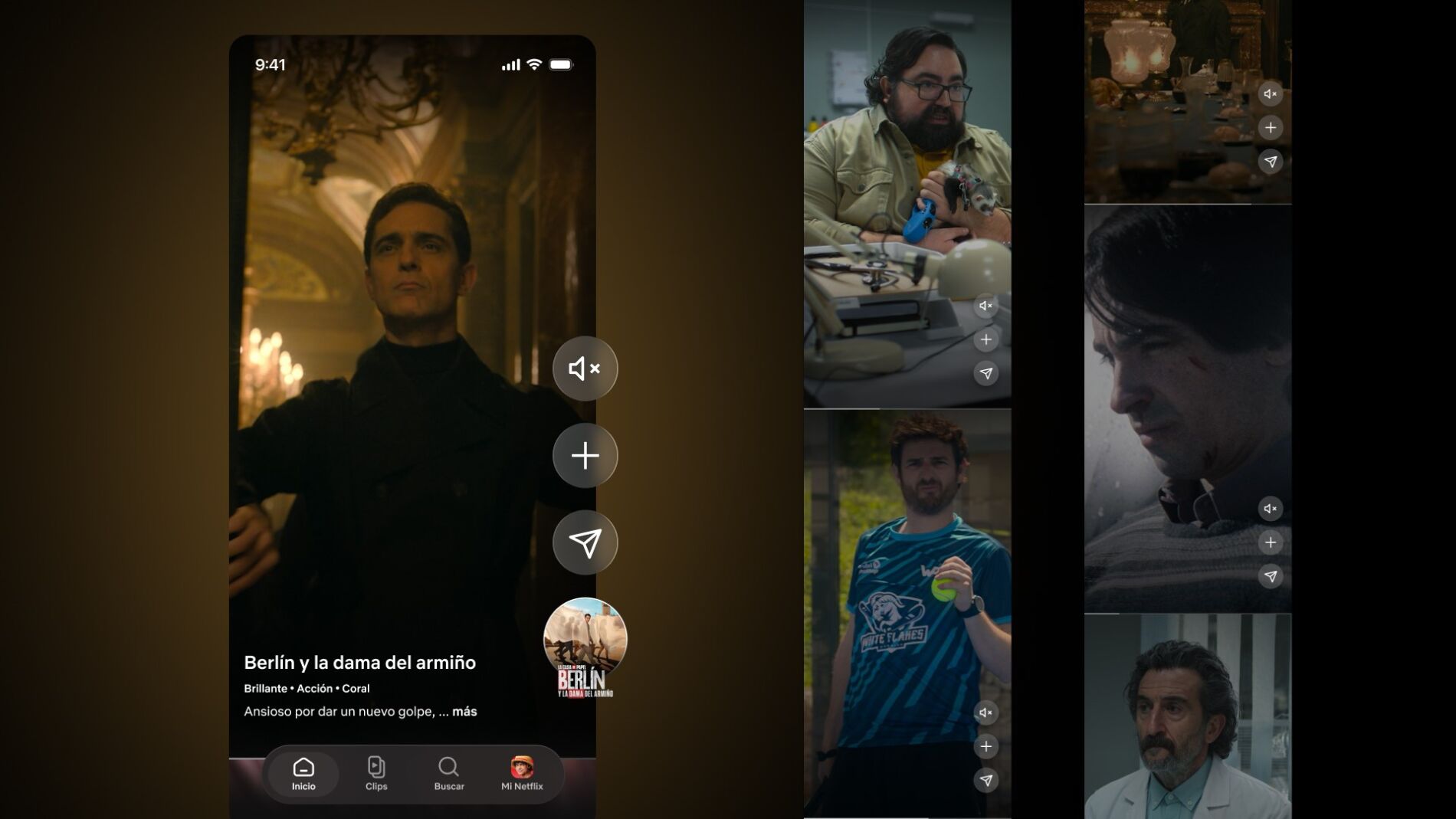
The short-form video release forms part of a wider strategic shift as the California-based streaming company considers opening its platform to third-party services. The proposed change would mark one of the most significant strategic pivots in the history of the business, which previously focused on expanding its proprietary catalogue.
Third-party streaming service integration
Netflix has held preliminary talks with media conglomerates NBCUniversal and Fox to examine integrating their respective streaming services, Peacock and Fox One, according to a report by The New York Times. Discussions remain in an early stage, and no final agreement has been reached between the companies.
Peacock provides subscribers with television series, original productions, and live sporting events, while Fox One aggregates content from Fox broadcast networks and live sports programming. Under the proposals under study, Netflix could act as a digital storefront allowing users to purchase subscriptions and access external content without leaving the primary application.
The precise technical mechanism of the potential integration has not been established. Netflix could limit its role to facilitating subscription purchases or directly embed portions of third-party content catalogues into its own interface.
Adopting an aggregator model would align Netflix with existing industry frameworks operated by Amazon Prime Video Channels, YouTube, and Roku. These digital platforms already allow consumers to manage multiple subscription services and channels within a single digital ecosystem.
Netflix has already tested third-party integration in France, where it incorporated live and on-demand television broadcasts from network TF1. Company executives view the French partnership as a promising collaboration that could pave the way for additional international agreements.
Allowing users to manage multiple entertainment subscriptions from a single mobile and television application reduces the friction of switching between separate platforms. However, no official timeline has been set for introducing the feature, and the company has not confirmed which external services will ultimately participate.
Any initial rollout involving Peacock and Fox One would likely be confined to the United States market. Industry distribution rights and licensing availability vary significantly across international regions, limiting immediate global deployment.
Market pressures and sports rights bids
The strategic changes arrive as Netflix seeks to protect its market leadership against slowing subscriber growth and increased competition. Although the company remains the dominant global streaming provider, its share of overall television audience viewing has declined, according to data published by The Wall Street Journal.
The company has also experienced financial pressure on Wall Street, with its stock valuation falling by more than 40 percent over the past year. Market analysts and investors view the decline as an indication that subscriber growth is reaching saturation, particularly within mature domestic markets like North America.
Concerns over subscriber churn, the rate at which customers cancel recurring subscriptions, have heightened following recent increases in subscription tier pricing. In response, Netflix is expanding its programming strategy to include lower-cost production formats that maintain high viewer engagement.
The budget-conscious content push includes video podcasts, short-form video clips, and programming previously broadcast on YouTube. By expanding into cheaper digital content formats, the business aims to increase total watch hours without incurring the high production expenses associated with premium scripted series and feature films.
Simultaneously, Netflix is assessing entry into live sports broadcasting to diversify its content offerings. The company is evaluating potential bids for the global broadcasting rights to the 2030 and 2034 FIFA World Cup tournaments.
Expanding into live sports is expected to bolster the platform's burgeoning advertising business. Unlike standard video-on-demand content where viewers can skip advertisements or upgrade to ad-free tiers, live sports broadcasts feature unskippable ad breaks that generate steady commercial revenues.
Together, the launch of mobile Clips, third-party platform bundling, and prospective sports rights acquisitions reflect a broader effort by Netflix to adapt to a maturing streaming market. By expanding service offerings and deepening subscriber engagement, the platform aims to secure long-term revenue growth.