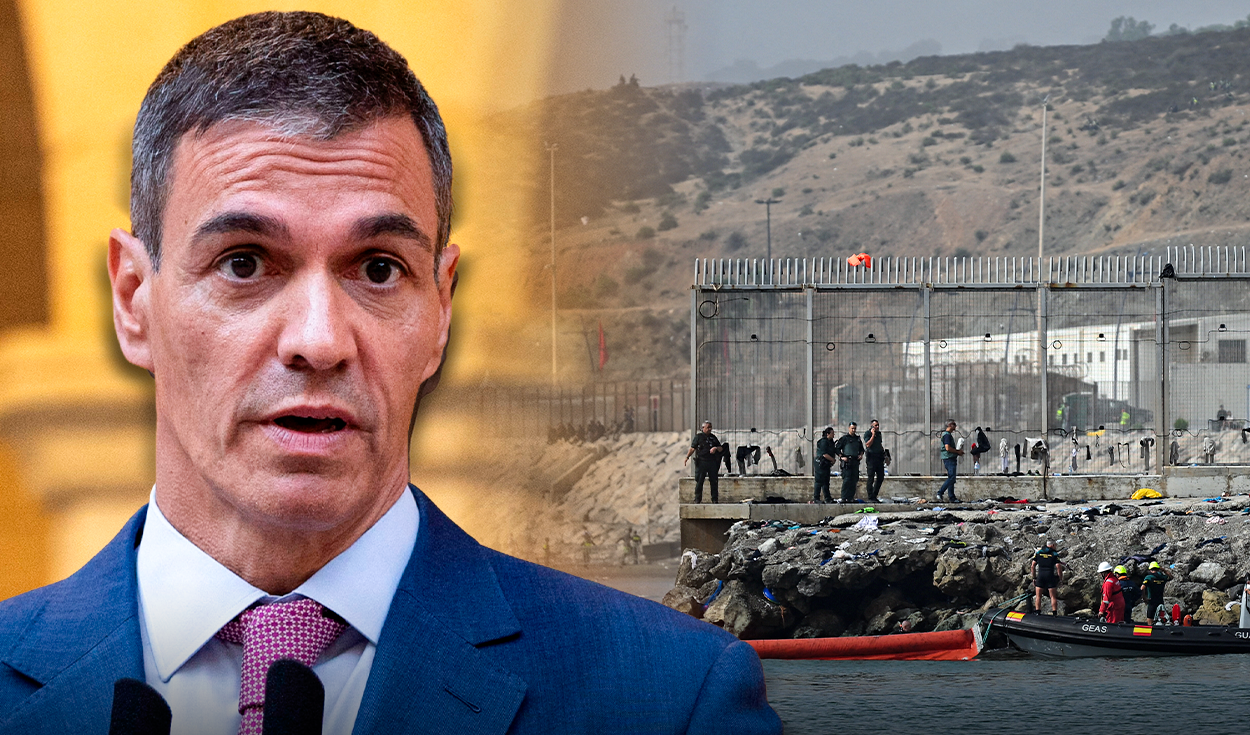
Spain's prime minister Pedro Sánchez has accused several European Union partners of acting selfishly after a mass migration surge at Ceuta left at least 67 people dead and set off a political crisis within the bloc.
Sánchez wrote to European Commission President Ursula von der Leyen, the European Council president, and the EU's rotating presidency to condemn the response of certain governments. He said they had acted out of prejudice, false information, ignorance, or political interests, calling their conduct contrary to European law, humanitarian law, and the solidarity principles that bind the bloc.
The letter came as some EU member states were considering whether to expel Spain from the Schengen free-movement zone.
Von der Leyen backed an extraordinary video conference of interior ministers scheduled for Tuesday, August 4, saying that combating illegal migration requires solidarity and a united European response. She acknowledged the cooperation between Madrid and Rabat and called for stronger enforcement of the bloc's external borders.
Floating barrier and mass returns
Spain deployed a 500-metre floating barrier at the Tarajal breakwater in Ceuta as an emergency measure. The structure combines buoys with a metal grating submerged one metre below the surface, designed to block maritime crossings from Morocco without impeding Civil Guard patrols.
Interior Minister Fernando Grande-Marlaska, visiting Ceuta, said the area had returned to reasonable normality but stressed that the crisis was not over. Authorities said coordination with Morocco had enabled the return of more than 48,000 people to Moroccan territory in under two days.
Madrid also tightened document checks for those leaving the enclave for the mainland by sea or air, noting that Ceuta does not provide automatic access to the European area. Searches for possible additional victims continued near the breakwater.
Italy suspends Schengen with Spain
Italy reinstated document checks on travellers arriving from Spain at its ports and airports, suspending its Schengen obligations toward Madrid. The government of Prime Minister Giorgia Meloni cited security reasons, with officials saying checks would primarily affect non-EU nationals.
Foreign Minister Antonio Tajani said the temporary suspension was a necessary decision to protect Italian citizens and defend European borders, arguing that blocking irregular arrivals was essential to prevent risks including terrorism.
Sánchez called the Italian decision unjustified and lamented that certain nations had chosen to attack Spain rather than offer solidarity. About 20 European countries pushed for a stricter migration framework while Brussels advocated for coordinated management of external borders.
Trump uses Ceuta images to warn against Democrats
The crisis drew sharp comment from Washington. President Donald Trump used footage of the crossing, speaking on Fox News from Camp David, to warn that the United States would face the same situation in three years if the wrong side returned to power. He described the events as an invasion driven by progressive policies.
Secretary of State Marco Rubio called the events a flagrant violation of sovereignty and human rights. Strategist Stephen Miller and Vice President JD Vance blamed the left for the mass irregular flow and said the United States was ready to assist other EU allies. Karoline Leavitt warned that a Democratic return to power would throw American borders wide open.