

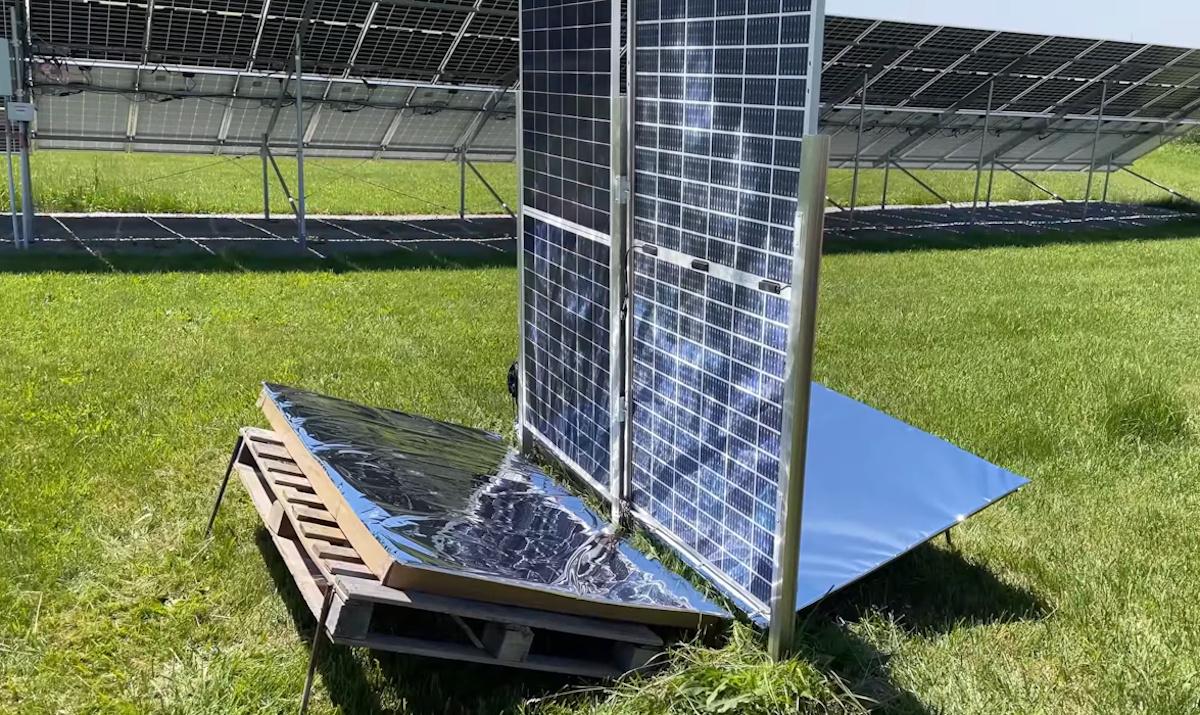
A new type of fence is spreading across Europe that does more than mark a property line: it generates electricity. Romanian outlet Libertatea reported on the rise of vertical, double-sided solar panels, known as bifacial panels, that can be installed in place of an ordinary fence.
Unlike conventional solar modules, which are mounted at an angle and face south, vertical bifacial panels capture sunlight from both sides at once. According to the report, standard panels produce the most electricity around midday, while vertical panels follow a different generation pattern that makes better use of morning and afternoon sunlight.
That difference could suit households whose electricity use peaks in the early morning and evening rather than at noon, the report said. However, it stressed that a vertical solar fence will not automatically outproduce a rooftop solar system. The outcome depends on the specific installation site, orientation, shading and the characteristics of the panels used.
What the University of York tests found
Researchers at the University of York tested a vertical bifacial system with a maximum output of 1.5 kilowatts over the course of a year. They compared it against vertical single-sided panels and a traditional system mounted at a 45-degree angle.
The differences were significant. Early in the morning, the vertical bifacial system produced 26.91% more electricity than the traditional angled setup. By the end of the day, its advantage stood at 22.88%. In winter, the gap widened to as much as 24.52% during certain periods.
The report's author cautioned that these figures should be treated carefully, since the experiment was carried out at one specific location under particular conditions and its results cannot simply be applied to every private home.
Reflected light and temperature matter
Reflected light plays a major role in how well bifacial panels perform. Light-coloured surfaces, such as white gravel or snow, can increase the amount of light reaching the panels. In the University of York experiment, white gravel placed beneath the panels helped illuminate their rear side.
Temperature also affects output. Heating typically reduces the productivity of solar cells, and vertical panels may benefit from better air circulation on both sides, though the actual effect depends on the panel's design, local wind conditions and climate.
Cost and potential output
Based on the calculations cited in the report, a 10-metre solar fence could have an installed capacity of roughly 1.5 to 1.7 kilowatts and, under favourable conditions, generate around 1,800 to 2,000 kilowatt-hours of electricity per year. The actual figure would depend on lighting, positioning and surrounding surfaces.
In Europe, prices for these panel fences start at 250 euros per metre, meaning a 10-metre fence would cost at least 2,500 euros before installation, foundations, electrical equipment and other expenses are added. How quickly such a system pays for itself depends directly on local electricity prices and how efficiently the fence performs under local weather and sunlight conditions.


