

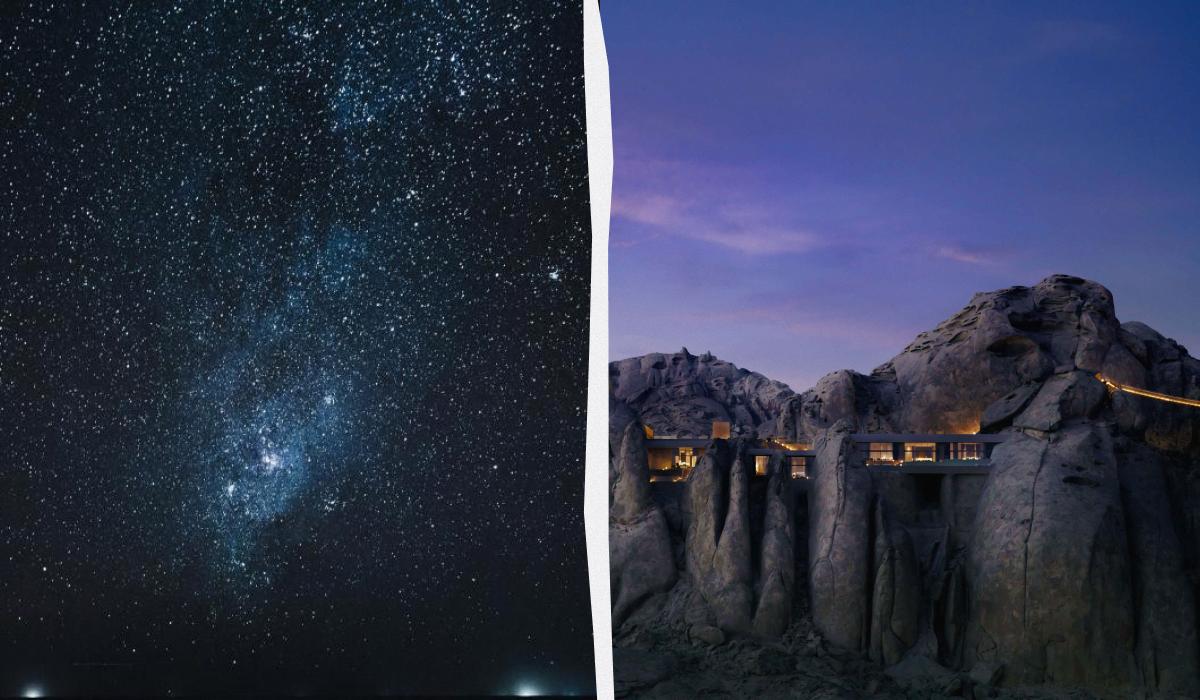
Desert Rock Resort and Nujuma, a Ritz-Carlton Reserve in Saudi Arabia, have become the first properties in the world to receive official DarkSky Approved Lodgings and Resorts certification.
The two luxury destinations earned the status after meeting strict criteria for preserving natural night skies and managing outdoor lighting.
According to Euronews Travel, DarkSky, an international organization that works against light pollution and promotes responsible outdoor lighting, introduced its Approved Lodgings and Resorts certification program in August 2026. Light pollution, caused by excessive artificial illumination, obscures celestial bodies near urban centers and impacts nocturnal environments worldwide.
The certification process evaluates the location of each hotel, its management's understanding of nocturnal environmental sensitivity, and the specific measures taken to reduce light impact across the property.
Villas and astronomy on the Red Sea
Nujuma, a Ritz-Carlton Reserve, covers 30,000 square meters and sits surrounded by islands in the Red Sea along Saudi Arabia's western coast. Ritz-Carlton Reserve is an ultra-luxury arm of Marriott International, operating boutique properties in secluded destinations worldwide.
The retreat offers beachfront relaxation and private villas with panoramic floor-to-ceiling windows designed to provide sweeping views of the night sky. The hotel also retains a dedicated astronomy expert on staff to guide guests through stargazing sessions.
Mountain suites in the Hejaz range
Desert Rock Resort is located in the Hejaz Mountains, a highland range running parallel to the Red Sea coast in western Saudi Arabia. The resort features 54 villas and 10 suites built directly into the mountain landscape or suspended from rocky peaks.
Recognized for its clear night skies, specialized outdoor lighting techniques, and guest education programs, Desert Rock houses an Astronomy Center equipped with powerful telescopes. Guests can observe planets, constellations, meteor showers, and other celestial wonders, or take guided night stargazing hikes through the surrounding desert terrain.
Surge in international astrotourism
Ukrainian news agency UNIAN reported that astrotourism, the practice of traveling to view celestial events and unpolluted night skies, has grown steadily in global popularity in recent years.
For instance, Spain welcomed large numbers of visitors this summer seeking to observe a total solar eclipse, with a similar phenomenon expected to draw crowds again next year. Likewise, trips to northern countries to view the northern lights remain among the most sought-after experiences for travelers interested in nocturnal tourism.


