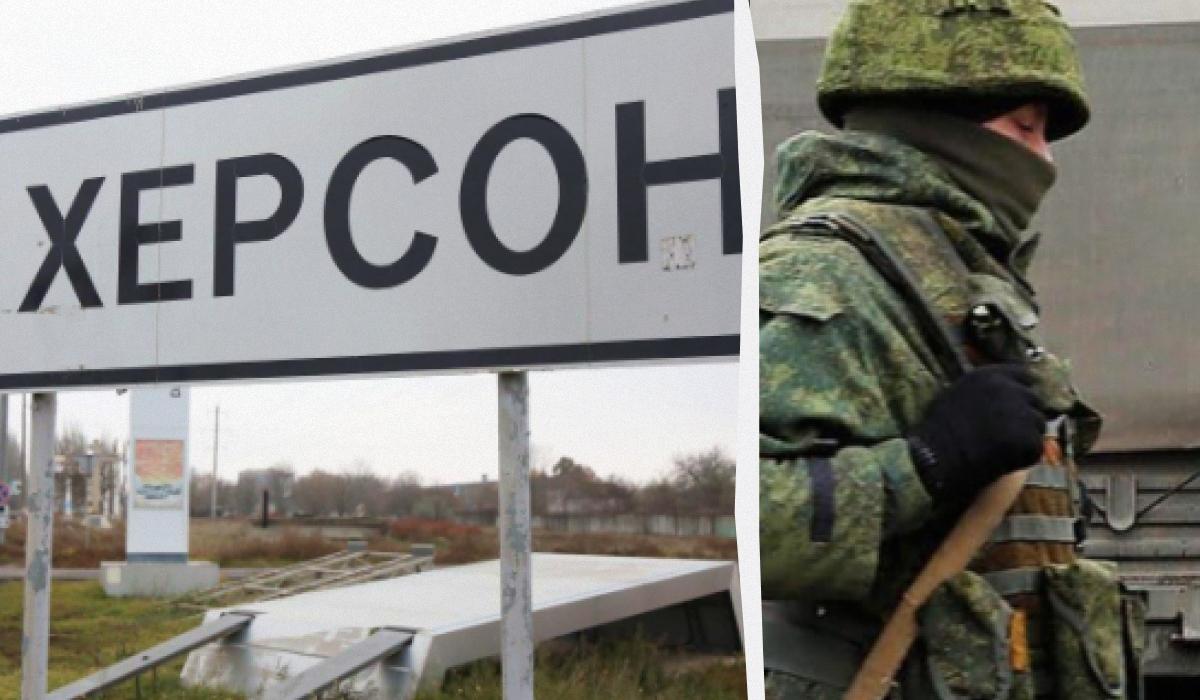
A 52-year-old market vendor named Yuriy survived a Russian drone attack in Kherson as occupation forces intensify strikes against civilians across the Dnipro River.
The vendor, a resident of neighboring Mykolaiv Oblast, was selling produce at a local market when an unmanned aerial vehicle chased him down. Yuriy gestured toward his vegetables to signal to the drone operator that he was merely a farmer, but the drone launched an immediate strike on him and his vehicle.
Yuriy suffered a concussion, explosive trauma, and multiple shrapnel wounds across his back and limbs. Medical staff treating him confirmed that his injuries are not life-threatening. Video footage of the pursuit circulated widely across social media platforms.
The Center for European Policy Analysis, a public policy institute based in Washington, D.C., reported that such brutal attacks on civilians have become daily occurrences in Kherson. The city, a regional capital in southern Ukraine liberated from Russian occupation in November 2022, remains under constant artillery and drone bombardment from positions across the river.
Trapped Residents Face Human Safaris in Oleshky
The humanitarian situation is most severe on the occupied left bank of the Dnipro River in the ruined frontline town of Oleshky. Media reports indicate that Russian occupation forces systematically conduct human safaris in the area to forcibly evict the remaining population.
Fewer than 2,000 residents remain in Oleshky out of a pre-war population of 24,000. Russian forces refuse to allow civilians to leave the area, leaving thousands trapped in a town that suffered catastrophic destruction when the Kakhovka Hydroelectric Power Plant dam was destroyed in June 2023.
Analysts report that occupied Oleshky receives almost no delivery of basic necessities. Local medical facilities survive solely by operating electrical generators, and safe evacuation routes do not exist for residents seeking to escape.
Human Rights Watch, an international non-governmental organization that investigates global rights abuses, published a report in July describing living conditions inside Oleshky as hellish.
Meanwhile, approximately 60,000 civilians remain on the Ukrainian-controlled right bank in Kherson city under continuous Russian shelling and aerial attacks.
Occupation Checkpoints and Human Shield Tactics
Zarina Zabrisky, an American journalist working as the only foreign reporter continuously based in Kherson, said most residents on the left bank do not attempt to flee because any escape attempt carries a high risk of death.
Zabrisky said residents have not left because evacuation routes are heavily mined and monitored by Russian drones, creating what she described as a siege by mines and drones. She noted that daily life for male residents under Russian occupation has turned into a deadly trap.
Ukrainian men attempting to pass Russian military checkpoints risk detention, forced mobilization into enemy units, or arrest, particularly if inspectors discover patriotic tattoos.
The only path to reach Ukrainian-controlled territory requires a lengthy detour through Belarus and Russia. Traveling that route requires a valid Ukrainian passport or an official document issued by the Russian occupation administration. Obtaining Russian documents creates a direct risk of forced mobilization into the Russian armed forces.
Zabrisky added that other residents stay behind because they are elderly, have limited physical mobility, lack financial resources, fear losing their homes, or refuse to abandon family members, pets, and livestock.
The journalist emphasized that Russian forces operate with extreme cynicism by using local civilians as human shields. Russian troops deploy military units and equipment adjacent to residential homes, restrict civilian movement, and exploit the Ukrainian military policy of avoiding strikes on civilian areas.
Zabrisky said that if Russian troops did not conceal themselves behind civilians, Ukrainian forces would destroy enemy positions and push occupiers out much faster. Local witnesses reported seeing Russian soldiers repeatedly force their way into occupied residential buildings to take cover from incoming Ukrainian drone strikes.
Control of Dnipro Islands and Humanitarian Demands
Military operations along the Dnipro River have exacted a heavy toll on Ukrainian forces. In October 2023, Ukrainian marines crossed the river and established a tactical bridgehead near the village of Krynky.
The operation involved intense fighting, with a single Ukrainian marine brigade recording approximately 700 soldiers killed or wounded before troops withdrew from the position in July 2024.
Dmytro Pulinets, commander of the 34th Separate Marine Brigade, explained in a written statement why Russian forces maintain a desperate defense of islands in the Dnipro riverbed.
Pulinets noted that controlling these islands allows Russian forces to conduct aerial reconnaissance, fire artillery, deploy drone systems against Kherson and nearby settlements, and deter Ukrainian troop movements across the Dnipro River.
Reports published by Russian military bloggers state that Ukrainian drone operators maintain such precise and constant coverage that Russian units on the river islands are frequently cut off from resupply lines and literally starve.
Zabrisky stated that international pressure on Russia must increase to guarantee independent humanitarian access and enable deliveries of food, medicine, and essential services to occupied territories.