Russia lacks the military and economic capability to wage a large-scale war against NATO despite rising concerns over potential Kremlin aggression, according to an analysis published by Newsweek.
Newsweek columnist Shane Croucher outlined five key factors preventing President Vladimir Putin from launching a major Western conflict, while warning that Russia could still undertake reckless actions to test alliance cohesion.
The primary constraint stems from severe Russian casualties during the ongoing invasion of Ukraine. According to Newsweek, Russian forces have suffered total casualties of 1.4 million personnel, including 450,000 troops killed, alongside a sharp decline in recruitment rates that began at the end of 2025.
Despite absorbing these heavy losses, Russian troops have failed to achieve significant tactical breakthroughs. During April and May, Russian forces lost more territory to Ukrainian defenders than they succeeded in capturing.
Croucher argued that a military struggling to break through heavily fortified Ukrainian defensive lines would face an even more overwhelming challenge when confronted by a unified NATO coalition led by the United States.
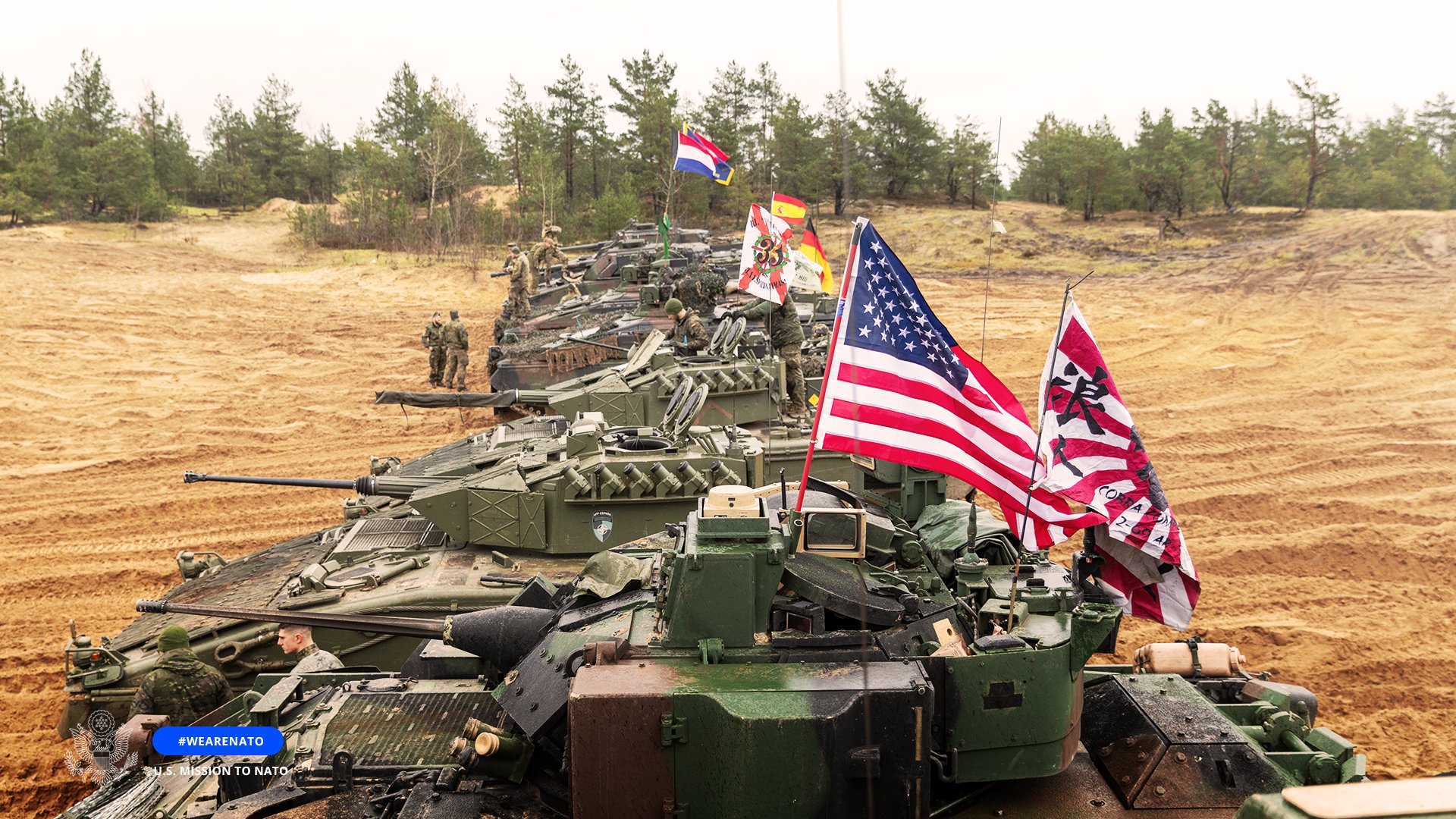
NATO, the 32-nation Western military alliance formed in 1949, maintains significant superiority in conventional military hardware, air power, and joint operational readiness compared to individual state forces.
China and Economic Weakness
China's diplomatic and economic position creates a second major obstacle to any Russian military campaign against Western nations. Moscow's economic isolation has forced it into the role of a junior partner to Beijing, but Chinese President Xi Jinping has not publicly declared any military support for Russia's war effort.
Croucher explained that Beijing will not back a war between Russia and NATO because such an escalation directly conflicts with Chinese national interests. A wider conflict would inevitably spill beyond a regional boundary, dramatically heighten the risk of nuclear weapons usage, destroy the geopolitical stability China requires for its ambitions regarding Taiwan, and severely endanger the European export market upon which Beijing depends.
The deteriorating condition of the Russian domestic economy serves as a third key factor preventing a war with NATO. Russia's economy continues to contract under the weight of wartime expenditures and international sanctions.
Reserves held in Russia's National Wealth Fund have shrunk substantially, leaving the country significantly poorer as a consequence of its war against Ukraine while member nations of the NATO alliance steadily increase their defensive expenditures.
The National Wealth Fund was established by Moscow as a sovereign reserve to support the state pension system and buffer the national budget during economic shocks. Its exhaustion severely limits the Kremlin's ability to finance a prolonged military conflict against well-funded Western economies.
Nuclear Constraints and Technological Gaps
Nuclear deterrence provides a fourth line of defense protecting Western countries from Russian attack. NATO's nuclear shield is anchored by three alliance members that possess nuclear weapons: the United States, the United Kingdom, and France.
Croucher noted that while nuclear signaling is a favored tactic in Putin's political arsenal and is frequently invoked by Russian officials, the strategy carries severe risks alongside its strategic advantages.
Furthermore, critical components of Russia's nuclear modernization drive are encountering serious technical setbacks. A test of the Sarmat intercontinental ballistic missile failed in 2025. The Stockholm International Peace Research Institute, an independent arms research organization known as SIPRI, linked these development failures directly to Western sanctions and the economic strains of the war in Ukraine.
A fifth vulnerability is Russia's inability to manufacture advanced microchips domestically. Russian defense manufacturers rely on complex procurement schemes to acquire computer components for strike drones, as legal purchases remain blocked by international trade sanctions.
Croucher emphasized that scale is the decisive factor in modern military technology competition. US private sector investment in artificial intelligence reached 285.9 billion dollars in 2025. By comparison, the US Department of Defense requested 53.6 billion dollars specifically for autonomous navigation and uncrewed platforms in its fiscal year 2027 budget request.
Findings from the Center for Intelligence and Security of Canada, known as CSIS, further highlight Russia's technological shortcomings. CSIS researchers analyzed hardware produced by a leading Russian drone manufacturer and discovered that despite loud promotional claims of swarm capability and full autonomous flight, these features were absent in practice and were never deployed by Kremlin forces.
The Risk of a Limited NATO Test
Notwithstanding these five major structural weaknesses, Croucher warned that Putin could still initiate rash actions against NATO. The Russian leader has repeatedly shown a willingness to absorb human and economic costs that Western analysts had considered prohibitively expensive.
A limited military operation designed to test NATO's commitment to collective defense remains an attractive option for Moscow precisely because such a probe would be relatively low-cost for Russia.
US intelligence reports suggest the period between autumn 2026 and 2029 represents the most likely window for Moscow to test the alliance. Intelligence assessments indicate that a full-scale ground invasion is the least likely scenario, as a conventional land assault would immediately trigger Article 5, NATO's mutual defense clause.
However, American intelligence analysis indicates that Putin's weak battlefield position in Ukraine could actually increase his incentive to escalate tensions with NATO. A defeat in Ukraine, or a settlement that fails to deliver outcomes Putin can portray at home as a victory, would leave him needing a major strategic distraction or a way to fracture Western support for Kyiv by testing alliance cohesion.
Putin could also be emboldened by existing vulnerabilities within the alliance. Ground forces in Europe are not NATO's primary strength, and allied air defense systems are currently evaluated as inadequate to meet major threats.
European Intelligence Warnings
Warnings from European security officials align with these intelligence assessments. Michal Koudelka, head of the Security Information Service of the Czech Republic, warned that Russia could soon launch an attack against NATO to test its resolve. Koudelka indicated such an operation could involve a limited cross-border invasion, false-flag provocations, or a wide-ranging influence campaign.
Additionally, President of Latvia Edgars Rinkevics warned that NATO is failing to keep pace with the rapid development of aerial attack technologies demonstrated in the war in Ukraine. Rinkevics stated that Europe's current approach to air defense preparation risks becoming obsolete by the middle of next year.