

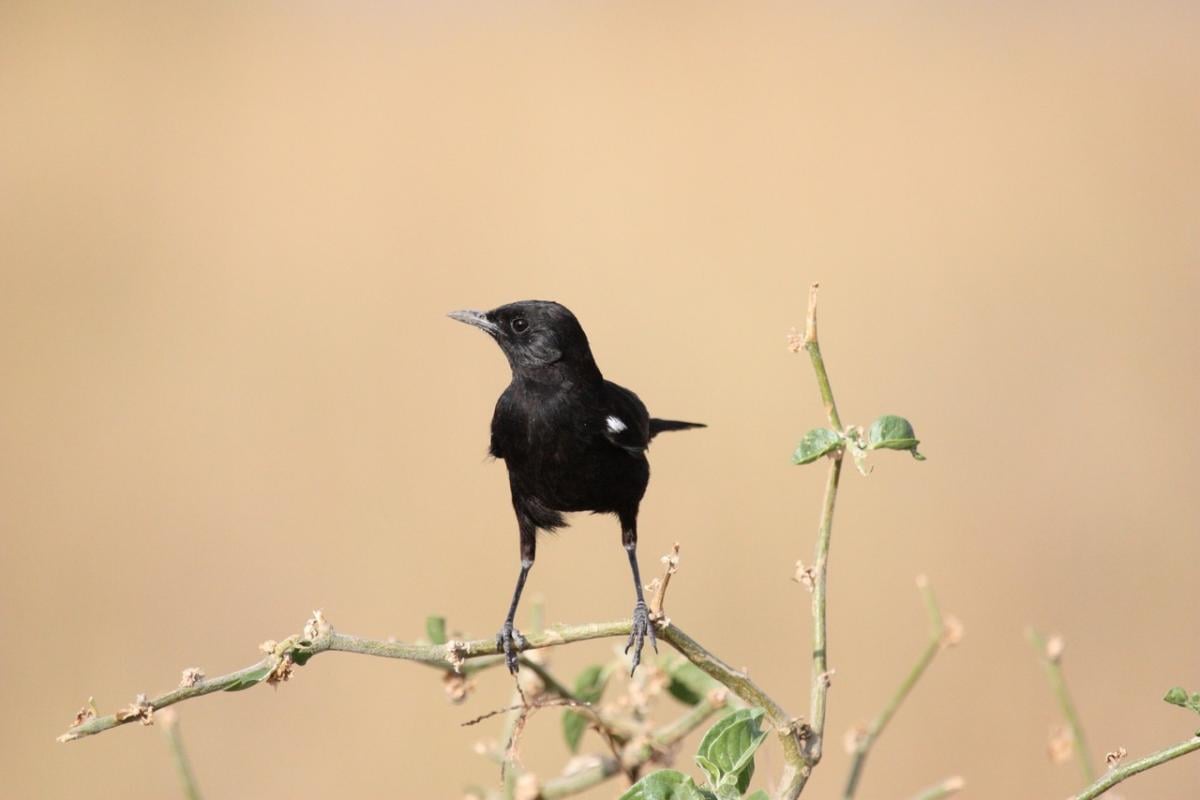
Red-winged blackbirds in the state of Oregon are surprisingly reluctant to physically attack rattlesnakes near their nesting sites, according to the website Scitech Daily.
A study published in the scientific journal Behavioral Ecology examined how the birds reacted to several potential predators that raid nests in the western part of the state. Oregon is located in the Pacific Northwest region of the United States.
Researchers placed realistic animal models on platforms a few metres from the nests of the blackbirds, a species known for its aggressive nest defence.
During experiments involving dozens of nests, the birds attacked a rattlesnake model only once. In contrast, they attacked ground squirrels more than 80 times. About half of the nests contained eggs, while the other half held chicks.
Rattlesnakes are native to western Oregon, the region west of the Cascade Mountains, a major mountain range spanning the Pacific Northwest. However, the venomous reptiles were largely exterminated in the area during the 1800s. As a result, the blackbirds living there today likely have little to no experience interacting with the snakes and rarely encounter them.
The study also tested the birds' reactions to scrub jays and non-venomous garter snakes, which are common across North America.
When confronting the rattlesnakes, the blackbirds responded by dive-bombing in their direction, but they almost never made physical contact.
Parental investment theory
Scientists believe that nest defence strategies depend on the level of risk the parents themselves face when protecting their young.
The experiment provided a new opportunity to test parental investment theory. This biological model helps researchers understand when animals will expend more effort or take on greater danger to protect their offspring, and when they will prioritise their own survival.
Blackbird defensive behaviour is well studied and changes depending on how dangerous a predator is to the nest, as well as the risk to the parents when approaching the threat.
For example, the birds might attack a squirrel that is eating their eggs, but they prefer to stay away from a hawk that could eat the adult birds.
In Europe, blackbirds are permanent residents of gardens and are highly territorial. Males are easily recognisable by their pitch-black plumage and bright yellow beak, while females are a more subdued brown colour.
The birds bring significant benefits to gardens. If they choose a location for nesting, they will remain there for many years.


