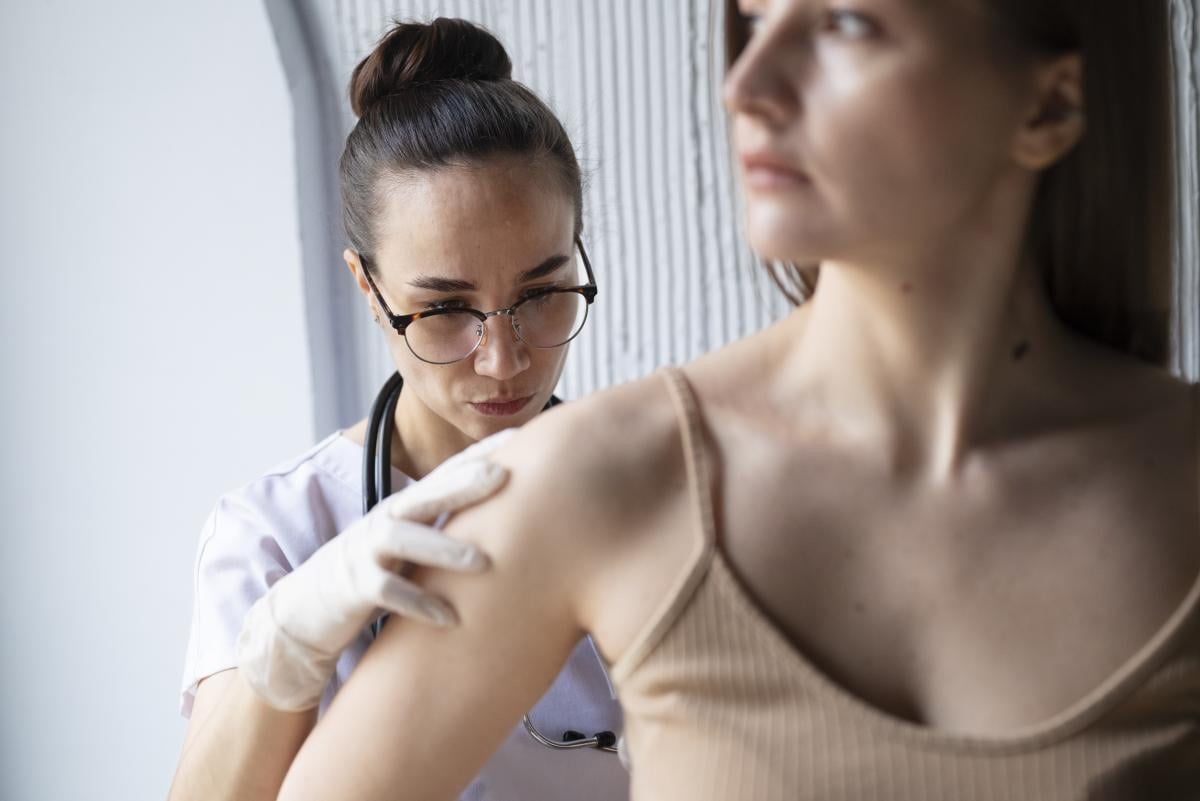
Red spots on the skin, often called "red moles," are usually harmless but in some cases warrant a visit to the doctor, according to a dermatologist at Odrex Medical House.
Alona Zazulinska told UNIAN that most red spots people call "red moles" are actually cherry angiomas, benign vascular growths that form when small blood vessels in the skin multiply locally.
Why angiomas appear
Zazulinska said medicine has not established an exact cause, but contributing factors can include age-related changes in blood vessels, heredity, hormonal fluctuations such as those during pregnancy or menopause, prolonged sun exposure, natural skin aging and minor injuries. She added that in rare cases, a sudden appearance of many new angiomas in a short period, known as eruptive angiomas, can be linked to certain systemic illnesses or medications.
In most cases, cherry angiomas pose no health risk. If a spot has a typical appearance, does not change, grow, hurt or cause discomfort over the years, no treatment or additional testing is needed.
When to worry about angiomas
Zazulinska said the number of cherry angiomas gradually increases with age, most often appearing after age 30 to 40 and becoming numerous after 50 to 60. She attributed this to natural aging of blood vessels, age-related changes in connective tissue and hormonal shifts, particularly in women after menopause. Angiomas affect both men and women, though she said they may become more noticeable in women due to hormonal changes.
Safe angiomas are small, evenly red or maroon in color, do not hurt or itch, do not grow and do not bleed without cause. A dermatologist visit is necessary if an angioma grows rapidly, bleeds regularly, changes shape or color sharply, becomes inflamed, causes pain or ulceration, or if dozens or hundreds of new red spots appear within a few weeks. Zazulinska said an angioma is not a precancerous condition and does not turn into skin cancer.
Should you remove a red mole
If a cherry angioma is a cosmetic concern or is frequently irritated by clothing, jewelry or shaving, it can be safely removed at a clinic, Zazulinska said. Doctors most often use vascular laser, electrocoagulation, radiowave methods or, in some cases, surgical removal, choosing the method based on the size, location and number of growths.
She warned against removing an angioma at home, tying it off with thread, burning it with acids or using folk remedies, saying these can cause bleeding, infection, scarring and complicate future diagnosis. If the angioma does not change, is not injured and causes no discomfort, removal is unnecessary.
What happens if an angioma is injured
Accidentally injuring an angioma often causes fairly heavy bleeding due to the many small blood vessels involved, followed by a scab, though it typically heals without serious consequences, Zazulinska said. She advised pressing a clean cloth on the area for 10 to 15 minutes and applying antiseptic if needed, and seeing a doctor if bleeding does not stop or recurs. If an angioma is repeatedly injured, she said it is better to have it removed at a clinic as a planned procedure.

Zazulinska is a dermatovenereologist who specializes in diagnosing, treating and preventing conditions of the skin, hair and nails. She consults on and treats allergic and atopic dermatitis, eczema, seborrheic dermatitis, acne, pityriasis rosea, lichen planus, herpes and fungal skin infections, and sexually transmitted infections including syphilis and gonorrhea.