

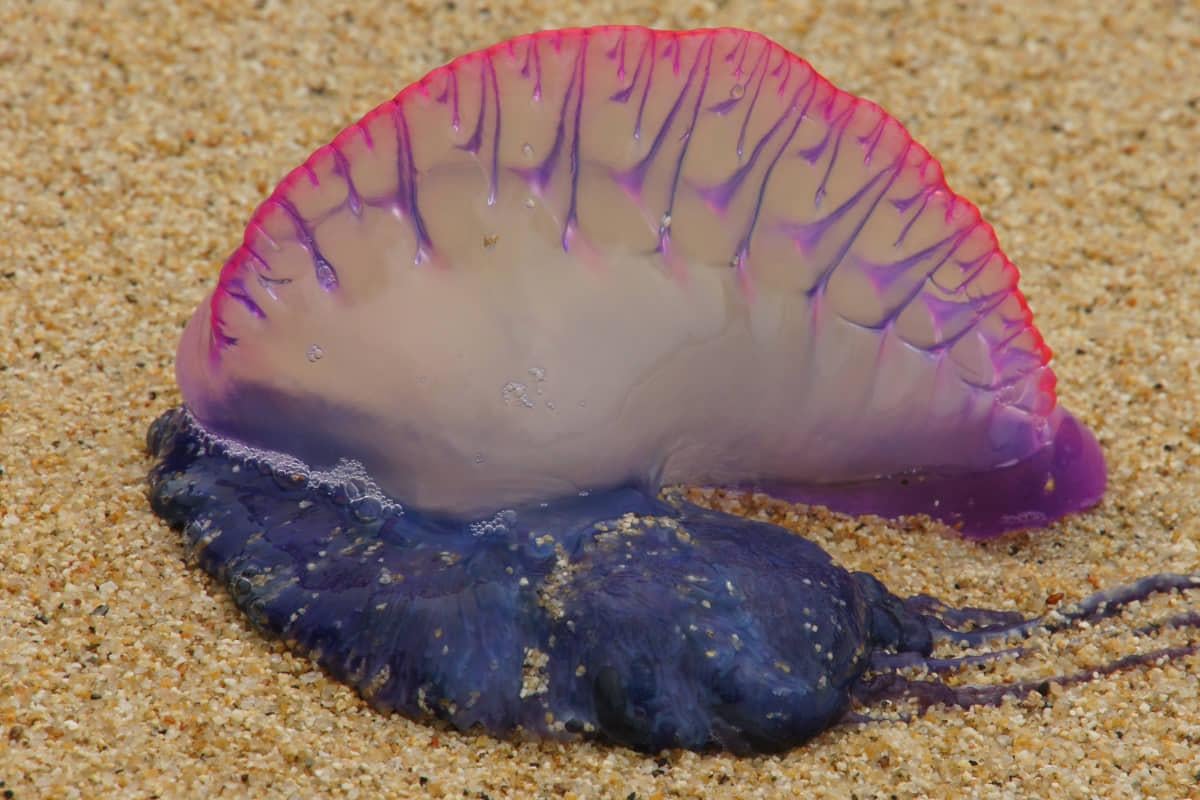
European Atlantic coast authorities are warning holidaymakers about the Portuguese man-of-war, a dangerous sea creature resembling a jellyfish that leaves painful burns on human skin. The Independent reported that sightings near beaches have increased recently.
In southern France, the department of Pyrénées-Atlantiques warned tourists after detecting the organisms. In Spain, the city council of San Sebastián on the Cantabrian coast uses a flag system on beaches such as Ondarreta, flying a white flag when Portuguese man-of-war are in the water and a red flag when swimming is banned.
San Sebastián officials noted that creature numbers vary during the day, so beach closures depend on the count and size of specimens found.
Colonial organism structure
Physalia physalis is often mistakenly called a jellyfish, but it is actually a colonial hydrozoan made of small creatures called zooids. Each zooid handles a specific function such as feeding or reproduction, and they cannot survive separately.
The British organization Wildlife Trusts described the Portuguese man-of-war as a large translucent purple float bubble with a pink crest and long bluish-purple tentacles. The organization noted that the organisms drift on the sea surface, sometimes tangle in seaweed masses, and become almost transparent with a light purple tint after washing ashore.
Sting treatment and lifeguard training
The tentacles pose the greatest danger and can sting long after the creature dies. The Pyrénées-Atlantiques department recommends rinsing stings with sea water or a solution of one part food vinegar to three parts warm sea water, while avoiding fresh water, rubbing, or scratching the skin, and seeing a doctor if pain persists.
Venomous sea animals have increased on the beaches of Aquitaine along France's Atlantic coast in recent years. The Regional Health Agency of Nouvelle-Aquitaine, located in Bordeaux, reported that most lifeguards in Gironde, Landes, and Pyrénées-Atlantiques can identify Portuguese man-of-war and provide first aid.
Information boards at beach entrances across the region display posters on Portuguese man-of-war, pelagic jellyfish, and weever fish, which are venomous fish that can pose a danger to people.
Seaweed impacts in the Caribbean
The report also noted that since 2011, beaches in South Florida and across the Caribbean basin have seen shores covered in massive piles of foul-smelling brown seaweed. For people living and working on the coasts of the Caribbean Sea, the Gulf of Mexico, and the tropical Atlantic, masses of sargassum seaweed clog ports, hinder fishing and shipping, and damage marine ecosystems.


