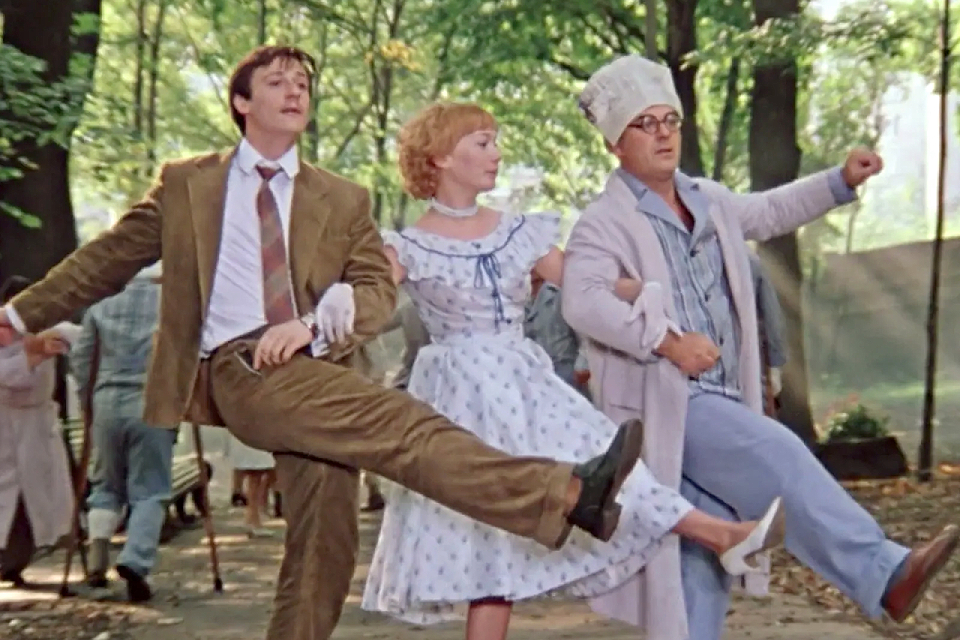
The creation of the iconic Soviet theatrical play and movie Pokrovsky Gates involved autobiographical secrets, political bargaining with television executives, and a secret midnight prop theft. Written by dramatist Leonid Zorin and later brought to the screen by director Mikhail Kozakov, the story became one of the most beloved classics of Soviet cinema.
Zorin wrote the original play in 1974 to mark his 50th birthday. Although the narrative is set in Moscow, the playwright drew heavily on his own youthful experiences living in a communal apartment at 13 Petrovsky Boulevard rather than on Pokrovka Street.
Many of the central characters were directly modelled on Zorin's former neighbours. The character of Margarita Pavlovna was based on a French language translator whose first husband was a refined intellectual and whose second husband was uncultured, reflecting the dynamic between the characters Khobotov and Bortsov. Zorin also based the character of Kostik partly on himself, though Zorin was not a historian. Zorin later noted that apart from the aunt, he did not have a single invented figure in the play.
To shape the story, Zorin adjusted its timeline forward by approximately ten years. Instead of taking place in the late 1940s, the events were shifted into the period of the Khrushchev thaw, a time of cultural liberalization in the Soviet Union. He also shifted the physical location closer to Pokrovsky Gates. The play enjoyed overwhelming success on stage after being produced almost immediately at the Theatre on Malaya Bronnaya in Moscow.
Political hurdles and Mosfilm resistance
Transitioning the story from stage to screen proved far more difficult. Executives at the state film studio Mosfilm rejected the project, deeming the storyline too frivolous for cinema production. Seeking an alternative route, Kozakov approached Ekran, a creative association responsible for producing television films for the state network.
Television executives agreed to consider the project but imposed a strict condition. Kozakov had to agree to act in the role of Felix Dzerzhinsky, the founder of the Soviet secret police, in the television series State Border. Although Kozakov accepted the acting role and fulfilled his end of the bargain, studio officials still withheld permission to begin filming Pokrovsky Gates.
The project was saved by actress Sofya Pilyavskaya, who was cast to play Kostik's aunt in the movie. Pilyavskaya was personally acquainted with Sergei Lapin, the powerful chairman of the USSR State Committee for Television and Radio Broadcasting, known as Gosteleradio. Her direct intervention with Lapin finally secured official authorization to start production.
Casting Oleg Menshikov as Kostik
With production approved, casting began for the lead role of Kostik, which required a carefree young man. Kozakov auditioned approximately 19 actors, but remained unsatisfied with every candidate.
The deadlock was broken by Kozakov's wife, Regina Bykova, who saw the young actor Oleg Menshikov performing on television in the partisan film I Wait and Hope. She suggested Menshikov for the part, leading to an immediate screen test. Zorin expressed great admiration for Menshikov's performance during the audition, and the actor was formally cast in the role that launched his career.
Midnight prop theft and studio sets
Securing locations and set pieces presented further challenges for the production crew. The interior of the central communal apartment was built from scratch inside a Mosfilm studio pavilion, while exterior filming took place in Nashchokinsky Lane in central Moscow.
Prop masters felt the chosen courtyard lacked the distinct atmosphere needed for the film. To solve the problem, crew members located a plaster statue of a pioneer boy holding a ball and covertly transported it to the filming site at night without formal authorization. The covert operation placed the statue in the courtyard, creating what became one of the most recognizable visual elements of the film.