

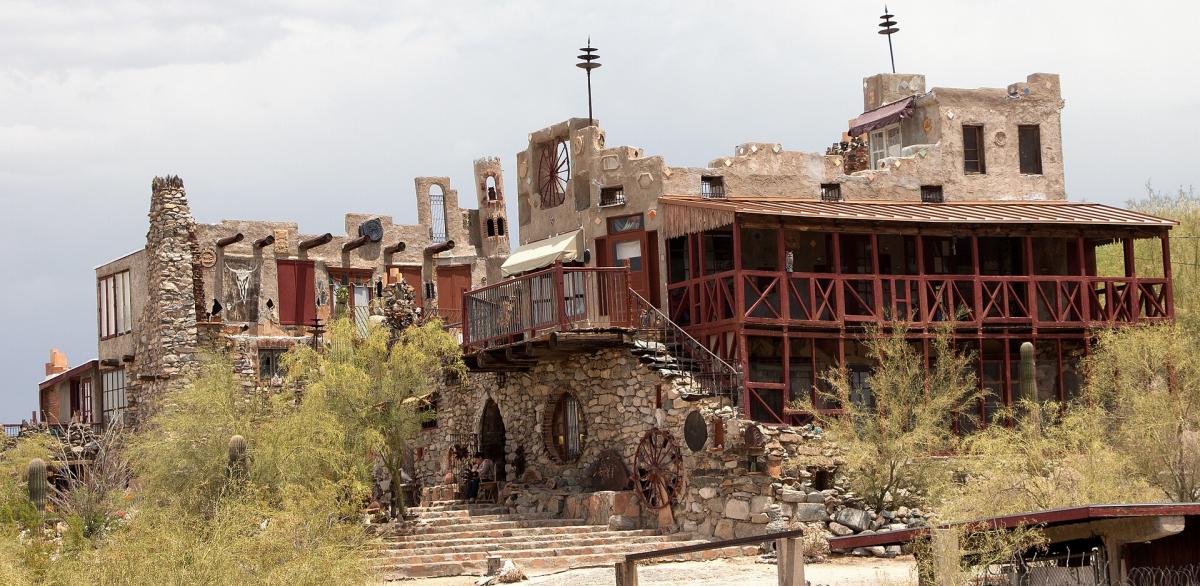
The National Trust for Historic Preservation has named Mystery Castle in Phoenix, Arizona, among America's 11 most endangered historic sites for 2024. The decision by the conservation organization has drawn renewed attention to the sprawling 18-room property built in the foothills of the South Mountains from discarded waste and desert stone.
Seattle businessman Boyce Luther Gulley built the house by hand between the 1930s and 1945 for his daughter, Mary Lou. According to the National Trust, Gulley constructed the landmark without formal architectural or engineering training, combining local minerals, folk art elements, and recycled objects.
Phoenix, the state capital of Arizona, attracted many people suffering from respiratory illnesses in the early 20th century due to its warm, dry desert climate. Gulley moved to the area in the late 1920s after being diagnosed with tuberculosis, leaving his wife and daughter in Seattle. Missing his young daughter, who loved building sandcastles, he began assembling a permanent stone fortress from whatever materials he could scavenge.
The Times of India reported that the unusual hand-built house has since become one of the most famous architectural landmarks in Phoenix. While the National Trust dates the main construction period to between 1934 and 1945, architectural historians note that Gulley had started work at the site earlier.
Recycled materials and hand-built design
The sprawling house was constructed to match the natural slopes of the hillside. Gulley incorporated discarded items directly into the structure, using salvaged railway components as structural beams and decorative elements, alongside rejected bricks and carefully laid desert stone.
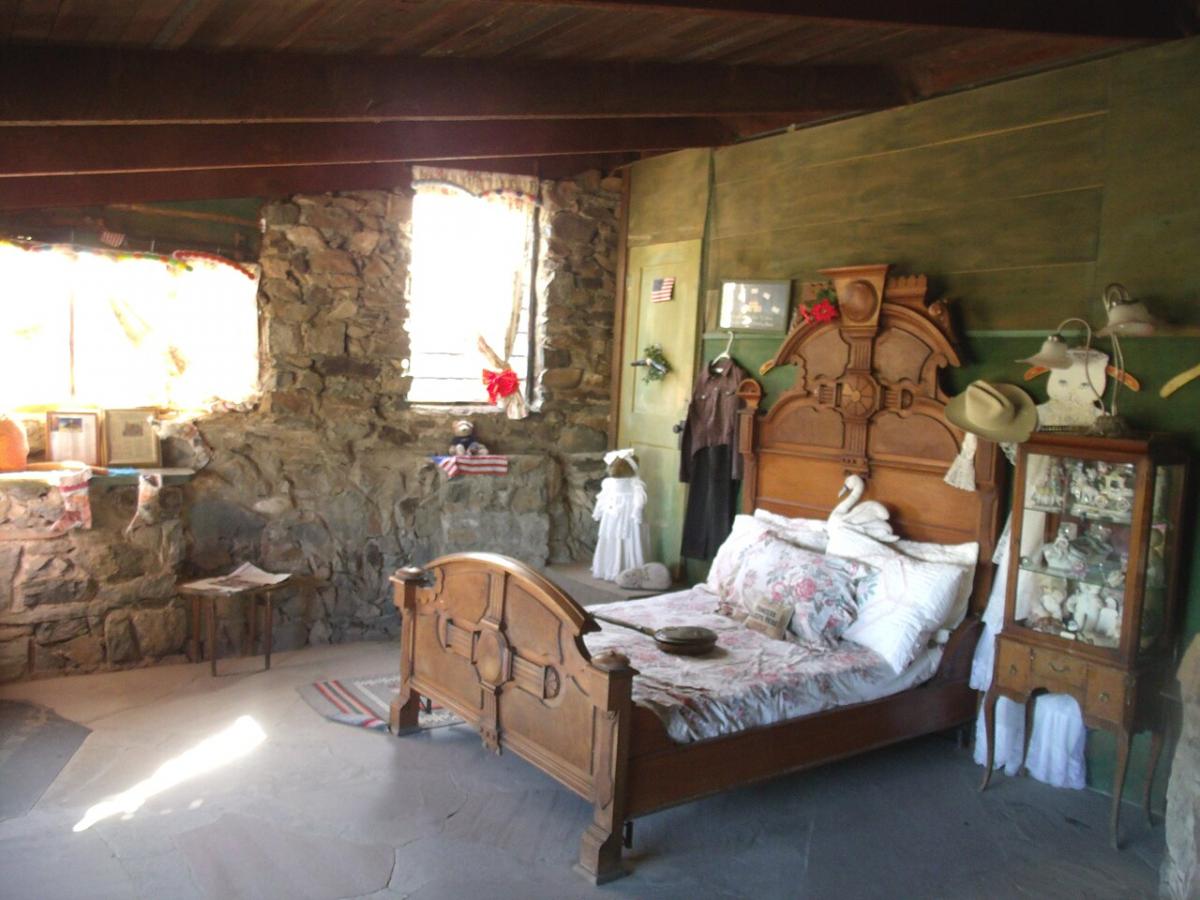
Inside, the 18-room structure contains a chapel, a bar, and a specific room designated as Purgatory. The interior also features 13 fireplaces, a network of staircases, and unusual passages, with custom furniture built directly into the stone masonry.
Window frames and decorative details were crafted from recycled car parts, telephone poles, and salvaged materials. Mary Lou Gulley was 22 years old when she discovered that her late father had willed the property to her.
Mary Lou and her mother, Frances, relocated to Arizona to live in the house, which was soon given its official name. A 1948 feature article in LIFE magazine, a major American pictorial news publication, highlighted Mary Lou and her home, establishing its public title as Mystery Castle.
Public tours and long-term preservation
Following the magazine publication, curious visitors began arriving at the site, prompting Mary Lou and her mother to begin offering guided tours. Mary Lou served as the chief caretaker and guide for decades, sharing the history of the building with visitors until her death in 2010.
Before her death, Mary Lou established a foundation to preserve and protect the site. The property is now recognized as a key example of American folk architecture and an early model of material reuse, leading to its 2024 inclusion on the endangered sites list.
Global examples of recycled architecture
Similar projects involving hand-built structures made from recycled waste have emerged across the Americas. In 2012, Canadian builder Robert Bezo began constructing the Plastic Bottle Village on the islands of Panama, a Central American nation.
Bezo developed a construction technique using discarded plastic bottles stacked inside steel cages to form solid walls. The Panama settlement includes a four-story castle built entirely from plastic bottles, which remains open to visiting tourists.


