

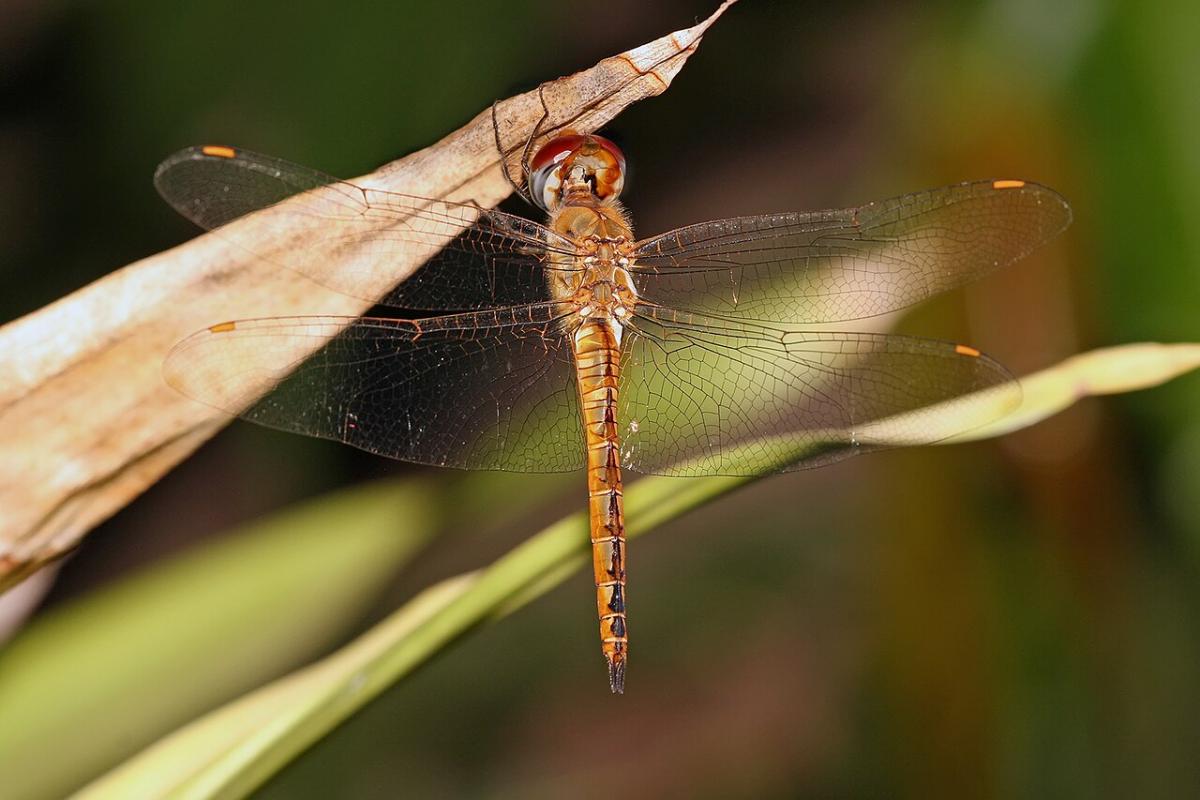
Scientists at Rutgers University-Newark have identified the Pantala flavescens dragonfly as the longest-distance migrating insect in the world, surpassing the monarch butterfly. According to The Times of India, genetic research showed that these dragonflies travel vast distances between continents and interbreed globally, forming a single gene pool. During seasonal migrations, the insects rely on powerful air currents to travel across continents and cross wide ocean stretches.
Global Population Genetic Study
According to a study titled A Global Population Genetic Study of Pantala flavescens published in the journal PLOS ONE, scientists analyzed dragonfly samples collected in Guyana, Japan, India, South Korea, Canada, and the United States. Researchers also examined data from the GenBank and BOLD Systems genetic databases, analyzing 49 mitochondrial DNA sequences in total.
The results revealed very little genetic variation between populations on different continents. Differences between geographically distant groups accounted for only 4.26 percent of genetic variation, with most differences occurring within local populations. This finding indicates that dragonflies worldwide belong to one connected population rather than isolated groups.
Senior study author Jessica Ware explained that if North American dragonflies bred only among themselves and Japanese dragonflies bred only with each other, noticeable genetic differences would exist between the groups. However, researchers found no such differences, confirming that dragonflies from distant regions exchange genetic material.
Wing Structure and Migration Route Details
The ability of Pantala flavescens to cover thousands of kilometers is largely driven by its physical structure. Ware noted that the species features an expanded wing surface area that helps it catch air currents. The dragonfly alternates short bursts of active flight with extended periods of gliding to conserve energy, aided by an enlarged base on its hind wings.
The species requires fresh water to reproduce, linking its migration patterns to seasonal shifts in humidity. Daniel Troast, who analyzed DNA samples for the study, explained that the dragonflies travel from India to Africa during India's dry season, which coincides with the start of Africa's rainy season. Researchers noted that this migration occurs annually.
Interbreeding and Tracking Research
Genetic analysis showed specific connections across long distances. A small group of dragonflies from Texas and the Canadian province of New Brunswick shared distinct genetic traits, while one sample from Canada closely matched a sample collected in the Indian state of Gujarat.
Researchers defined Pantala flavescens as a global panmictic population, meaning individuals from around the world can freely interbreed. Similar population structures have previously been documented in only a few species, including specific corals, eels, and deep-sea fish. The study noted that if the insects followed strict regional migration routes, separate genetic groups would have formed.
Scientists have not yet established exact migration routes because direct tracking devices are too large for the insects. Researchers are currently analyzing genetic data and isotopes in wing chitin to trace their movement paths.
Butterfly Memory Study
Separate research previously reported on insect behavior involved a 10-year-old Japanese schoolboy who conducted a study on butterflies. The student noticed that wild butterflies typically fly away when humans approach.
However, butterflies he raised from caterpillars frequently returned to his hand after being released into the wild. This behavior prompted him to investigate whether butterflies retain memories formed during the caterpillar stage despite undergoing complete metamorphosis.


