

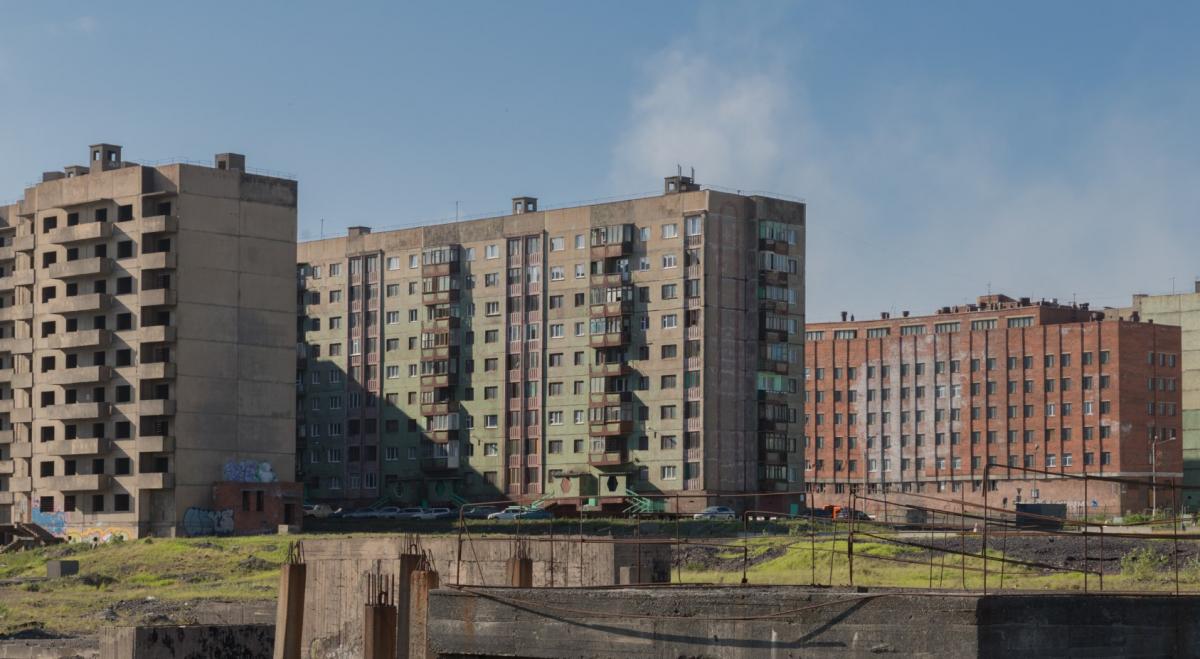
The isolated city of Norilsk in northern Russia has no road network connecting it to the rest of the country. Located in the Krasnoyarsk Krai region of Siberia, the city is home to roughly 176,000 residents and is widely regarded as one of the most inhospitable major urban centers on the planet.
The remote settlement sits approximately 2,400 kilometres from the North Pole and roughly 3,000 kilometres from the Russian capital of Moscow. Geographical position above the Arctic Circle subjects the population to extreme seasonal shifts, including a polar night period in winter when the sun remains below the horizon for about 45 days.
By contrast, the summer months bring several weeks where true darkness never falls. Even without its industrial challenges, life in the Arctic city is defined by long, severe winters, with temperatures frequently dropping to around minus 30 degrees Celsius and snow covering the ground for almost the entire year.
Industrial Origins and Forced Labor Camps
Mediafax reported that the Norilsk area sits atop one of the world's largest natural deposits of nickel, copper, and palladium. To exploit these vast mineral resources, Soviet authorities began constructing a massive mining and metallurgical complex at the site in 1935.
The darkest era of the city's history is tied to Norillag, a system of GULAG forced labor camps established by Soviet leaders. Over the following two decades, hundreds of thousands of prisoners were funneled through the camp network to build mines under brutal conditions. Thousands of inmates perished from extreme cold, starvation, disease, and physical exhaustion.
The GULAG system operated as a government agency overseeing forced labor facilities across the Soviet Union during the mid-twentieth century. Although authorities shut down the Norillag camps in the 1950s, the industrial infrastructure remained in place, continuing to shape the economy and daily life of the region.
Environmental Impact and Logistics
The expansion of heavy industry brought economic significance and local jobs, but it also generated severe environmental degradation. For decades, Norilsk has been ranked among the most polluted industrial locations in the world. High emissions of sulfur dioxide and other airborne pollutants have devastated the surrounding natural environment, destroying plant life across broad areas and leaving the nearby landscape virtually desolate.
Environmental damage reached a critical point in 2020 when the city drew global media attention for a major ecological disaster. A massive volume of diesel fuel leaked from a storage tank at a local thermal power station, contaminating nearby soil and surrounding watercourses.
Transporting goods and people in and out of the region remains a complex logistical challenge due to the complete absence of overland roads. Air travel serves as the main practical option for visitors and residents. Heavy cargo and passenger transport also rely on river transport through the nearby port of Dudinka, located on the Yenisey River, which connects the territory to Arctic shipping routes.


