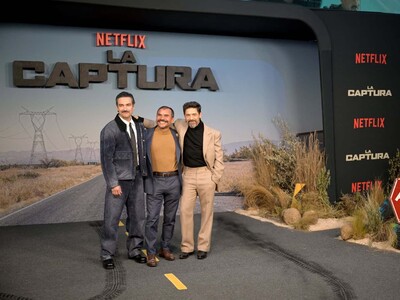
Mexican feature film La Captura releases on Netflix on Friday, recounting the 2016 arrest of former Sinaloa cartel boss Joaquín El Chapo Guzmán by two police officers in Mexico.
The movie focuses on the officers who captured the drug kingpin and refused briefcases of bribe money to let him go, presenting a rare shift in a genre that has historically romanticised cartel violence.
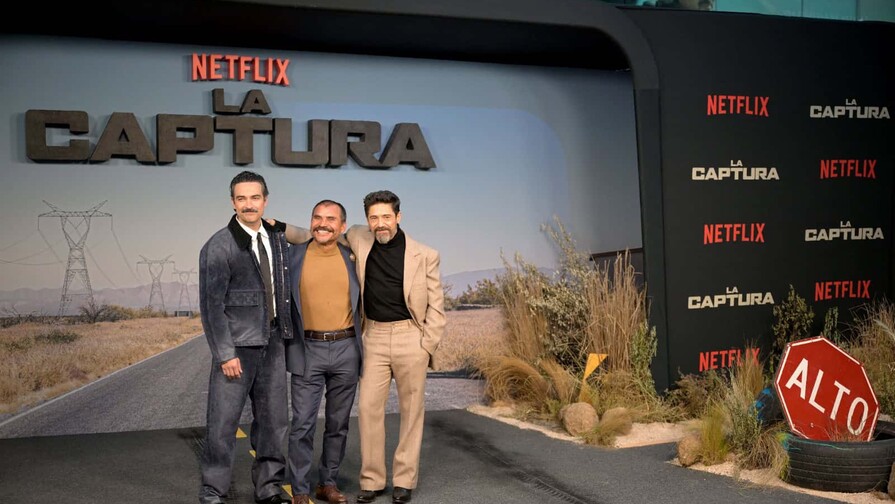
Actors Alfonso Herrera, Noé Hernández, and Héctor Kotsifakis attended the red carpet premiere of the film, also known as Facing El Chapo, in Mexico City on August 18, 2026.
Police officers in Mexico are rarely depicted as heroic figures in television and cinema. Law enforcement personnel in the country are frequently accused of corruption and associated with organized crime networks.
Guzmán, the 69-year-old former head of the Sinaloa cartel, is currently serving a life sentence in a maximum-security prison in the United States.
Real event behind the film
In 2016, Guzmán nearly evaded capture during a high-stakes raid conducted by the Mexican Navy.
After fleeing the naval operation and stealing a vehicle, Guzmán unexpectedly encountered two local police officers.
The officers had received a radio alert regarding the stolen vehicle and intercepted it, only to discover with astonishment that the driver was the most wanted criminal in the world.
United States authorities had previously compared Guzmán to American Prohibition-era gangster Al Capone. Despite his notoriety, the two officers turned down briefcases filled with cash offered by the kingpin.
Instead of accepting the bribes, the officers locked Guzmán inside a nearby hotel until military and law enforcement reinforcements arrived at the scene.
Following the arrest, Mexican authorities relocated both officers and assigned them protected identities to safeguard them from cartel retaliation.
Shift in narco fiction
Over several decades, narcocorridos and television series chronicling Guzmán's prison escapes and criminal career helped construct a widespread legend around his figure.
The narco-genre originally gained widespread popularity in Colombia through productions such as Sin tetas no hay paraíso in 2006 and El cártel de los sapos in 2008.
These productions established a macho, extravagant aesthetic that survived long after the major drug lords of that era were captured or killed.
Broadcasters in Colombia produced a hit television series about cartel leader Pablo Escobar, while Telemundo produced El señor de los cielos, a series based on Mexican drug lord Amado Carrillo Fuentes.
El señor de los cielos is concluding after 10 seasons. The show achieved such popularity that some viewers admitted hoping the main character would avoid capture by law enforcement.
Netflix also previously produced its own biographical drama series focused on the life of Guzmán.
Government response and industry changes
Mexican President Claudia Sheinbaum has actively promoted public campaigns against television shows and movies that she states glorify violence and organized crime.
As part of these measures, President Sheinbaum launched a national musical competition intended to provide an alternative to the rise of narcocorridos across the country.
Omar Rincón, a professor at the Universidad de Los Andes in Colombia and researcher of narco-culture, told AFP that the level of heroification surrounding criminals was crystal clear.
Rincón explained that traditional narco-dramas portrayed the drug trafficker as a popular hero who emerged from a working-class neighborhood to achieve immense success.
However, Rincón noted that graphic narconovelas have lost their commercial momentum because there are no remaining major drug lords whose lives can be adapted into television dramas.
Rincón added that while stories about drug users or victims exist, producers often consider them unappealing for mainstream audiences or suitable only for documentaries, leading filmmakers toward law enforcement perspectives.
Perspectives from the cast and director
Director Chava Cartas has spearheaded this narrative transition toward law enforcement perspectives in Mexican cinema.
In 2025, Cartas directed Contraataque, a film following elite Mexican soldiers combating a cartel hit squad near the United States border.
Contraataque became the eighth most watched movie globally on Netflix during the first half of 2025, and a sequel to the military action film is currently in production.
Speaking to AFP at the Mexico City premiere, actress Paola Fernández, who plays an officer's wife in La Captura, said she felt the film was very necessary.
Fernández stated that audiences had unfortunately become accustomed to idolising themes surrounding drug trafficking, making a hero-focused perspective vital.
Actor Alfonso Herrera, who plays one of the arresting officers, cautioned against taking a naive view of Mexico's ongoing security challenges.
Herrera stressed that while he does not support romanticising security forces, viewers can objectively recognize that different types of Mexican stories deserve to be told.