Apple TV+ launched "Mayday" globally on Friday, September 4, 2026, an action comedy starring Ryan Reynolds and Kenneth Branagh that trades the usual solemn Cold War patriotism for the messiness of a forced, gag-filled partnership between two men who have every reason to distrust each other.
The story is set in 1987 and follows Lieutenant Troy Kelly, a brash U.S. Navy pilot nicknamed "the assassin" for his sharp, sarcastic tongue. Kelly is sent on a top-secret mission to take aerial photographs over Soviet territory alongside a fellow pilot played by Louis Cancelmi, but the operation ends in disaster when their jet is shot down.
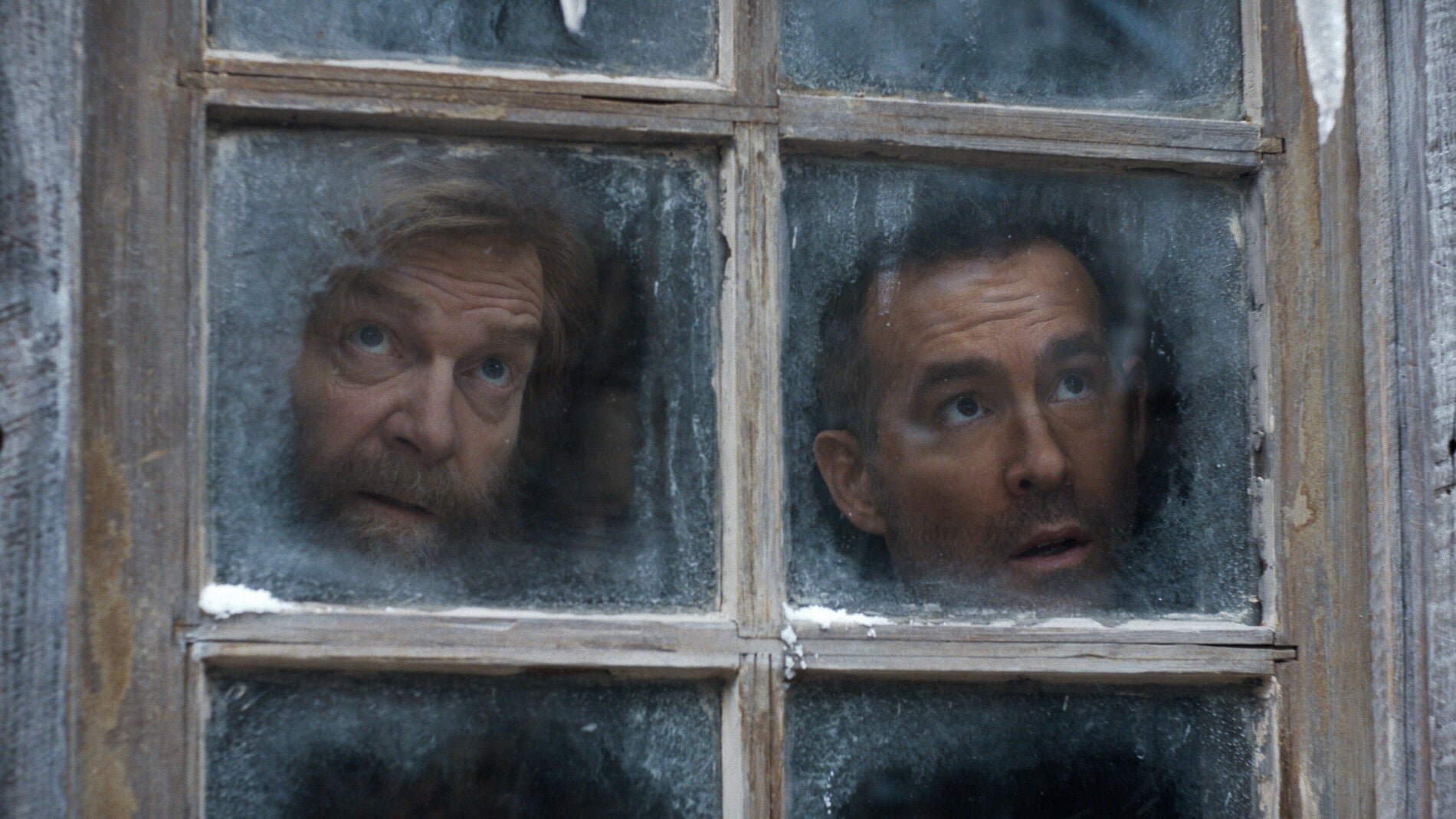
Kelly ejects at the last second, narrowly avoiding the burning wreckage of his jet just before his own parachute catches fire. He wakes from a coma tied to a bunk inside a remote cabin deep in the Russian steppe. His captor is Nikolai Ustinov, a rugged, bearded former KGB agent who has voluntarily cut himself off from the world. Rather than torture his prisoner, Ustinov reveals an almost childlike obsession with American pop culture, decorating his cabin walls with American iconography and repeatedly watching a smuggled videotape of "Top Gun."
A forced alliance
Surrounded by enemies, Kelly has no choice but to accept Ustinov's help. The Soviet, for his part, sees rescuing the American pilot as his own ticket out: a chance to secure political asylum and cross the United States in a motorhome with his daughter, Anna.
The film's momentum comes largely from the unexpected, often hilarious chemistry between its two leads. Kenneth Branagh, the Oscar-winning British actor and director, plays Nikolai as a hermit who is endearing and more than a little unhinged, using twitchy eye movements as running visual jokes. At 65, Branagh also takes on the film's hand-to-hand combat, credibly holding his own as a physical action hero.
Branagh and Reynolds' chemistry
Opposite him, Ryan Reynolds dials down his familiar wisecracking superhero persona. His usual jabs of superiority read here not as cool confidence but as a symptom of arrogance and cultural blindness in a world Kelly does not understand at all.
Directors Jonathan Goldstein and John Francis Daley handle the film's pacing and urban chase choreography with notable ease. Working with cinematographer Barry Peterson and the film's digital effects team, they give the pair's escape a weightless, kinetic energy, including a shootout aboard a train and a chase involving a truck loaded with nuclear missiles.
A bureaucratic villain
The film's central threat is the ruthless officer Volkov, played by a stern Marcin Dorocinski, who embodies the bureaucratic resistance to the political reforms of the era and becomes the real obstacle standing between Kelly and Ustinov's uneasy alliance.
Verdict
"Mayday" is occasionally too pleased with its own nostalgic winks, and it makes little use of Maria Bakalova's dramatic range or David Morse's brief turn as the pilot's convalescing father. But the strength of its close-quarters action scenes, including a laugh-out-loud sequence set inside a closet, tips the balance firmly toward pure entertainment.
The film comes across as an honest crowd-pleaser that skips cheap moral lessons in favor of a thoroughly enjoyable popcorn comedy, a fitting way to close out the summer season with a smart smile.