Marleyda Soto, Daniella Reyes and María Adelaida Puerta, three stars of Netflix's "One Hundred Years of Solitude," said the show's second part reflects the corruption and political violence still shaping Latin America today. The cast spoke to La República ahead of the Bogotá premiere of the new episodes.
In one of the first scenes of the second part, Úrsula Iguarán tries to get her son, Colonel Aureliano Buendía, to free General Moncada, played by Peruvian actor Salvador del Solar. Moncada confronts the colonel before his execution, telling him that he hated the military so much that he ended up just like them.
The premiere took place at the Teatro Mayor Julio Mario Santo Domingo in Bogotá, where more than 350 guests joined the cast. Before the event, Reyes, Soto and Puerta connected over Zoom for a round of interviews about the launch. The first part of the series drew mixed reviews but went on to win awards and a strong audience response.
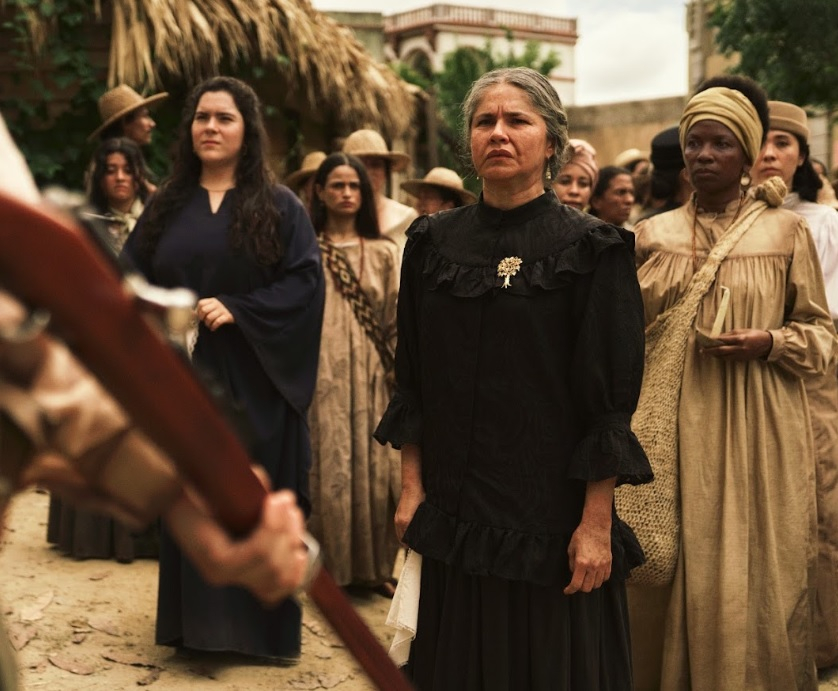
Soto, who plays Úrsula Iguarán, said the success of both the series and the novel comes from how precisely the story portrays Colombians while also working as an X-ray of Latin America as a whole. She said any neighboring country watching the series or reading the book would find parallels with its own history, culture and customs. Soto called that universal quality, despite the story's deeply local and Colombian roots, one of the most beautiful things about "One Hundred Years of Solitude."
Amaranta's return in a decaying Macondo
Puerta joined the cast to play Amaranta and echoed her colleague's view, describing Macondo's small universe as a reflection of the wider world, with the same battles, loves, heartbreaks, sorrows and joys. She said that reflective function is the most important thing the work achieves.
Puerta's character enters a Macondo now in chaos and decline. She said the casting came as a last-minute surprise, comparing it to arriving at a party already underway, except the second part is a tense, murky party. She said she had to approach the role with the wide-eyed surprise of a child handed the best toy, even though the toy is a dark one, since Amaranta carries the weight of everything she did as a young woman. Puerta called it a great challenge but a beautiful one, made possible by the magical realism that turns a reality that could otherwise feel like a knife into something that prompts reflection.
Remedios the beauty and a bigger second season
Reyes plays Remedios the Beauty, the mystical character who seems to stand outside the Buendía family's world and defies its rules. She said readers can identify with the characters, and that the Nobel laureate's writing lets audiences across Latin America see themselves in the story, which she said explains the book's worldwide reception.
The cast said the intention was to make the second part bigger than the first. Soto explained that the first season showed the rise, birth and splendor of Macondo across its first 50 years, its most prosperous period, before violence and politics entered the story. She said those themes grow much stronger in the second part, bringing the decline of Macondo and of the Buendía family, as the characters fall into decay, oblivion and absolute solitude.
Mirroring Latin America's present
Asked whether a good series, like a good novel, must always connect with current events, Soto said it does. She said returning repeatedly to the book as an actor revealed how each reading turns up new elements with striking relevance to what her country, and its neighbors, are living through now. She said themes of corruption and political violence affecting Latin American peoples are more relevant than ever, and that audiences will find a very current portrait of that shared experience.
Puerta said she has always valued being part of projects that question what people are as human beings, since everyday distance can keep people from noticing what is happening around them. She said that is what she loves about the work of Gabriel García Márquez, because it shows audiences what they really are.
Reyes agreed, saying the story shaped the cast personally as they built their characters, and that it felt natural to realize it also mirrors what is happening socially, culturally and politically today. She said that beyond showing Macondo's reality, the story also revealed a reality within themselves.