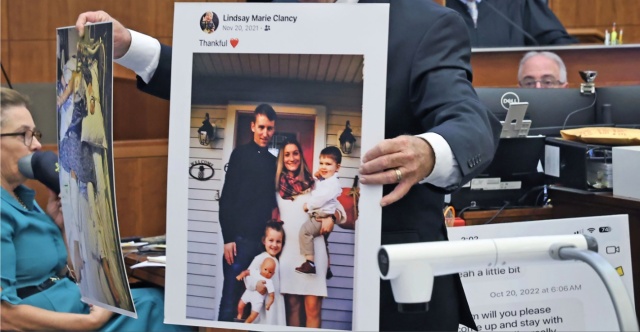
A 12-member jury in Massachusetts began deliberating on Thursday to decide whether Lindsay Clancy is criminally responsible for the January 2023 deaths of her three young children at their home in Duxbury.
The panel of nine women and three men deliberated for approximately three and a half hours at the courthouse before being dismissed for the day by Judge William Sullivan. They are scheduled to return on Friday morning at 9:00 a.m. to resume discussions on a verdict.
Following the conclusion of Thursday's proceedings, defense attorney Kevin Reddington said that Clancy was nervous and frightened as her fate shifted to the jury. The courtroom was filled with journalists and members of the public, including women in the gallery who wore pink garments in a gesture of support for the defendant.
Before attorneys delivered their closing arguments, Clancy wiped her eyes and her shoulders trembled while Judge Sullivan presented the formal legal charges to the courtroom.
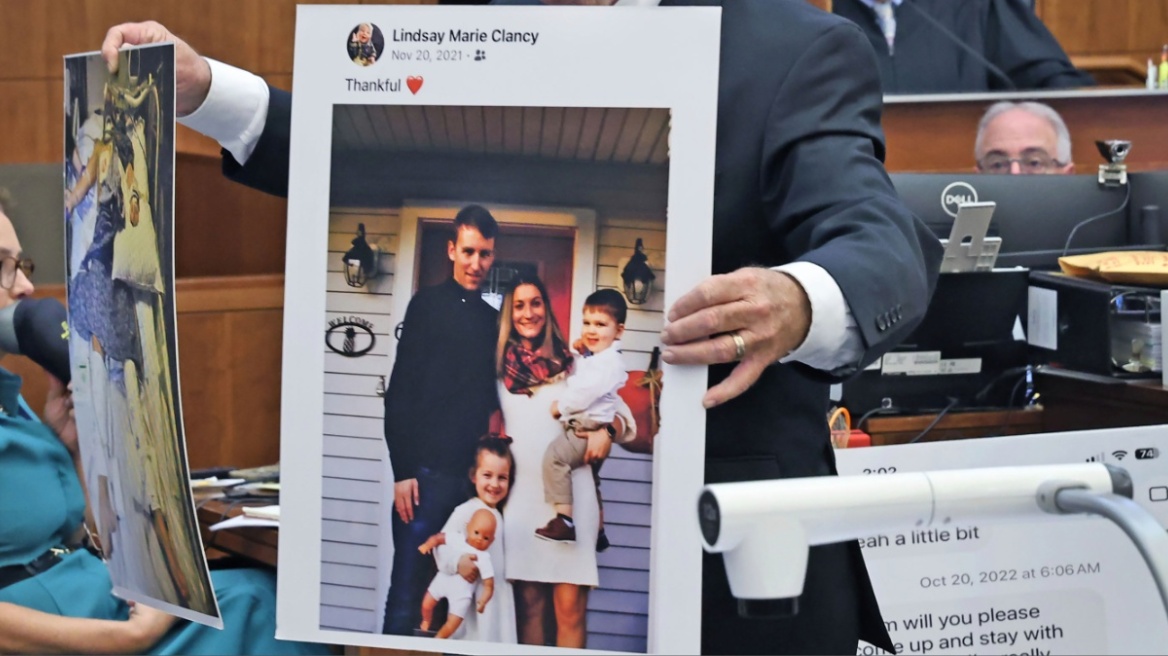
Verdicts before the jury
Jurors must determine whether Clancy is guilty of first-degree murder, second-degree murder, or involuntary manslaughter. The six alternate jurors, comprising three men and three women, were released from service prior to the start of deliberations.
A conviction for first-degree murder in Massachusetts carries a mandatory sentence of life imprisonment without the possibility of parole. Second-degree murder carries a life sentence with the opportunity to seek parole, while an involuntary manslaughter conviction carries a maximum penalty of up to 20 years in prison.
Jurors may also find Clancy not criminally responsible for the deaths due to her mental condition at the time of the offense. Judge Sullivan instructed the jury that such a finding could result in Clancy spending the remainder of her life in a hospital, though eventual release remains legally possible.
In American criminal law, a verdict of not criminally responsible by reason of insanity directs a defendant to a secure psychiatric facility for evaluation and medical care rather than a state prison. Commitment periods are subject to periodic judicial review to determine whether ongoing hospitalization is required for public safety and treatment.
The defense argument
During his closing argument, Reddington urged the jury to find Clancy not criminally responsible, focusing his defense on her severe mental illness and the prescription medications she had been taking.
Reddington told the court that the evidence demonstrated Clancy was a very good mother who lived for her children until medical professionals began prescribing excessive amounts of medication to her. He attributed the tragic events directly to the drugs and poor medical care she received.
The defense attorney highlighted evidence shown during the trial indicating that Clancy had expressed fears and concerns about her prescribed medication regimen. He noted that her handwritten journal entries documented a steady decline in her mental health leading up to the incident.
Central to the defense case was testimony from forensic psychiatrist Dr. Phillip Resnick, who examined Clancy. Dr. Resnick testified that Clancy was clearly in a psychotic state and was unable to control her actions when she killed her children.
Forensic psychiatry involves the application of medical psychiatric expertise to legal matters. Experts in the field evaluate criminal defendants to assess mental capacity, state of mind during an offense, and whether psychiatric disorders impaired an individual's ability to understand their actions or conform to the law.
Reddington noted that medical experts from both the defense and prosecution acknowledged during trial that Clancy made a serious attempt to end her own life, pointing to physical evidence presented to the jury. He also criticized law enforcement, accusing police of failing to conduct a thorough investigation into the circumstances of the case.
The prosecution case
Assistant District Attorney Jennifer Sprague presented a contrasting narrative in her closing argument, asserting that Clancy made deliberate choices and exercised control over her conduct.
Sprague acknowledged to the jury that there was no dispute that Clancy suffered from mental illness and had attempted suicide. However, the prosecutor argued that mental illness was not the central question for the jury, stating that the decisive issue was whether Clancy knew the difference between right and wrong when she killed her children.
Sprague stated that the killings were a deliberate choice, emphasizing that Clancy interacted with others and presented herself as a functional adult and mother. The prosecutor noted that Clancy failed to inform mandatory reporting professionals of her thoughts of harming her children, despite having taken her daughter to a medical appointment on the day of the killings.
Mandatory reporting laws require specified professionals, including doctors, nurses, and social workers, to report suspected instances of child endangerment or severe harm to state authorities. Healthcare providers are trained to intervene or alert emergency services when patients express intent to harm themselves or others.
Addressing Clancy's claim that she heard an auditory hallucination guiding her to kill her children, Sprague pointed out that Clancy did not immediately report hearing any such voice to her husband.
Dispute over the suicide attempt
The prosecution strongly challenged the defense interpretation of Clancy's suicide attempt. Sprague argued that the failure of the attempt indicated that no controlling voice was directing her actions.
Sprague told jurors that the medications Clancy ingested were not present in lethal quantities and characterized her cut wounds as superficial.
The prosecutor argued that Clancy possessed ample resources, personal support, and access to high quality medical treatment, but failed to adhere to her prescribed care plan. Sprague rejected defense efforts to hold physicians responsible for Clancy's depression, stating that the defendant had not always been candid with her doctors regarding her condition and medication usage.
Following Sprague's closing remarks, the 12 jurors deliberated for three and a half hours before proceedings adjourned for the evening. The panel will resume discussions on Friday morning at 9:00 a.m.
Timeline of the killings
The killings occurred on January 24, 2023, at the Clancy family residence in Duxbury, a coastal town located approximately 35 miles southeast of Boston.
Duxbury is a suburban community in Plymouth County, Massachusetts, situated along Cape Cod Bay. Known for its coastal setting and residential neighborhoods, the town lies within the greater Boston metropolitan region.
According to prosecutors, Lindsay Clancy carried out the attack after her husband, Patrick Clancy, left the house to pick up takeout food and prescription medication.
Emergency responders found 5-year-old Cora and 3-year-old Dawson unconscious inside the home, and both children were pronounced dead shortly thereafter. The couple's 8-month-old son, Callan, was rushed to a hospital in critical condition but died several days later. Prosecutors stated that Clancy used exercise bands to strangle all three children.
After harming the children, Clancy cut her wrists and neck before jumping from a second-story window of the residence. Patrick Clancy discovered his wife injured outside the house when he returned home. He searched the property and discovered the three children in the basement.
Clancy survived the fall but sustained severe injuries that left her paralyzed from the waist down. Throughout the legal proceedings, the central dispute has focused on her state of mind. The defense maintains she acted while in a state of psychosis beyond her control, while the prosecution contends she retained the capacity to distinguish right from wrong.