


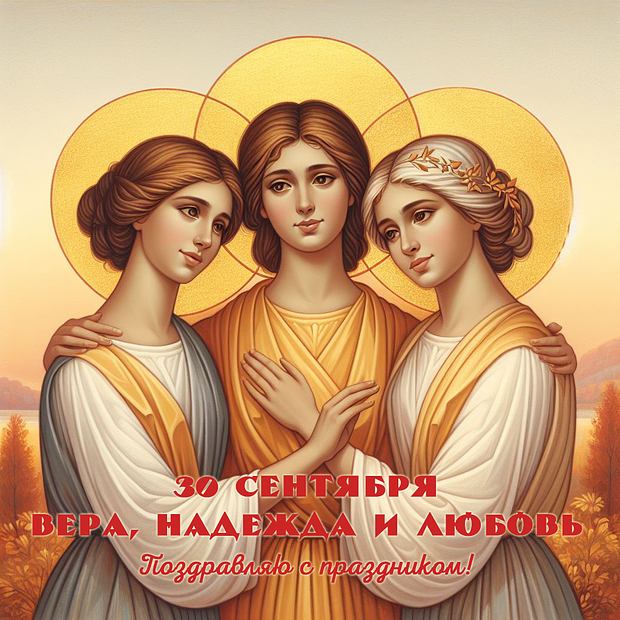
Russian news portal Lenta.ru published a collection of more than 90 downloadable holiday cards and greeting messages on September 29, 2026, marking the annual celebration of Saint Faith, Saint Hope, Saint Love, and their mother Saint Sophia.
The religious and cultural holiday, celebrated every year on September 30, honors the memory of four early Christian martyrs while serving as a broader celebration for all women, particularly those named after the saints.

Lenta.ru editor and AI artist Nelly Sverdlova curated the release, which features digital artwork generated using artificial intelligence platforms including Nano Banana Pro, OpenAI's DALL-E 3, and Yandex's Shedevrum.
Sverdlova organized the collection into six distinct categories, offering readers options that range from aesthetic graphics and traditional Orthodox cards to folk designs, poetry, and specialized wishes for nameday celebrants.

The collection provides free downloadable images alongside written messages designed to be sent to family members, friends, and colleagues via messaging applications.

According to the publication, the three virtues of faith, hope, and love represent vital spiritual pillars that provide emotional warmth, strength during difficult times, and comfort during clear autumn days.

Digital card categories and generative AI tools
Sverdlova explained that the digital cards are intended to help people express appreciation and affection for loved ones without needing complex formal speeches.

The release features image designs generated by Nano Banana Pro, depicting symbolic representations of the three theological virtues alongside warm autumn motifs.

Additional illustrations in the set were produced using DALL-E 3 and Shedevrum, highlighting artistic interpretations of maternal love, spiritual light, and peaceful reflection.

Sverdlova noted that the greeting section includes specialized text for nameday celebrants, wishing them harmony, quiet joy, and protection from their heavenly patrons.

The Orthodox card section focuses on quiet spiritual strength, emphasizing that faith calms the mind, hope heals the soul, and love warms the body.

The folk collection highlights the importance of family warmth, encouraging readers to release past grudges and enjoy simple pleasures like sharing tea, conversations, and quiet moments together.

In addition to visual cards, the set includes short rhyming poems that express wishes for peaceful thoughts, angel protection, and homes filled with happiness.
Origins and history of Saint Sophia and her daughters
The full official title of the holiday is the Day of Memory of Holy Martyrs Faith, Hope, Love and Their Mother Sophia, commemorating events from the second century.
According to historical records cited in the report, the three young sisters were widely recognized for their physical beauty, moral purity, meekness, and wisdom.
News of the Christian family reached Roman Emperor Hadrian, who ruled the Roman Empire from 117 AD to 138 AD and was known as a zealous persecutor of Christians.
Emperor Hadrian demanded that the young sisters renounce their faith in Jesus Christ, subjecting them to severe torture while forcing their mother Sophia to watch the torment.
Neither the daughters nor their mother renounced their Christian beliefs, enduring martyrdom for their faith and later being canonized as holy martyrs by the Christian church.
Lenta.ru reported that the essence of the holiday lies in the triumph of unwavering faith, spiritual resilience before cruel trials, and all-conquering maternal love.
Name etymology and Christian symbolism
The female names Faith, Hope, and Love entered Slavic culture with the spread of Christianity as direct loan translations, or calques, of the original Greek names Pistis, Elpis, and Agape.
In contrast, the mother's name, Sophia, was retained in its original Greek form, though it lost its literal meaning, which in classical antiquity denoted wisdom.
Christian iconography represents the three virtues through specific symbols: the cross for faith, the anchor for hope, and the heart for love.
Folk customs and Universal Women's Wailing
In traditional Russian peasant culture, the September 30 holiday was commonly called Women's Nameday because it honors four female saints.
Even women who did not bear the names of the saints observed a special three-day period of celebration, during which they were traditionally excused from physical labor and domestic chores.
A notable folk custom associated with the morning of September 30 was a ritual known as Universal Women's Wailing, where women gathered together to cry aloud.
The ritual wailing allowed women to purge accumulated grief, emotional pain, and personal resentments, a practice believed to protect their families from future misfortunes.
Following the ritual crying, believers visited local churches to light candles, later gathering at home for festive family meals.
In the evening, unmarried youth organized social gatherings, known as posidelki, featuring games and conversation.
Traditional prohibitions and male responsibilities
Cultural traditions associated with the Day of Faith, Hope, and Love enforce several strict rules regarding household dynamics and social behavior.
Folk tradition strictly forbids quarreling with women, speaking harsh words, or wishing harm upon neighbors on September 30.
Religious custom also prohibits holding betrothals or celebrating weddings on this day.
According to traditional guidelines, men are required to take over all domestic responsibilities and housework throughout the holiday, allowing women to rest.
Lenta.ru summarized the holiday as a blend of solemn historical remembrance, spiritual reflection, and a folk tradition of honoring women through emotional renewal and family unity.


