

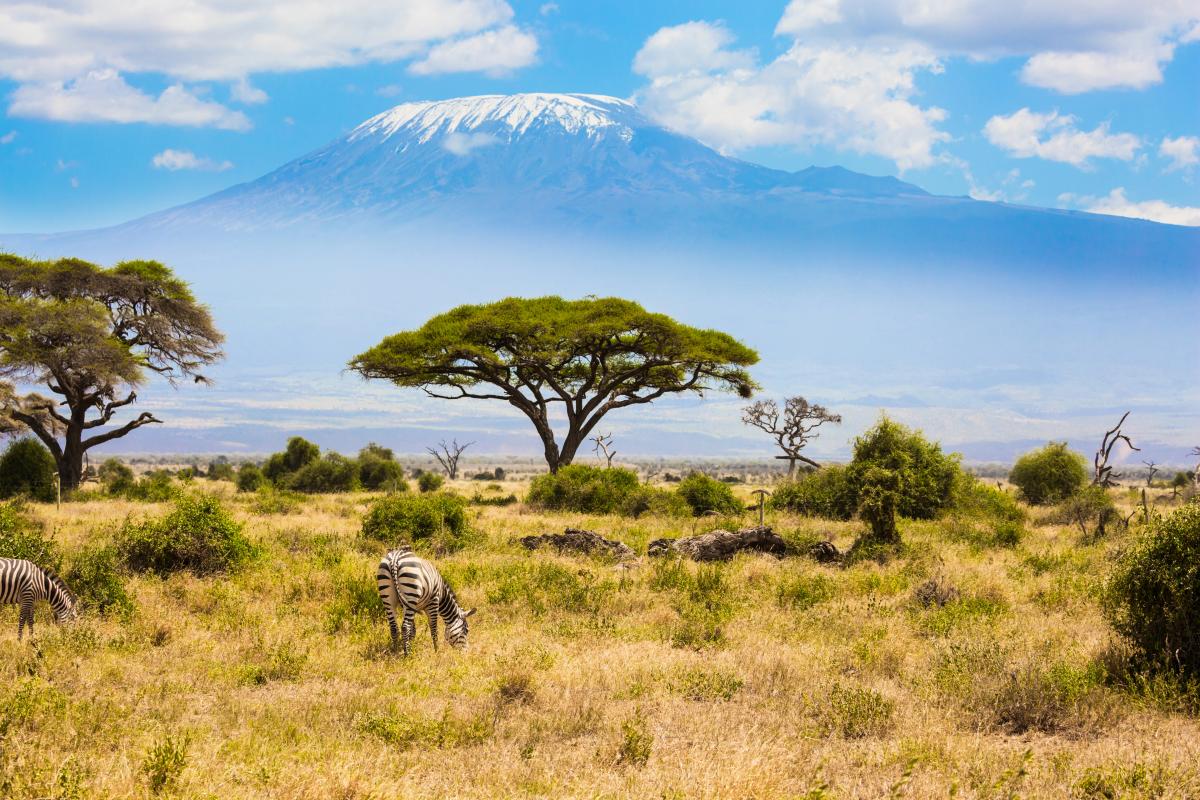
Tree cover across fenced sections of the Kenyan savannah shrank back to near-original levels after elephants, giraffes, and other large herbivores returned to the land following an 18-year exclusion experiment.
Fences installed to keep megaherbivores out were removed in 2017, triggering a rapid decline in tree canopy that returned cover to 36.5 percent by 2025, close to the 36.2 percent recorded when the study began.
Researchers had locked large plant-eating animals out of protected plots for nearly two decades to observe how savannah vegetation responds in their absence, according to a study published in the journal Ecology Letters and reported by The Times of India.
Savannah ecosystems and megaherbivores
Savannahs are tropical grassland ecosystems defined by a delicate structural balance between open grasses and scattered woody trees. Covering wide regions of sub-Saharan Africa, including Kenya, these landscapes experience distinct wet and dry seasons that dictate plant growth and animal movements.
Large herbivores, often called megaherbivores, play a critical role in preserving the open structure of the savannah. African bush elephants use their great size and physical power to knock down trees, strip bark, and break branches, while giraffes browse high in the tree canopy.
Smaller browsing animals, such as impalas and dik-diks, eat younger tree seedlings and lower vegetation. Together, this community of plant-eating animals limits the spread of woody plants, preventing open grasslands from turning into dense woodland or scrubland.
The concept of rewilding focuses on restoring these natural ecological interactions by returning native animal populations to lands where they were previously lost or excluded.
Impact of excluding large herbivores
The exclusion study entitled African savanna tree responses to large herbivore loss and rewilding began in 1999 when scientists set up fenced enclosures in the Kenyan savannah to keep large herbivores out. Researchers monitored unfenced control plots alongside the protected areas to track natural baseline changes over time.
Tree cover inside the fenced plots expanded rapidly during the first decade without animals. Canopy cover climbed from an initial average of 36.2 percent to over 60 percent by 2009, remaining steady at that level through 2016.
By contrast, tree cover on the unfenced control plots stayed between 21 percent and 32 percent across the entire study period. Researchers reported that tree cover was higher inside the fenced plots than on control plots every year from 1999 to 2016.
Excluding animals also altered tree height and population density. By 2016, trees inside the fenced areas reached an average height of 2.37 metres, compared to 1.49 metres on the unfenced control plots.
Tree density inside the protected zones more than doubled during the exclusion period. Average density rose from 1,544 trees per hectare in 1999 to 3,285 trees per hectare in 2009, while density on control plots remained virtually unchanged. New tree emergence was also more active inside the fenced plots during the first ten years.
Reintroduction of animals and vegetation response
In 2017, researchers removed the perimeter fences and allowed the full community of large herbivores back into the previously protected areas. The return of animal herds caused immediate shifts in tree growth and canopy structure.
During the first three years after fence removal, trees in the previously fenced plots recorded their most negative height growth in the history of the experiment. Within two years of animal re-entry, the height difference between fenced trees and control trees completely disappeared.
Canopy growth also turned negative on average across the recently unfenced plots during the first two years of animal return. Woody plant species such as Grewia tenax and Acacia mellifera, which had shown positive canopy growth during the exclusion period, experienced negative canopy growth after animals returned.
Researchers linked the rapid reduction in tree height and new tree emergence to intensive browsing on adult trees by elephants. At the same time, smaller herbivores such as impalas and dik-diks returned to feed on younger plants across the landscape.
Legacy effects and ecosystem rewilding
Tree cover declined after the animals returned at a pace comparable to its initial growth rate during the first decade without herbivores. By 2025, canopy cover on previously fenced plots had dropped to 36.5 percent, nearly matching the 36.2 percent recorded at the start of the study, though remaining slightly higher than on control plots.
While total canopy cover returned close to its initial level, other vegetation characteristics did not recover in the same way. Tree density remained high, while tree mortality rose sharply after the animals returned.
Tree mortality on fenced plots had already increased to 19.2 trees per year between 2009 and 2016. After animals returned, annual mortality climbed further to an average of 30.5 trees per year between 2016 and 2019, compared to 14.0 trees per year on control plots over the same timeframe, according to data from the last field survey in 2019.
The study concluded that restoring animal access stopped tree canopy expansion, but did not immediately return the savannah to its original structure. Researchers noted that some vegetation changes caused by 18 years of herbivore exclusion may linger long after animals return, calling these shifts potentially resistant to rewilding.


