Two cyclones over the Arabian Peninsula triggered Kenya's worst desert locust invasion in more than 70 years, after anomalous rainfall allowed the insects to multiply unchecked.
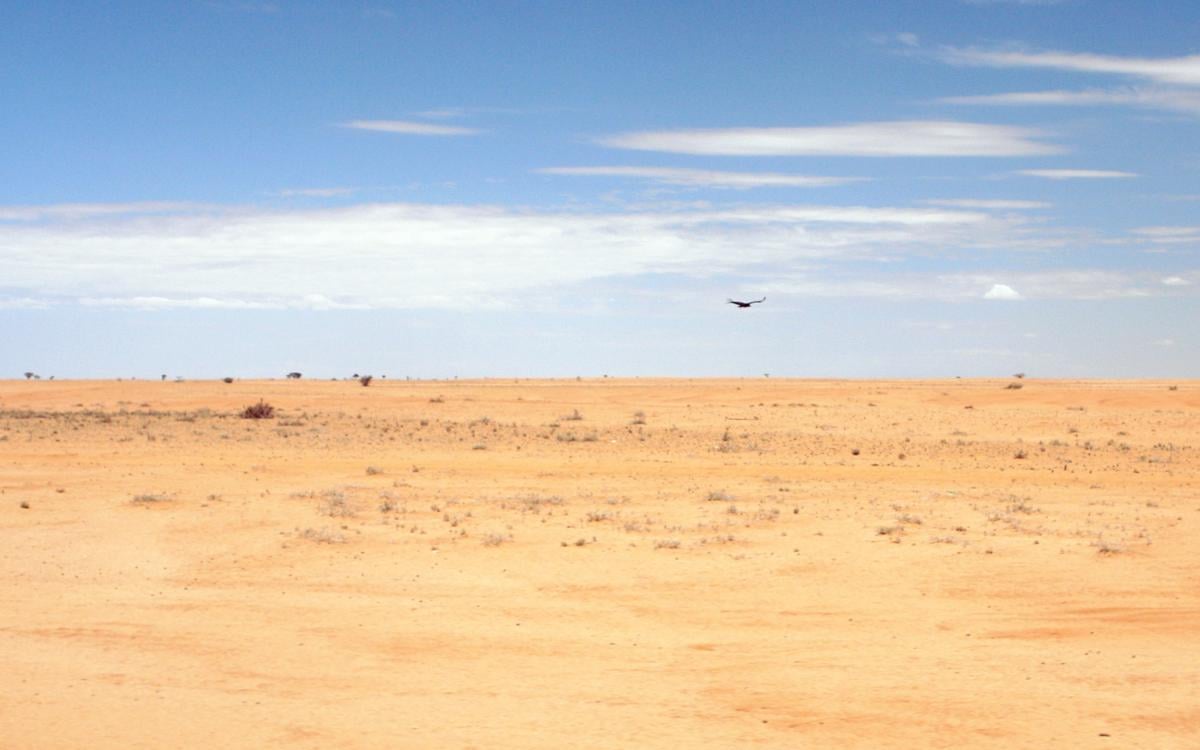
In 2018, Cyclones Mekunu and Luban struck the Rub' al Khali, a vast sand desert encompassing parts of Saudi Arabia, Yemen, Oman and the United Arab Emirates. The storms brought between 100 and 300 millimetres of rain to areas of Oman and Yemen in May and October, respectively. This amounted to roughly five times the region's normal rainfall.
Science Blog reported that the deluge created temporary lakes and moistened the soil in a region typically too arid to support such ecosystems, providing perfect breeding conditions for the insects.
Because this part of the desert usually lacks sufficient rainfall to support agriculture, the area is sparsely populated and the initial breeding went largely unobserved. The combination of heat and moisture allowed the locusts to complete three generations of reproduction almost entirely unnoticed.
The desert locust life cycle sees eggs hatch in about two weeks, larvae develop over six weeks, and mature adults begin laying eggs three weeks later. Under optimal conditions, a single generation can multiply the population twentyfold. Three consecutive generations can result in an 8,000-fold increase in locust numbers.
The crucial second cyclone
The second cyclone proved decisive for the outbreak. If Cyclone Luban had not arrived in October, the first generation of locusts spawned by Cyclone Mekunu in May would likely have perished as the desert soil dried out. Instead, Luban re-saturated the ground, ensuring the survival and continued multiplication of subsequent generations.
By January 2019, massive swarms began migrating towards Saudi Arabia and Yemen, by which point the outbreak could no longer be contained locally.
The desert locust, or Schistocerca gregaria, is typically a solitary insect. An adult weighs about two grams and consumes its own body weight in vegetation daily. However, when brought together in high densities, the insects undergo a physiological transformation and gather into enormous, highly mobile swarms.
These swarms can pack between 40 million and 80 million locusts into a single square kilometre. Traveling up to 150 kilometres per day, a one square kilometre swarm destroys up to 160 tonnes of green vegetation daily, an amount equivalent to the food intake of 35,000 people.
Spread across East Africa
During the spring of 2019, the locusts expanded their territory toward Iran, India and Pakistan. The swarms also crossed the Gulf of Aden to reach Ethiopia and Somalia, tracking rainfall and moving into moistened areas where they could reproduce again.
The crisis was compounded by Cyclone Pawan in December 2019, which prolonged the favourable breeding conditions in East Africa. By early 2020, Kenya was battling its worst locust plague in seven decades.
The agricultural disaster was worsened by geopolitical conflict and poor monitoring. Ongoing wars in Yemen and Somalia prevented specialists from surveying key breeding grounds. The regional locust control organisation lacked resources, while the onset of the COVID-19 pandemic severely disrupted pesticide supplies and the deployment of international experts.
Scientists warned that such events could repeat. The northwestern Indian Ocean saw two cyclones in 2018 and a record eight cyclones in 2019, the highest number since 1976. Ocean warming and changing climate conditions could increase the likelihood of similar outbreaks in the future.
North Atlantic cold patch
In a separate climate development, scientists are monitoring a cold patch in the North Atlantic Ocean, located south of Greenland.
The phenomenon is driven by the melting of ice in Greenland, which is pouring more fresh water into the ocean. Researchers indicate this influx of fresh water could slow down the region's ocean circulation systems, which normally carry warm water northwards and regulate European weather patterns.
While scientists consider a complete collapse of the circulation system unlikely in the immediate future, they warn that specific parts of the system could begin to change seriously within the coming decades. This threatens Europe with colder winters, droughts and intensifying storms.