Hollywood cinema underwent an explicit sexual transformation during the 1980s led by actors Kathleen Turner and Glenn Close, who portrayed a new archetype of psychotic, obsession-driven femmes fatales, according to film analyst Lluis Fernández writing for Bellas y Malvadas.
The trend marked a major departure from classic film noir, introducing characters whose overwhelming desire and psychological instability drove them to violent acts and betrayal.
Fernández highlighted Lawrence Kasdan's 1981 thriller Body Heat as the initial sign of this shift, featuring explicit sexual encounters between stars William Hurt and Kathleen Turner. Turner portrayed a bored housewife who redefined the domestic femme fatale stereotype by betraying those around her in the pursuit of wealth and passion.
The film functioned as an indirect remake of the classic story The Postman Always Rings Twice. Director Bob Rafelson released another adaptation in 1981, which gained notoriety for an explicit sex scene on a kitchen table involving Jack Nicholson and Jessica Lange.
While the original 1946 version starring Lana Turner and John Garfield depicted sex through urgent romantic passion, Rafelson's version used explicit encounters bordering on pornography as the central motive for the lovers to murder the husband. Their violent desire, free of remorse, bound them together beyond death.

Precedents of the psychotic femme fatale
Postmodern cinema expanded this erotic focus by creating the psychotic villainess, a character type with few historical precedents in American film. Earlier examples were rare and stood out for their psychological intensity.
One primary precursor was Mrs. Danvers in Alfred Hitchcock's 1940 film Rebecca, played by Judith Anderson. The disturbed housekeeper sets fire to the Manderley mansion to prevent the new Mrs. de Winter from profaning the memory of her former mistress.
Another early antecedent was John M. Stahl's 1945 film noir Leave Her to Heaven, filmed in Technicolor and starring Gene Tierney. Tierney played a woman tormented by imaginary jealousy who ruthlessly eliminated anyone standing between her and her husband's exclusive affection.
These classic characters established the blueprint for women obsessed with a man who rejects them or driven to madness by an overwhelming sense of loss.
Obsession and personality dislocation
According to Fernández, a fundamental personality dislocation causes these modern femmes fatales to live in an imaginary world that they attempt to enforce through physical violence. Their intense passion triggers a demand for total compliance from their targets under threat of death.
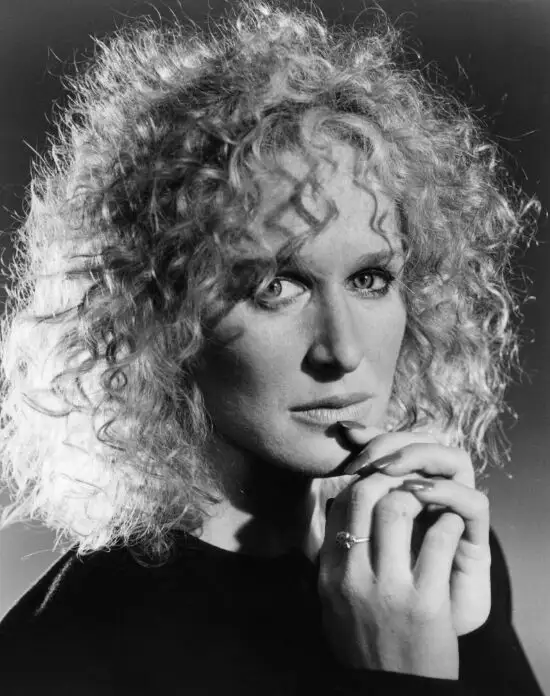
Director Adrian Lyne's 1987 thriller Fatal Attraction established the peak of this trend. Glenn Close starred as Alex Forrest, a woman who becomes dangerously obsessed with a married man, played by Michael Douglas, after a single night of intimacy.
The narrative pitted a dominant female antagonist against a weak male protagonist. Douglas's character brings about his own ruin because his fear of exposing his infidelity to his wife leaves him unable to stop the escalating harassment.
The theme of family defense resurfaced in Curtis Hanson's 1992 thriller The Hand That Rocks the Cradle, starring Rebecca De Mornay as an avenging nanny driven mad by hatred. Like Fatal Attraction, the story centered on a domestic unit trying to protect itself from a woman seeking to reclaim a lost family or lover through vengeance.
Erotic thrillers and psychological horror
Michael Douglas returned to the genre in Paul Verhoeven's 1992 film Basic Instinct, opposite Sharon Stone. Stone played an uninhibited murder suspect whose intense, violent sexuality leads Douglas's character to identify with her despite the danger.
Basic Instinct gained widespread fame for an interrogation scene in which Stone briefly crosses her legs, exposing her genitalia. Director Verhoeven had previously explored explicit themes in his Dutch film debut cult hit Turkish Delight in 1973, which starred actor Rutger Hauer.
The genre reached a distinct peak in Rob Reiner's 1990 film adaptation of Misery, featuring Kathy Bates as the psychotic murderer Annie Wilkes. Bates portrayed an obsessed fan who rescues a romance novelist after a car crash in a snowy landscape.
Wilkes suffers a violent psychotic break after discovering that the author killed off her favorite character, Misery, in his latest book. Her extreme sadism forces the writer to draft a new novel resurrecting the heroine while enduring tortures that Fernández noted would satisfy the Marquis de Sade and Leopold von Sacher-Masoch.