Four people, including an unborn baby, have died after two hooded gunmen on a motorcycle opened fire on a crowd in Isla Cristina, a coastal town in the south-western Spanish province of Huelva.
The shooting took place at around 10:00 p.m. on Sunday in the El Rocío neighborhood, killing a 39-year-old woman who was eight months pregnant, her unborn child, her 62-year-old mother, and a 16-year-old boy.
Investigators are treating a clash between rival drug trafficking clans as the main line of inquiry into the attack, while judicial secrecy remains in place over the case.
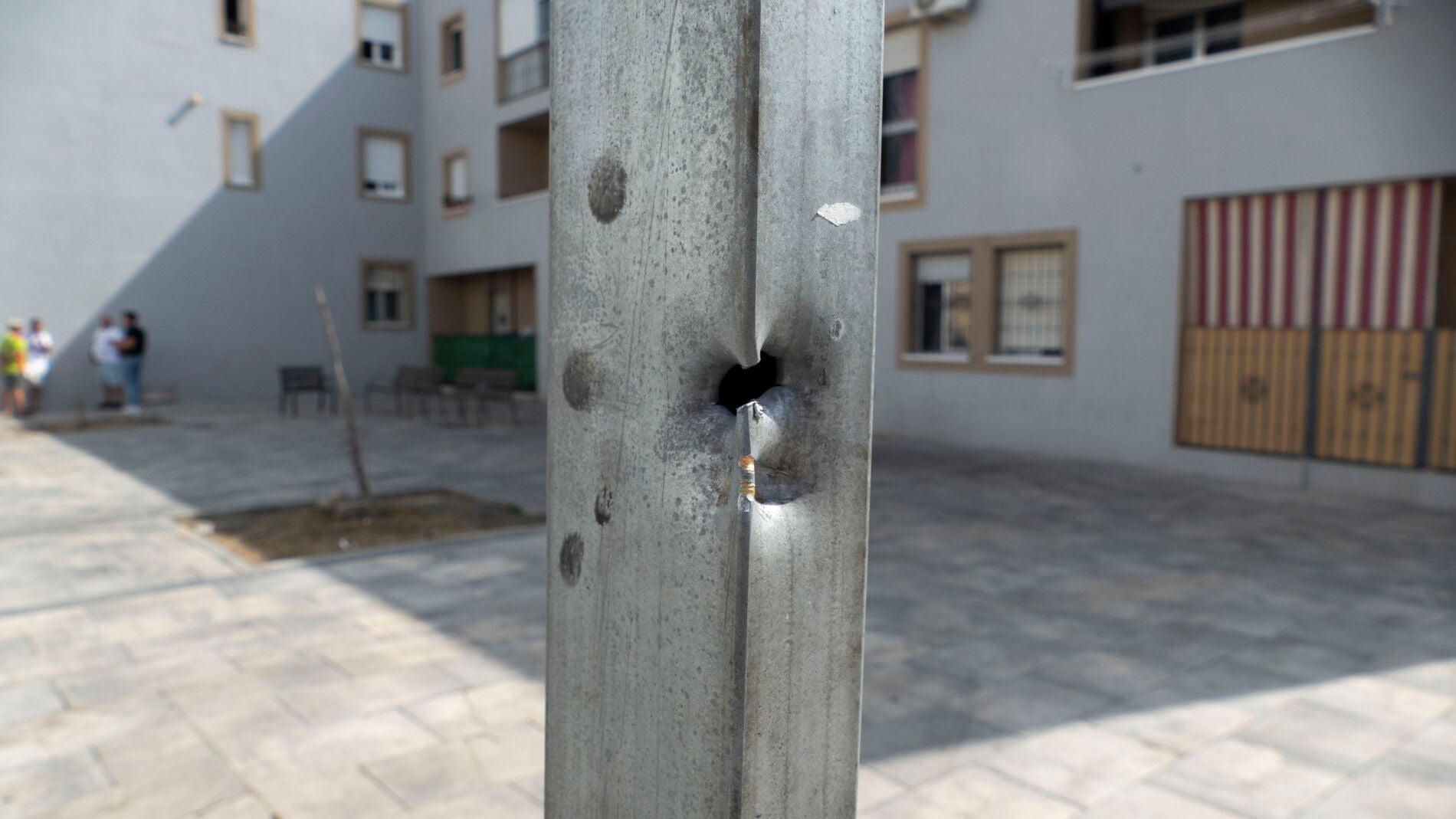
Motorcycle attack and police search
The attackers approached the group on a motorcycle and fired multiple rounds using a long firearm before escaping. Emergency services and local law enforcement launched a search operation immediately after the shooting.
Police later found the getaway motorcycle set ablaze in a pine forest near the Giralda campsite, where local agricultural landowners and firefighters extinguished the fire. Officers from the Civil Guard are reviewing local security camera footage to identify and locate the assailants.
Two other young men were wounded in the attack. An 18-year-old man, who is the son of the 39-year-old victim and grandson of the 62-year-old victim, remains in serious condition in hospital. A second victim, who was shot in the leg, is reported to be in stable condition and out of danger.
Escalating clan conflict in Huelva
The mayor of Isla Cristina, Jenaro Orta, stated that the primary line of investigation points to an ongoing feud between clans. He noted that the conflict may be connected to a shooting in September 2024 in the El Torrejón neighborhood of Huelva capital.
That previous incident left one person dead and two others injured, leading to the arrest of a suspect in the northern Spanish city of Gijón. Subsequent intimidation and retaliatory actions transferred the dispute to Isla Cristina.
In May 2025, authorities in Isla Cristina arrested three individuals for threatening local residents with weapons and firing shots from rooftops. Two months later, in July 2025, another shooting in the town resulted in one death and left a woman wounded.
Calls for emergency police resources
The massacre has intensified demands from police unions and regional leaders for stronger law enforcement measures across Andalusia. Ángel Becerra, Andalusian secretary for the Unified Police Union, warned that criminal organizations are no longer restricted to isolated coastal areas and requested that Andalusia be declared a Special Singularity Zone.
The union urged the central government to implement a permanent policing strategy with stable staffing, recognize the National Police as a high-risk profession, and establish wage parity. The union warned that without a firm state response, the region risks turning into a small Medellín, recalling that two Civil Guard officers, Jerónimo and Germán, died fighting drug trafficking off the Huelva coast in May, following the deaths of officers David and Miguel Ángel in Barbate in 2024.
The Unified Association of Civil Guards also filed a formal complaint with the local government sub-delegation regarding severe personnel shortages in Huelva. The association stated that the lack of staff in the service unit leaves only one officer at the sub-delegation and two at headquarters at times, who must handle facility security while taking public crime reports. Nearly one third of the unit's workforce is currently assigned to administrative duties or temporary assignments.
Political figures in Andalusia echoed the unions' concerns. Andalusian Regional President Juanma Moreno called the situation unbearable, stating that crime was gaining ground while resources were lacking, and urged the central government to reinforce anti-narcotics capabilities. Andalusian Third Vice President Carolina España also called for increased police resources and drastic measures.
Government defends provincial security record
In response to the criticism, representatives of the central government defended law enforcement efforts in the region. María José Rico, the government sub-delegate in Huelva, maintained that the province is safe, noting that its crime rate is three points below the Spanish national average and 3.4 points below the regional average for Andalusia, making it the second safest province after Córdoba.
Rico stated that drug trafficking is not an isolated problem and emphasized that police pressure aims to prevent criminal organizations from establishing roots in the area. She noted that Huelva is included in the fifth edition of the Special Security Plan for Campo de Gibraltar, an initiative extending through late 2027 across six Andalusian provinces.
According to figures provided by the sub-delegation, police staffing in Huelva has grown by 16 percent, with more than 80 extra officers deployed this summer alongside high-speed vessels, drones, night-vision equipment, and the Integrated External Surveillance System.
So far this year, law enforcement agencies in Huelva have seized more than 25,000 kilograms of hashish and over 5,000 kilograms of cocaine, arresting 87 people and sending 21 to prison. The sub-delegation highlighted major operations earlier in the year, including the interception of more than six tonnes of cocaine off the coast of Huelva by the Civil Guard in April and a seizure of over 5,000 kilograms of drugs by the National Police in March.