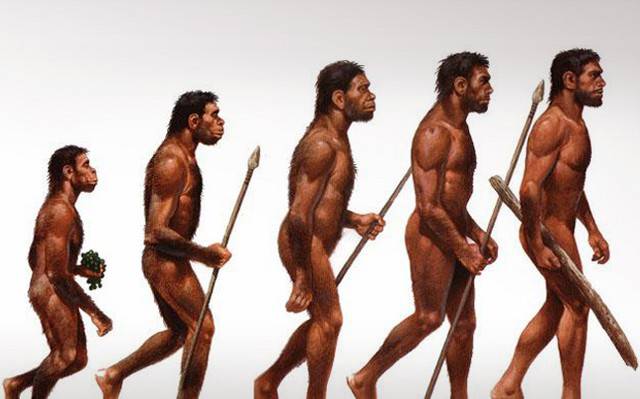
Scientists remain unable to explain why humans evolved a chin, a physical feature unique to Homo sapiens that is absent in all other modern mammals.
Even archaic human relatives such as Neanderthals lacked a distinct chin, leaving evolutionary biologists without a definitive answer for how or why the structure developed, according to a report by independent.co.uk.
Homo sapiens, the species to which all modern human beings belong, evolved in Africa before spreading globally. Neanderthals were an extinct species of hominins that lived across Europe and Asia until approximately 40,000 years ago, sharing many anatomical traits with modern humans but lacking a projecting chin point on the lower jaw.
Studying traits across the evolutionary tree
Max Telford, professor of zoology and comparative anatomy at UCL, explained that the evolution of the human body is generally investigated by tracing traits across the evolutionary tree. UCL, based in London, is one of the world's leading research universities in biological sciences.
When physical traits appear independently in multiple different species, scientists can compare those instances to identify the specific evolutionary pressure that drove their development. A classic example of this process, known as convergent evolution, is observed in the testicle size of primates.
Primate species that face intense competition between males for reproductive access tend to evolve larger testicles. Producing a higher quantity of sperm increases the likelihood of reproductive success, a pattern documented across numerous species subjected to similar evolutionary pressures.
Competing theories on chin development
In contrast to primate traits shaped by convergent evolution, the human chin presents a unique problem because no other animal possesses a comparable structure to serve as a baseline for scientific comparison.
Despite this limitation, researchers have proposed several potential explanations for why the chin developed in humans. One theory suggests that the chin evolved to reinforce the lower jaw against mechanical stress, helping to protect the jawbone during physical conflicts between early human ancestors.
A second hypothesis links the formation of the chin to broader evolutionary changes in the human face and the development of male facial appearance.
A third perspective suggests that the chin is not an intentional evolutionary adaptation at all, but rather an indirect side effect of jaw shrinkage. As early humans transitioned to softer and cooked foods, the biological need for a powerful jaw diminished. As the jaw reduced in size over generations, the chin remained as a prominent bony ridge.
Ongoing mystery in human evolution
The central paradox for evolutionary biologists is that the chin lacks any equivalent feature in the animal kingdom that would allow scientists to test these competing hypotheses in a laboratory or field setting.
As a result, while evolutionary science has successfully clarified the origins of almost every other human anatomical feature, the chin remains one of the body's most persistent unsolved mysteries. Researchers noted that until a comparable evolutionary example is identified in another species, science will continue to rely on theories and indirect evidence rather than a definitive answer.